Hair Transplant: How It Works — The Biology, the Surgery, and What Procedure Day Actually Feels Like
Introduction: Why Most Explanations Leave You With More Questions Than Answers
Many patients spend hours researching hair transplants, reviewing dramatic before-and-after photos, skimming clinic websites, and reading the same surface-level explanation repeatedly: “grafts are moved from the back of your head to the front.” And yet uncertainty remains. Why does transplanted hair stay permanently? What actually determines whether the result looks natural or artificial? What will the day itself feel like, hour by hour?
Those questions deserve real answers, not marketing slogans. This article addresses three of them: WHY transplanted hair is permanent (the biology), HOW surgical skill determines whether a patient achieves a 97% outcome or a 75% failure (the quality variables), and WHAT procedure day actually looks, feels, and sounds like (the experience).
The scale of the problem is significant. Approximately 50 million men and 30 million women in the United States are affected by androgenetic alopecia. By age 50, up to 50% of men and 40% of women show visible hair loss. This is not a fringe concern; it is one of the most common human experiences.
Consider this a clinical literacy guide, not a sales pitch. The goal is to transform an anxious researcher into a confident, informed patient who can walk into a consultation and ask the right questions. The article covers the biology first, the surgical quality variables second, and a detailed procedure-day walkthrough third, followed by the growth timeline, the 2026 innovation landscape, and a practical checklist for evaluating any clinic.
Part One: The Biology — Why Transplanted Hair Is Permanently Yours
Most competing content skips this layer entirely, which is a problem. Without understanding the biology, a patient cannot evaluate permanence claims or understand what they are actually purchasing.
Hair transplantation is not cosmetic trickery. It is a biological relocation of living tissue governed by genetic programming. Understanding that single idea changes everything.
What Actually Causes Pattern Hair Loss (And Why It Matters for the Transplant)
Androgenetic alopecia (AGA) operates at the cellular level. Dihydrotestosterone (DHT), a potent derivative of testosterone, binds to androgen receptors in genetically susceptible hair follicles. This triggers a process called miniaturization: follicles progressively shrink, produce thinner and shorter hairs, and eventually stop producing visible hair altogether.
Crucially, this is a genetic susceptibility, not a hormone imbalance. DHT levels are often perfectly normal. The problem is that certain follicles are genetically programmed to respond destructively to DHT while others are not.
This explains the predictable geographic pattern of baldness. Follicles on the top and front of the scalp carry the genetic vulnerability. Follicles on the back and sides (the “safe donor zone”) are genetically programmed to ignore DHT entirely. DHT-sensitive follicles can be thought of as having a lock that DHT’s key can open; donor-zone follicles simply do not have that lock.
Over 95% of hair loss in men is attributed to AGA, and the same hormonal mechanism affects women, though typically with a diffuse rather than patterned presentation.
The Donor Dominance Principle: The Scientific Reason Results Are Permanent
In 1959, Dr. Norman Orentreich made the landmark discovery of “donor dominance.” When follicles from the DHT-resistant safe donor zone are transplanted to a balding area, they retain their original genetic programming. They continue to ignore DHT and continue to grow hair, regardless of their new location.
This is not a theory; it is a clinically validated biological principle. The follicle carries its genetic identity with it, much like transplanting a plant that keeps its own root system no matter where in the garden it is placed. Long-term evidence supports this: a 2024 paper documented graft survival a full 15 years after surgery, and a 2023 retrospective analysis of patients operated on 10 years earlier confirmed that implanted grafts were still growing.
One important nuance deserves attention. Transplanted follicles are biologically permanent, but the overall cosmetic result is not automatically permanent without managing ongoing native hair loss. The native hairs surrounding the transplanted grafts can continue to thin over time. This is why a comprehensive treatment plan, potentially including medications such as finasteride or minoxidil, is often recommended alongside surgery.
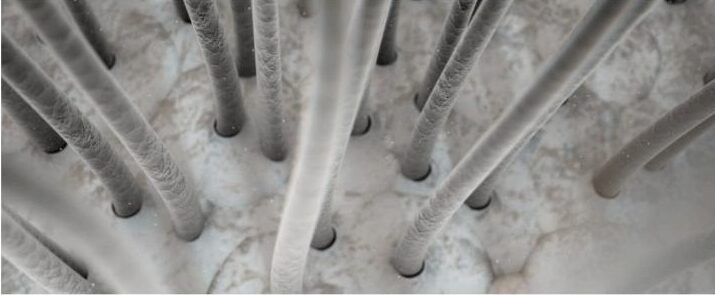
One additional essential concept is the “follicular unit.” This is the natural grouping of one to four hairs that share a single follicle base. Surgeons transplant these intact groupings rather than individual hairs, preserving the natural clustering pattern that makes results look undetectable.
The Safe Donor Zone: Why Location Is Everything
The safe donor zone spans the occipital and parietal scalp (back and sides), where follicles are genetically stable and DHT-resistant.
The sobering reality is that this donor supply is finite. A patient has approximately 6,000 lifetime grafts available from this zone. It is not a renewable resource. Every graft harvested is permanently removed from the donor area, and every graft wasted by poor technique is gone forever.
That finite supply makes clinic and surgeon selection the single most consequential decision in the entire process, not merely a quality preference but a risk management imperative. Beard and body hair can supplement scalp donor supply in some cases, but scalp donor hair remains the gold standard because of its superior survival rates and texture match.
With the “why” established, the next question is how surgical skill determines whether those precious grafts actually survive.
Part Two: The Surgery — How Skill Determines Whether a Patient Gets a 97% Outcome or a 75% Failure
Most patients evaluate clinics on price, photos, and reviews. The variables that actually determine outcomes, however, are measurable, specific, and rarely discussed in patient-facing content. The central point is straightforward: two patients can receive the same number of grafts from two different clinics and end up with dramatically different results, not because of luck, but because of identifiable quality variables that anyone can learn to ask about.
FUE vs. FUT: Understanding the Two Primary Techniques
FUE (Follicular Unit Extraction) extracts individual follicular units one by one from the donor area using a micro-punch tool, typically 0.9 to 1.2mm in diameter. No linear incision is made; the result is a pattern of tiny circular healing sites that are virtually undetectable even with a shaved head. FUE now accounts for approximately 85% of male hair restoration procedures per the ISHRS 2025 Practice Census.
FUT (Follicular Unit Transplantation) removes a strip of scalp tissue from the donor area, which is then meticulously dissected under microscopes into individual grafts. This method allows a higher graft yield in a single session and, with advanced closure techniques such as trichophytic closure, results in a fine linear scar typically concealed by surrounding hair. Hair Transplant Specialists uses a proprietary Microprecision Follicular Grafting® technique with trichophytic closure for exactly this reason.
Strategic context that is often omitted: FUT may be advantageous as a first procedure for patients anticipating multiple sessions over their lifetime, because it preserves the peripheral donor zones for future FUE harvesting, maximizing the finite donor supply.
DHI (Direct Hair Implantation) is a refinement of FUE that uses the Choi Implanter Pen to create the recipient site and implant the follicle in a single motion, significantly reducing the time grafts spend outside the body.
The “best” technique is not universal. It depends on the individual’s hair loss pattern, donor characteristics, lifestyle, and long-term goals, which is why a thorough consultation is essential.
The Biology of Graft Survival: What Happens to a Follicle Outside the Body
The moment a follicle leaves the scalp, a biological clock starts ticking. It is cut off from its blood supply and begins experiencing ischemia (oxygen deprivation).
The cascade of threats is well-defined. ATP, the cell’s energy currency, begins depleting within one to two minutes of oxygen deprivation, forcing cells into less efficient anaerobic metabolism. Simultaneously, desiccation (dehydration) begins if grafts are not kept moist. Upon reimplantation, ischemia-reperfusion injury (a paradoxical burst of cellular damage that occurs when oxygen is restored) poses an additional threat.
Limmer’s foundational research established a benchmark of roughly 1% graft loss per hour outside the body: at two hours, about 95% survive; at four hours, about 90%. This makes procedural speed and workflow efficiency direct survival variables, not conveniences.
Graft survival is the single most important quality metric in hair transplantation. At accredited, physician-led clinics, modern FUE achieves survival rates of 90 to 95%, with top-tier facilities reporting 95 to 98% at 12 months. Poor practitioners may achieve only 75 to 85%, meaning as many as one in four grafts fails.
To make that concrete: if a patient receives 2,000 grafts and the clinic achieves 75% survival, 500 grafts (permanently harvested from a finite supply) produce no hair. Those grafts are gone forever.
Transection Rate: The Most Important Number Most Patients Have Never Heard Of
Transection rate is the percentage of follicles accidentally cut, crushed, or damaged during extraction, rendering them non-viable before implantation even begins.
The benchmark matters. Elite surgeons maintain transection rates of 2 to 5% or less; NCBI StatPearls states FUE transection should remain below 4% with proper technique. Poor surgeons, particularly in high-volume, low-oversight settings, may transect 20 to 75% of grafts.
A transected follicle is destroyed before it ever reaches the recipient site. The patient pays for it, the donor area is permanently depleted of it, but it will never produce a single hair. What drives transection? Follicle angle, depth, and curvature vary between individuals and must be read and adjusted in real time during extraction. This requires experienced hands, proper equipment, and adequate time per graft, none of which are compatible with high-speed, high-volume models.
Transection rate is a question patients can and should ask during consultations. A clinic that cannot or will not answer it provides a meaningful signal about its transparency. While robotic systems such as the ARTAS iXi use AI vision to assist with angle mapping, a comparative study found that manual FUE by an experienced surgeon achieved a higher yield rate (90.03%) than the robotic system (82.05%). Technology assists, but it does not replace surgical judgment.
Graft Storage: Why the Holding Solution Matters More Than Most Patients Know
During a typical 5 to 8 hour procedure, harvested grafts spend significant time in a holding solution. That solution directly affects how many survive.
Dr. Jerry Cooley’s landmark extended-storage research is illuminating: HypoThermosol combined with liposomal ATP yielded 72% graft survival after five days; HypoThermosol alone yielded 44%; plain saline yielded 0%. Even within standard procedure windows, advanced intracellular solutions significantly outperform saline. A 2025 study in the International Journal of Trichology confirmed that optimal holding solutions can maintain follicle viability for 12 to 14 hours, providing a meaningful buffer during long procedures.
“What storage solution do you use for grafts during the procedure?” is a simple question that reveals whether a clinic operates at a premium or commodity level. Emerging adjuncts such as PRP (Platelet-Rich Plasma) are also being used to enhance survival: a 2025 meta-analysis of 43 trials found PRP significantly improves density, with an average gain of +25.61 hairs/cm².
The Black Market Crisis: Why Clinic Selection Is a Risk Management Decision
The ISHRS 2025 Practice Census revealed that 10% of all hair transplant cases in 2024 involved repairing damage from black market or unqualified providers, up from 6% in 2021 (a 67% increase in four years). Fifty-nine percent of ISHRS members reported black market clinics operating in their cities.
“Black market” in this context means procedures performed by unlicensed technicians in unaccredited facilities, often marketed as heavily discounted packages and particularly prevalent in certain medical tourism markets. The specific harms are severe: overharvesting that permanently depletes the donor zone, high transection rates that waste grafts, unsanitary conditions that risk infection, and no post-operative care or accountability.
Connecting this back to finite donor capital: corrective surgery after a botched procedure must work with whatever donor supply remains, which may be severely depleted. Some patients are left with insufficient donor hair to correct the damage. Choosing a board-certified, surgeon-led clinic with credentialed technicians is not a luxury upgrade; it is responsible stewardship of a biological resource that cannot be replaced.
Part Three: Procedure Day — What It Actually Looks, Feels, and Sounds Like
The unknown is almost always more frightening than the reality. A detailed, sensory walkthrough transforms abstract fear into manageable, familiar expectations. Larger sessions of 1,500 to 3,000 grafts typically run 6 to 10 hours; smaller sessions may finish in 3 to 5 hours.
Before Arrival: Pre-Procedure Preparation
Patients typically receive instructions to avoid blood-thinning medications and supplements for a specified period, refrain from alcohol, wash their hair the morning of the procedure, and wear comfortable, button-front clothing that does not need to be pulled over the head.
Because the day is long and mild sedation may be offered, patients should arrange transportation home even though the procedure uses local rather than general anesthesia. Eating a normal meal beforehand is encouraged; there is no reason to undergo a procedure lasting many hours on an empty stomach. A mix of excitement and nerves on procedure morning is entirely normal, and knowing what to expect is the most effective antidote.
Check-In Through Anesthesia: The First Hour
Hairline design is a collaborative, artistic process. The surgeon marks the proposed hairline with the patient standing and looking in a mirror. This is the moment to ask questions and voice preferences; a skilled surgeon explains the reasoning behind every angle and density decision made in the interest of naturalness.
Next comes scalp preparation and local anesthesia. The anesthesia injections are typically the most uncomfortable part of the entire procedure. A series of small injections numb the donor and recipient areas, and patients describe the sensation as similar to dental anesthesia: a brief sting followed by numbness. Once it takes effect (usually within minutes), the scalp is numb and patients feel pressure but not pain for the remainder of the procedure.
Local anesthesia is the gold standard endorsed by leading medical organizations worldwide. General anesthesia is not recommended, as extended time under it increases medical risk without improving outcomes. Some clinics offer oral sedation or anti-anxiety medication to help patients relax; this is worth asking about during consultation.
The Harvesting Phase: Hours One Through Four
During donor harvesting, the patient lies face-down or reclined, the scalp is numb, and only mild pressure or vibration is felt. The micro-punch produces a soft, repetitive mechanical sound. The surgeon or experienced technicians extract follicular units one by one (FUE) or remove a donor strip (FUT), placing each graft immediately into holding solution.
This is the longest stretch of the procedure. Patients are typically offered entertainment; Hair Transplant Specialists provides 65-inch flat-screen TVs, Netflix, and a Sonos music system, so patients can nap, watch movies, or rest. Breaks are provided for the restroom, snacks or meals, and stretching. A procedure of this length is designed around patient comfort, not endurance. Meanwhile, a skilled team works with coordinated efficiency: as harvesting continues, other members sort and prepare grafts under microscopes, minimizing out-of-body time.
Recipient Site Creation and Graft Placement: The Artistic Core
The surgeon uses fine blades or needles to create tiny incisions in the recipient area. The angle, depth, direction, and density of these incisions determine naturalness. This is where the ISHRS observation that hairline design is “80% art and 20% surgery” becomes most apparent.
Density distribution follows nature: single-hair grafts are placed at the very front to create a soft transition zone, with multi-hair grafts (two to four hairs) placed behind to build density. The team then places each prepared graft into its designated site with fine forceps, at the correct depth and angle, without damaging the follicle.
Throughout this phase, the patient rests with the scalp numb, watching entertainment or conversing with the team. Many patients find this phase surprisingly social; an attentive, communicative team significantly reduces anxiety.
Post-Procedure: The Final Hour and Discharge
After the last graft is placed, the scalp is gently cleaned, any minor bleeding is addressed, and the immediate result is photographed. Patients receive detailed written instructions covering how to sleep (head elevated for the first few nights to reduce swelling), how to wash the scalp, activities to avoid, and what to expect during recovery.
The recipient area will show small red dots or crusts; the donor area (FUE) will show tiny circular healing sites. Some swelling around the forehead and eyes is common in the first two to four days as anesthesia fluid migrates downward with gravity. This is normal and temporary. Most patients resume desk work and light activity within 3 to 10 days, while strenuous exercise is typically restricted for two to four weeks. A follow-up appointment is a standard part of quality care.
After the Procedure: Understanding the Growth Timeline (And the “Ugly Duckling” Phase)
The post-operative period contains several predictable events that look alarming but are completely normal. Patients who are not prepared often panic or wrongly conclude their procedure failed.
Shock Loss Explained: Two Separate Biological Events
“Shock loss” (post-operative effluvium) affects an estimated 30 to 95% of patients and is the single most misunderstood aspect of recovery. It involves two distinct mechanisms with separate timelines.
Anagen Effluvium (Weeks 2 to 4): The transplanted grafts shed their hair shafts due to the ischemia-driven follicular reset from the out-of-body period. Patients watch their new hairs fall out, which looks alarming, but the follicles remain alive beneath the scalp. Transplanted follicles re-enter anagen at approximately 60 days and reach full anagen by about 90 days.
Telogen Effluvium (Months 2 to 3): Native hairs surrounding the transplant sites may shed due to the physiological stress of surgery. This is a temporary disruption of the growth cycle, not permanent loss.
The critical distinction: shock loss is reversible. Regrowth occurs in over 95% of cases. The “ugly duckling phase” (between week three and month four, when shed hairs are gone and new growth has not yet emerged) is the most psychologically challenging period, but it is normal and expected. Some patients also experience temporary donor-area shock loss from the same telogen mechanism; it resolves as the scalp heals.
The Growth Timeline: What to Expect Month by Month
- Weeks 2 to 4: Shock loss begins; transplanted shafts shed. The scalp may look similar to or slightly worse than before. This is normal.
- Months 3 to 4: New fine hairs emerge, initially thin and light-colored.
- Months 4 to 8: Roughly 30 to 40% of final results become visible; hair thickens and darkens.
- Months 9 to 12: The majority of transplanted hairs reach maturity; results are substantially visible.
- Months 12 to 18: Full results are evaluated. This is the appropriate window to assess whether additional sessions are desired.
A minimum eight-month waiting period between procedures is standard. The outcome data is reassuring: 86.18% of FUE patients rated results as excellent at one year, satisfaction rates of 75 to 90% are documented when expectations are well managed, and over 95% of patients experience measurable emotional benefit, with average improvements of 40 to 55% on anxiety and depression scales within 12 months. Patients curious about what results look like at the midpoint can review hair transplant results at 6 months to set realistic expectations.
Safety, Complications, and Realistic Expectations
Overall complication rates range from 1.2% to 4.7% per a 2024 scoping review in Aesthetic Plastic Surgery, making hair transplantation one of the safest elective surgical procedures available. A landmark 10-year study of 2,896 patients found zero life-threatening complications and a total minor complication rate of only 0.10%.
Common minor complications include temporary swelling, itching, folliculitis (small pimples around graft sites), and temporary numbness, all of which typically resolve within weeks. Ideal candidates have adequate donor density, a stable hair loss pattern (stable for at least 6 to 12 months), realistic expectations, and good overall health. Poor candidates include those with diffuse unpatterned alopecia, active scarring alopecias, or insufficient donor supply.
Younger patients present a unique challenge because their hair loss pattern is often not yet established. Transplanting too early risks placing grafts where they may not be needed or missing areas that will later bald, so a conservative, staged approach guided by experienced judgment is essential. Notably, female surgical patients increased 16.5% from 2021 to 2024 per ISHRS data, reflecting growing awareness that hair restoration is not exclusively a male concern.
The 2026 Landscape: What Is Proven, What Is Emerging, and What Is Still Experimental
An honest orientation neither dismisses innovation nor overclaims it.
The baseline is settled: hair transplantation (FUE, FUT, and DHI) remains the only proven, clinically validated method for permanent hair restoration in 2026.
Proven adjunct therapies include PRP (a 2025 meta-analysis of 43 trials confirmed significant density improvement), low-level light therapy, finasteride (85%+ stabilization or improvement after five years), and minoxidil. Hair Transplant Specialists offers many of these, along with the ultrasound-based Alma TED treatment, as complements to surgery.
Emerging surgical innovations include Ultra-High Density Hair Transplant (UHDHT), which combines ultra-fine micro extraction (0.6 to 0.8mm punches versus the standard 0.9 to 1.2mm) with advanced implantation, and hyperbaric oxygen therapy post-FUE, which has documented 97 to 99% graft integration rates in early studies.
On stem cells and follicle cloning, honesty is essential. Japan is the most advanced market: Shiseido launched the first commercial stem cell hair treatment (S-DSC therapy) in July 2024 for Japanese citizens only. In February 2026, researchers at RIKEN/Organ Technologies identified a previously unknown “third cell” essential for fully regenerating hair follicles, and their Phase II trial enrolling roughly 200 patients began in late 2026. These developments are genuinely exciting but remain experimental and are not available as standard treatments.
The grounding conclusion: for patients experiencing hair loss today, the proven path to permanent restoration is a well-performed surgical transplant by a qualified team. Everything else is a complement or a future possibility.
How to Evaluate a Hair Transplant Clinic: The Questions That Reveal Everything
The information above becomes actionable in the consultation room. The following questions are specific, informed, and worth asking:
- What is your transection rate, and how do you measure it? (Benchmark: under 4 to 5%.)
- What graft storage solution do you use, and why? (Look for advanced intracellular solutions, not plain saline.)
- Who performs the extraction: the surgeon or technicians? What are their credentials and years of experience?
- What is your graft survival rate at 12 months, and how do you track it?
- How do you minimize out-of-body time for grafts?
- Can you walk me through your hairline design philosophy and how you plan for future hair loss progression?
- What is your protocol for managing shock loss, and how will you support patients through recovery?
- Are your surgeons board-certified and members of the ISHRS or an equivalent professional organization?
Board certification and ISHRS membership matter because they represent peer-reviewed standards, ongoing education, and accountability (none of which unlicensed providers offer regardless of their marketing). The ultimate frame remains finite donor capital: every graft wasted by poor technique is permanently gone. The right clinic is not the cheapest option; it is the one that gives a patient’s finite biological resource the best possible chance of producing the desired result. Patients who want a structured framework for this evaluation can consult a hair transplant clinic grading guide before their consultations.
Conclusion: From Anxious Researcher to Informed Patient
Three layers now fit together. The biology (donor dominance and DHT resistance) explains why results are permanent. The surgery (transection rate, graft survival, out-of-body time, and storage solutions) identifies the measurable quality variables that determine outcomes. The experience (procedure day) is a long but comfortable, well-supported process, not an ordeal.
The emotional dimension is real. Hair loss affects confidence, identity, and quality of life in deeply personal ways. Pursuing restoration is not vanity; it is an investment in wellbeing, backed by data showing 40 to 55% improvements in anxiety and depression scales and over 95% emotional benefit rates post-procedure.
The insight that separates informed patients from uninformed ones is this: the question is not “does hair transplantation work?” The science is settled, and 15-year follow-up data confirms it. The real question is: “Will this specific clinic, with this specific team, give these finite donor grafts the best possible chance of surviving and thriving?” That question is now answerable, because the reader has the clinical vocabulary, the quality benchmarks, and the procedural literacy to walk into a consultation as an equal participant.
Ready to See If You Are a Candidate? Start With a Consultation
A consultation is not a commitment. It is an information-gathering conversation in which a patient’s specific hair loss pattern, donor characteristics, and goals are assessed by a qualified surgeon.
A quality consultation at Hair Transplant Specialists includes an evaluation of hair growth and loss patterns, a review of family history, a discussion of realistic expectations, and a transparent conversation about candidacy (including honest guidance if surgery is not the right fit at this time).
The team offers the clinical authority and patient-centered care this article has outlined: board-certified surgeons with a combined 100+ years of practice, surgical technicians with 15 to 18+ years of experience, and leadership including a former President of the International Society of Hair Restoration Surgery.
To take the next step, contact Hair Transplant Specialists at INeedMoreHair.com or by phone. Office hours are Monday through Thursday, 9:00 AM to 5:00 PM; Friday, 9:00 AM to 3:00 PM; with weekends by appointment. The journey to restored confidence begins with a single conversation, and the team is committed to being present at every step of that journey.