Hair Transplant Graft Count Calculation: The Area × Density Formula Surgeons Use to Estimate Your 1,500–3,000 Graft Range
Introduction: Why Graft Estimation Is More Than a Lookup Table
Most patients walk into their first hair transplant consultation armed with little more than a vague Norwood-stage guess and a number found online. They know they are “somewhere around a Stage 3 or 4” and have seen ranges like “2,000 to 3,000 grafts” mentioned in forums and articles. What they do not understand is how surgeons actually arrive at these numbers—or why two patients at the same Norwood stage might receive dramatically different graft recommendations.
The reality is that graft estimation follows a precise mathematical formula: Recipient Area (cm²) × Target Density (grafts/cm²) = Graft Count. This equation forms the foundation of every surgical plan, transforming subjective hair loss classifications into actionable numbers.
The 1,500–3,000 graft range represents the statistical sweet spot for moderate hair loss candidates. According to the 2025 ISHRS Practice Census, the average FUE procedure involves 2,262 grafts, while FUT procedures average 2,100 grafts—both figures landing squarely within this range. Understanding why this range exists, and how individual factors push patients toward its upper or lower boundaries, is essential pre-consultation knowledge.
This article explains each variable in the formula, clarifies the critical distinction between grafts and hairs, introduces the lifetime donor ceiling that constrains every surgical decision, and examines why online calculators consistently fall short of the accuracy achieved during in-person assessments.
Grafts vs. Hairs: The Distinction Most Patients Miss
Before exploring calculations, patients must understand a fundamental distinction that many online resources blur: grafts and hairs are not the same thing.
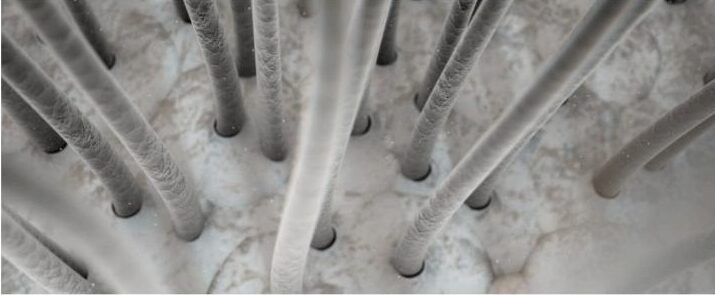
A graft—also called a follicular unit—is a naturally occurring cluster of 1 to 4 hairs that grows from a single point in the scalp. The average graft contains approximately 2 hairs. This means 2,000 grafts can yield anywhere from 2,000 to 8,000 individual hairs, depending on the patient’s natural follicular grouping.
Surgeons count grafts, not hairs, because grafts are the unit of extraction, handling, and implantation. Each graft is individually harvested from the donor area and carefully placed into a recipient site. Surgical team efficiency, clinic protocols, and procedure pricing all revolve around graft counts.
This distinction has profound practical implications. Surgeons strategically place single-hair grafts at the hairline to create a soft, natural transition—mimicking how natural hairlines feature finer hairs at the edges. Multi-hair grafts containing 2 to 4 hairs are reserved for the mid-scalp and crown, where density matters more than delicacy.
When online resources or calculators conflate grafts with hairs, patients develop unrealistic expectations. A quote of “4,000 hairs” sounds impressive until one realizes it may represent only 2,000 grafts of average follicular grouping.
The Core Formula: Recipient Area × Target Density = Graft Count
The mathematical model surgeons use for graft estimation is straightforward:
Number of Grafts = Recipient Area (cm²) × Target Density (grafts/cm²)
This is not a simplified approximation—it is the actual calculation performed during surgical planning. Consider a worked example: a patient with a measured recipient area of 60 cm² and a target density of 40 grafts/cm² requires approximately 2,400 grafts (60 × 40 = 2,400).
Both variables in this equation must be individually measured and adjusted based on the patient’s specific anatomy and goals. Neither is fixed, and neither can be assumed from a Norwood classification alone.
While Norwood stages provide a useful starting point for categorizing hair loss patterns, they do not account for individual scalp geometry, hair characteristics, or density goals. Two patients classified as Norwood Stage 4 might have recipient areas differing by 20 cm² or more, resulting in graft recommendations that vary by hundreds of units.
Variable 1: Measuring the Recipient Area
The first variable in the formula requires precise physical measurement. During consultation, surgeons use scalp mapping tools to calculate the recipient area in square centimeters, identifying all zones requiring coverage.
The Norwood-Hamilton Scale classifies male pattern baldness across seven stages, while the Ludwig Scale addresses female hair loss patterns. These classification systems help estimate affected surface area and guide initial planning. For a deeper look at how these patterns develop, understanding hair loss provides helpful context on the underlying mechanisms.
A newer tool gaining traction is the PRECISE Scale, published in Aesthetic Plastic Surgery in 2024. This quantitative system assigns one point per 30 cm² of bald area and recommends 1,500 follicular units per scale point. The PRECISE Scale offers greater mathematical precision than qualitative Norwood staging, translating directly from measured area to recommended graft count.
Approximate recipient area ranges by Norwood stage include:
- Stage 2–3: 15–40 cm²
- Stage 3–4: 40–70 cm²
- Stage 4–5: 70–110 cm²
- Stage 6–7: 110–160+ cm²
Women’s graft estimation presents additional complexity. The Ludwig Scale addresses diffuse thinning across the scalp rather than discrete bald zones, making standardized calculations more challenging—one reason online calculators frequently underperform for female patients. Women considering restoration can learn more about hair transplant candidacy assessment for women to understand how these factors are evaluated.
For patients under 30, surgeons must also factor in future hair loss trajectory. The area requiring coverage today may expand significantly over the coming decades, influencing how aggressively grafts are allocated in the initial procedure.
Variable 2: Setting the Target Density
Natural, unaffected scalp density ranges from 80 to 100 follicular units per square centimeter. However, transplants do not need to match this density to achieve cosmetically full results. Clinical experience has established that 30 to 50 FU/cm² creates the appearance of fullness—roughly half of natural density.
Modern surgical planning employs zone-based density targeting rather than applying a single uniform density across the entire recipient area. Different scalp zones serve different aesthetic functions and require different approaches:
Hairline Zone: The soft transition edge at the front of the hairline typically receives 25–35 grafts/cm², while the central tuft area may receive 40–45 grafts/cm². This gradient creates the natural appearance of hair gradually thickening from front to back.
Mid-Scalp Zone: This area typically receives 35–45 grafts/cm², with multi-hair grafts dominating to maximize density where coverage matters most.
Crown Zone: The whorl pattern at the crown requires careful angular placement and typically receives 25–35 grafts/cm². Density targets here are often lower due to the technical challenges of matching natural growth patterns.
A critical safety constraint governs maximum density: clinical practice limits transplant density to 40–50 grafts/cm² per session. Exceeding 50–60 grafts/cm² risks overwhelming the dermal blood supply and reducing graft survival rates. This vascular safety ceiling means that achieving very high densities may require multiple staged procedures rather than a single mega-session.
How Hair Characteristics Adjust the Formula
The formula provides a mathematical framework, but individual hair characteristics significantly modify the final recommendation.
Hair texture dramatically affects coverage. Coarse or curly hair provides substantially more visual coverage per graft than fine or straight hair. A patient with thick, wavy hair may achieve satisfactory results with 20% fewer grafts than someone with fine, straight hair covering the same area.
Hair-to-skin color contrast also influences graft requirements. Low-contrast combinations—light hair on light skin, or dark hair on dark skin—require fewer grafts to achieve a full appearance. High-contrast combinations, such as dark hair on light skin, reveal the scalp more readily and often necessitate higher graft counts.
Scalp laxity affects donor harvest capacity. Patients with tight scalps may face limitations on how many grafts can be safely extracted, particularly with FUT procedures.
Donor hair density varies considerably between individuals. Patients with high donor density have more flexibility in targeting higher recipient densities, while those with sparse donor areas must plan more conservatively.
These factors explain why in-person consultations achieve 90–95% accuracy in graft estimation, while online calculators manage only 40–60%. No algorithm can assess scalp laxity through a photograph or evaluate hair texture from a Norwood stage selection.
Typical Graft Ranges by Hair Loss Stage
Based on the formula and clinical experience, typical graft ranges by Norwood stage fall into predictable bands:
| Norwood Stage | Typical Graft Range |
|---|---|
| Stage 2–3 | 500–1,500 grafts |
| Stage 3–4 | 1,500–2,500 grafts |
| Stage 4–5 | 2,500–4,000 grafts |
| Stage 6–7 | 4,000–6,000+ grafts |
Norwood Stages 3–4 represent the most common candidate pool, which is why the 1,500–3,000 range covers the majority of patients seeking hair restoration.
The 2025 ISHRS Practice Census confirms these patterns statistically: 79.1% of FUE cases used 1,000–3,999 grafts, and 91.1% of FUT cases used 0–2,999 grafts. The average first-time FUE procedure involved 2,262 grafts—almost precisely in the middle of the 1,500–3,000 range.
These are planning estimates, not guarantees. The surgeon’s in-person assessment of recipient area, donor supply, and hair characteristics determines the final number for each individual patient.
The Lifetime Donor Ceiling: Why ~6,000 Grafts Is the Upper Limit
Every hair transplant patient faces a constraint that shapes long-term planning: the lifetime donor ceiling. Most patients have a maximum of approximately 6,000 harvestable grafts across all procedures combined.
This ceiling exists because only 25–30% of donor follicles should be extracted in a single session. Harvesting more aggressively risks creating visible thinning in the donor zone—trading baldness on top for baldness in back. The widely accepted maximum for a single mega-session is 4,800–5,000 grafts; exceeding this threshold risks graft viability due to extended time outside the body and donor zone depletion.
The donor ceiling has profound implications for patients considering their first procedure. A 28-year-old who uses 3,000 grafts has only approximately 3,000 remaining for future procedures as hair loss progresses. This is why surgeons recommend conservative graft use in early procedures, particularly for patients under 25–30 whose hair loss pattern has not yet stabilized. Careful planning for multiple sessions is an important part of any long-term hair restoration strategy.
Beard and chest donor sites can supplement scalp supply in some cases, but scalp remains the primary source—used in 91.7% of FUE cases according to ISHRS data.
Graft Survival Rates and Why Surgeons Plan for Attrition
Modern FUE and DHI techniques achieve graft survival rates of 85–95% in healthy, non-smoking patients. However, this means 5–15% of transplanted grafts may not survive to produce permanent hair.
Surgeons account for this expected attrition when setting target graft counts. If a patient needs 2,000 surviving grafts for optimal coverage and the expected survival rate is 90%, the surgeon may plan to extract and implant approximately 2,200 grafts to ensure the target is met.
Graft survival depends heavily on time outside the body. Grafts implanted within 2–4 hours of extraction have significantly higher survival rates than those kept waiting longer. Surgical team efficiency and facility quality therefore directly affect outcomes—a well-coordinated team can process more grafts within the optimal window.
The consequences of poor planning or execution are reflected in repair statistics. Repair procedures—correcting prior botched transplants—accounted for 6.9% of all hair transplants in 2024, up from 5.4% in 2021. Many of these cases result from inadequate graft planning, poor technique, or unrealistic promises from low-quality providers.
Why Online Graft Calculators Fall Short
The accuracy gap between online tools and professional assessment is substantial: online graft calculators achieve only 40–60% accuracy, while in-person surgeon consultations achieve 90–95%.
Calculators cannot assess scalp laxity, donor density, hair texture, color contrast, zone-specific density requirements, or future hair loss trajectory. Most operate on a binary model—input a Norwood stage, receive a graft range—without applying the Area × Density formula or adjusting for individual variables.
A particular risk emerges in medical tourism contexts. Some overseas clinics inflate graft counts to justify all-inclusive package pricing, and patients without formula knowledge cannot evaluate whether a quoted “4,500 grafts” represents genuine surgical planning or marketing mathematics. Understanding the risks of turkey hair transplant vs US providers can help patients make more informed decisions when evaluating international options.
Online calculators serve a purpose as general orientation tools before consultation. They should never be used for surgical planning or financial budgeting. Patients who understand the formula framework are better equipped to ask informed questions during their consultation rather than arriving with calculator-generated expectations.
What to Expect During a Graft Count Consultation
A thorough graft count consultation involves multiple assessments. The surgeon maps the scalp to measure recipient area in square centimeters, evaluates donor density, examines hair characteristics, and discusses the patient’s goals and expectations.
Classification systems such as the Norwood or Ludwig Scale provide a starting point, but the surgeon refines the estimate using the Area × Density formula and individual patient factors. Some surgeons now incorporate the PRECISE Scale for more quantitative area measurement.
For younger patients, the surgeon assesses future hair loss trajectory to plan graft allocation across potential future procedures. This long-term perspective prevents over-allocation in early procedures that could leave insufficient donor supply for later needs.
A complete graft plan includes total graft count, zone-by-zone density targets, session staging if multiple procedures are anticipated, and a donor preservation strategy.
Putting the Formula to Work: A Step-by-Step Example
Consider a realistic scenario: a 38-year-old male at Norwood Stage 3 Vertex with moderate frontal recession and early crown thinning.
Step 1 — Measure recipient area: The surgeon maps the thinning zones and calculates total area at 55 cm², distributed across four zones.
Step 2 — Set zone-based density targets:
- Hairline transition zone (10 cm²): 30 grafts/cm²
- Central hairline (15 cm²): 42 grafts/cm²
- Mid-scalp (20 cm²): 40 grafts/cm²
- Vertex (10 cm²): 30 grafts/cm²
Step 3 — Apply the formula per zone and sum:
(10 × 30) + (15 × 42) + (20 × 40) + (10 × 30) = 300 + 630 + 800 + 300 = 2,030 grafts
Step 4 — Adjust for attrition: At a 90% expected survival rate, the surgeon plans for 2,030 ÷ 0.90 ≈ 2,255 grafts to be extracted.
Step 5 — Verify against donor ceiling: The surgeon confirms 2,255 grafts represents less than 25–30% of the patient’s total donor supply, preserving options for future procedures.
This result—approximately 2,250 grafts—falls squarely within the 1,500–3,000 range and aligns closely with the ISHRS average of 2,262 grafts per FUE case.
Conclusion: The Formula Is the Foundation — The Surgeon Is the Variable
Graft count estimation is a mathematical process, not a subjective guess or a simple stage lookup. The formula—Recipient Area × Target Density = Graft Count—provides the framework underlying every surgical plan.
Understanding the distinction between grafts and hairs prevents unrealistic expectations. Recognizing the lifetime donor ceiling of approximately 6,000 grafts shapes long-term planning decisions. And understanding that the 1,500–3,000 range represents the statistical norm for moderate hair loss—validated by ISHRS data showing an average of 2,262 FUE grafts per case—sets appropriate expectations before consultation.
The formula provides structure, but the accuracy of each variable depends on the expertise of the surgeon conducting the assessment. Measuring recipient area precisely, setting appropriate zone-based density targets, and adjusting for individual hair characteristics all require clinical experience that no online calculator can replicate.
Patients who understand this formula enter their consultations better equipped to ask informed questions, evaluate estimates critically, and make sound decisions about their hair restoration journey.
Ready to Calculate Your Graft Count? Schedule a Consultation with Hair Transplant Specialists
Understanding the formula is the first step. Having a board-certified surgeon apply it to an individual scalp is the next.
Hair Transplant Specialists brings the expertise required for accurate graft estimation. The team includes Dr. Sharon Keene, former President of the International Society of Hair Restoration Surgery and recipient of the Platinum Follicle Award for outstanding research achievement. With combined experience exceeding 100 years, the surgical team performs procedures using the proprietary Microprecision Follicular Grafting® technique—designed to deliver the natural-looking results that distinguish quality hair restoration.
The practice’s typical graft range of 1,500 to 3,000 grafts per session aligns with industry standards, performed in state-of-the-art surgical suites in Eagan, Minnesota. Consultations are available Monday through Thursday from 9 AM to 5 PM, Friday from 9 AM to 3 PM, and weekends by appointment.
To schedule a consultation, contact Hair Transplant Specialists at (651) 393-5399 or visit INeedMoreHair.com.