Follicular Unit Integrity Natural Grouping: The Anatomical Unity Principle That Defines Natural Results
Introduction: Why ‘Natural Groupings’ Is More Than a Marketing Phrase
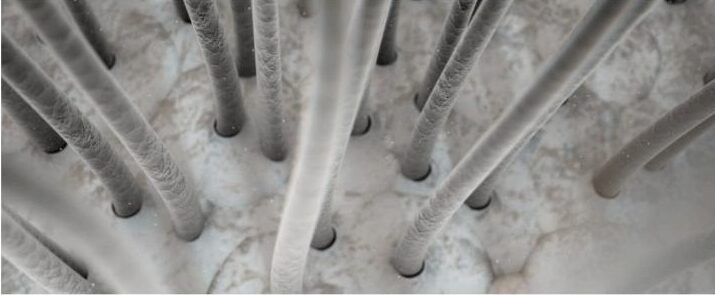
Scalp hair does not grow as individual strands. This counterintuitive truth forms the foundation of modern hair restoration science. Hair emerges from the scalp in anatomically defined clusters called follicular units, containing one to four hairs each. This is not a convenient surgical observation or a marketing phrase—it is a biological fact with profound structural implications for anyone considering hair transplantation.
Most patients researching hair restoration already understand the basics: transplants involve moving groupings of one to four hairs from donor areas to recipient sites. What is rarely explained is why these groupings exist as unified biological structures rather than convenient clusters of independent follicles that happen to grow near each other.
The core thesis of this article is straightforward yet rarely articulated: follicular unit integrity natural grouping is the single most important determinant of natural-looking hair transplant results—more important than which extraction technique (FUT or FUE) a surgeon employs. Understanding this principle empowers patients to evaluate surgical approaches based on biological evidence rather than marketing claims.
This examination provides a quantitative breakdown of what happens when follicular unit unity is violated, the anatomical evidence behind the principle, and why the FUE selection bias problem quietly undermines results even in modern clinics.
The Follicular Unit: A Brief History of a Landmark Discovery
The follicular unit was first formally described in 1984 by pathologist Dr. John Headington in his landmark paper “Transverse Microscopic Anatomy of the Human Scalp.” Headington defined the follicular unit as a distinct anatomical structure consisting of two to four terminal follicles, one to two vellus follicles, associated sebaceous lobules, and arrector pili muscle insertions—all circumscribed by a perifollicular investing stroma called the perifolliculum.
The term “follicular unit” entered hair transplant surgical literature through Drs. Robert Bernstein and William Rassman in their 1995 publication “Follicular Transplantation.” Bernstein proposed that entire surgical hair restoration should be accomplished using only follicular units—a revolutionary concept that transformed the field.
Dr. Bobby Limmer’s 1994 pioneering work with stereoscopic microscope-based dissection provided the technical breakthrough that made isolating intact follicular units from donor strips possible. This innovation became the backbone of modern Follicular Unit Transplantation (FUT).
The historical contrast is instructive. Before follicular unit transplantation, surgeons used plug grafts containing 10 to 25 hairs in arbitrary groupings, creating grafts approximately 4 mm wide—the width of a pencil eraser. Mini-micrografts followed, but graft sizes remained arbitrary and did not mimic nature. The fundamental flaw of all pre-FUT techniques was not merely graft size—it was the violation of natural grouping.
The Anatomy of Unity: What Makes a Follicular Unit a Single Structure
The central argument for preserving follicular unit integrity rests on a critical anatomical reality: the follicular unit is not a cluster of independent follicles that happen to be near each other. It is a single, integrated anatomical and physiological structure with shared components that function together.
A complete follicular unit contains terminal hair follicles, vellus follicles, sebaceous glands, arrector pili muscles, perifollicular dermis, adipose tissue, eccrine coils, and shared neural and vascular networks. Keeping the follicular unit intact during transplantation preserves all of these supporting structures simultaneously. Disrupting any one component affects the function of the whole unit.
The Shared Arrector Pili: The Muscular Proof of Unity
Within each follicular unit, the arrector pili muscles merge into a single muscular unit at the upper isthmus level, encircling the sebaceous gland and inserting into all follicles of the unit. A 2006 three-dimensional reconstruction study published in the Journal of Anatomy confirmed that a single arrector pili muscle branches in a bronchial-tree pattern to insert into all hair follicles of the follicular unit, forming one mass inside the perifolliculum.
A 2004 study in the Journal of the American Academy of Dermatology further confirmed this shared muscular architecture and its role in follicular unit integrity.
The clinical implication is significant: because the arrector pili is shared across all follicles in the unit, artificially separating follicles from different follicular units and combining them into a single graft creates a structure with no shared muscular architecture—a biological impostor that lacks the integrated function of a natural unit.
The Perifolliculum: The Anatomical Boundary That Defines the Unit
The perifolliculum, or investing stroma, is the connective tissue envelope that circumscribes each follicular unit. This is the anatomical boundary that Headington identified in 1984 as defining the follicular unit as a discrete structure.
This boundary is not arbitrary. It separates one follicular unit from its neighbors and contains the shared vascular, neural, and muscular components within a defined space. Despite being central to the original scientific definition of the follicular unit, the perifolliculum is rarely mentioned in patient education materials.
In surgical practice, the perifolliculum is the natural dissection plane that skilled technicians follow when isolating follicular units under stereomicroscopic magnification. Respecting this boundary is what makes a graft biologically complete.
Shared Sebaceous Glands and Vascular Networks: The Other Pillars of Unity
The sebaceous glands within a follicular unit serve all follicles in the unit as shared structures—not duplicated per follicle but functioning as a communal resource. The vascular network supplying the follicular unit is organized around the unit as a whole, meaning blood supply, oxygen delivery, and nutrient exchange are coordinated at the follicular unit level.
Artificially combining follicles from different follicular units into a single graft creates a structure with mismatched or redundant support systems, increasing metabolic demand and reducing survival efficiency. Damage to the perifolliculum, sebaceous glands, or arrector pili during dissection directly reduces graft viability—making anatomical integrity a survival issue, not merely an aesthetic one.
What Happens When Follicular Unit Integrity Is Violated: The Quantitative Case
Understanding why the follicular unit is a unified structure leads to the critical question: what happens when artificial dissection violates that unity?
This artificially enlarged graft requires a recipient site more than twice as large as one designed for a natural 3-hair unit, causing greater trauma to the scalp’s connective tissue and blood supply. Larger recipient sites mean more visible scarring, slower healing, disrupted blood supply to surrounding native hair, and—most critically—a graft that does not match the size or shape of surrounding natural follicular units. This produces the “pluggy” or “tufted” appearance that patients seek to avoid.
By contrast, preserving natural follicular unit groupings allows recipient sites to be kept as small as 0.6 to 1.2 mm, minimizing trauma, enabling dense packing, and facilitating rapid healing without visible marks.
The 4 mm plug grafts of the 1950s through 1970s represent the extreme version of this same violation—arbitrary groupings that produced the infamous “doll’s hair” appearance. The underlying principle remains identical whether the violation is large or subtle.
The FUE Selection Bias Problem: A Hidden Threat to Natural Grouping
A critical but underreported issue in modern hair transplantation is the FUE selection bias problem.
During FUE, surgeons and technicians tend to preferentially extract larger follicular units (3- and 4-hair units) because they yield more hair per extraction hole. This efficiency bias distorts the natural distribution of follicular unit sizes in the donor area, leaving too few single-hair and two-hair units available for the hairline.
When single-hair grafts are needed for the hairline but are unavailable due to selection bias, surgeons must artificially split multi-hair follicular units—the very artificial dissection that compromises natural appearance and violates follicular unit integrity.
Artificially split grafts are not the same as naturally occurring single-hair follicular units. They lack the complete perifollicular stroma, shared sebaceous glands, and arrector pili architecture of a true 1-hair unit.
FUT vs. FUE: Harvesting Methods Are Secondary to Grouping Integrity
Most patients and even some practitioners treat the FUT versus FUE debate as the central question of hair transplantation. In reality, it is secondary to the core principle of follicular unit integrity natural grouping.
Both FUT and FUE are harvesting methods—ways of obtaining follicular units from the donor area. The critical question is not how the follicular unit is harvested but whether it is kept intact after harvesting.
FUT offers advantages in preserving natural grouping. Strip dissection under stereomicroscopic magnification achieves transection rates of 2 to 4%, compared to 20% with loupe dissection alone, and yields a natural distribution of all follicular unit sizes.
FUE offers advantages in donor site appearance (no linear scar) while presenting distinct challenges: transection rates average 5% or higher, and the selection bias problem can compromise the natural distribution of graft sizes. “Hidden transection”—where follicles are damaged below the scalp surface without being visible in the extracted graft—represents a critical but underreported threat to follicular unit integrity.
A perfectly executed FUE procedure that preserves natural groupings will produce natural results. A poorly executed FUT procedure that violates groupings will not. The technique is the vehicle; grouping integrity is the destination.
Strategic Placement: How Natural Grouping Size Determines Hairline Design
Preserving natural follicular unit groupings extends beyond graft survival to strategic placement that mirrors how hair naturally grows across the scalp.
The natural gradient is instructive: hairline density in nature is considerably less than crown density, with many follicular units at the hairline containing only one to two hairs. This creates a soft, feathered transition that the eye reads as natural.
The placement hierarchy follows this pattern:
- 1-hair follicular units at the frontal hairline create the transitional zone (approximately ¼ inch of single-hair grafts)
- 2-hair follicular units in the transitional zone behind the hairline
- 3- and 4-hair follicular units in the mid-scalp and crown to maximize fullness
Violating this placement hierarchy with artificially dissected grafts creates an unnatural result. Placing multi-hair grafts too close to the hairline produces a “pluggy” or “tufted” appearance because it does not replicate the natural density gradient.
This strategic logic only works when surgeons have access to the full natural distribution of follicular unit sizes—reinforcing why preserving natural groupings during harvesting is essential.
Hair Transplant Specialists’ proprietary Microprecision Follicular Grafting® technique uses natural follicular groupings of one to four hairs without artificial dissection, with a transitional zone of single-hair grafts at the frontal hairline.
Ethnic and Racial Variation: Why Natural Grouping Is Not One-Size-Fits-All
Follicular unit characteristics vary significantly across ethnic and racial groups. Preserving natural groupings requires understanding these differences.
Key data points illustrate this variation:
- Caucasians have the highest density (approximately 200 hairs per cm², approximately 100,000 total follicles)
- African Americans have the lowest density (approximately 85 to 90 follicular units per cm², approximately 60,000 follicles) but the thickest individual hair shafts
- Asians have medium density (approximately 130 hairs per cm², approximately 80,000 follicles) with the largest hair shaft diameter
The natural distribution of 1-, 2-, 3-, and 4-hair follicular units varies by patient hair density and ethnicity. A surgical plan that produces natural results for a Caucasian patient may produce an unnatural result for an Asian or African American patient if the same grouping distribution is assumed.
African American hair follicles have significant curvature beneath the scalp surface, making FUE extraction more technically challenging and increasing the risk of transection—a direct threat to follicular unit integrity.
The principle of natural grouping integrity is universal, but its application must be customized to each patient’s unique follicular anatomy.
The Follicular Unit Constant: Why Follicular Unit Count Matters More Than Hair Count
The “follicular unit constant” represents an important planning principle: follicular unit density per mm² is relatively stable across patients (approximately 1 follicular unit per mm², or 65 to 85 follicular units per cm²), while the number of hairs per follicular unit drives the apparent density differences between patients.
As androgenetic alopecia progresses, the number of active follicles within each follicular unit decreases, but the total number of follicular units remains relatively stable. This means follicular unit count is a more reliable surgical planning metric than raw hair count.
On average, there are 1.8 to 2.3 hairs per follicular unit, and the distance between follicular units ranges from 1.0 mm to 1.4 mm. Understanding that follicular unit count—not hair count—is the stable planning metric helps set realistic expectations about achievable density in areas of advanced hair loss. Patients curious about how this affects their procedure can learn more about how many grafts a hair transplant requires.
Microscopic Dissection: The Technical Standard That Protects Grouping Integrity
Preserving follicular unit integrity natural grouping requires specific technical infrastructure, primarily stereomicroscopic dissection.
Transection rate data illustrates the stakes:
- Stereomicroscopic dissection in FUT: 2 to 4% transection rates
- Loupe dissection alone: 20% transection rates
- FUE procedures: 5% generally considered acceptable
A transected follicle is a damaged or severed follicle that will not grow. In the context of follicular unit integrity, transection often means the perifollicular stroma, arrector pili connections, or sebaceous gland attachments are disrupted.
Hair Transplant Specialists employs surgical technicians with 15 to 18 or more years of experience performing microscopic dissection—the level of expertise required to consistently achieve low transection rates and preserve natural groupings. This commitment to technical excellence directly supports strong hair transplant graft survival rates.
Conclusion: Natural Grouping Integrity Is the Principle Behind the Result
Follicular unit integrity natural grouping is not a technique—it is the anatomical principle that all successful hair transplantation must respect, regardless of whether FUT or FUE is used.
The follicular unit is a unified biological structure with shared arrector pili musculature, sebaceous glands, perifollicular stroma, and vascular networks. Violating this unity—whether through artificial dissection or FUE selection bias—produces grafts that are biologically incomplete and visually unnatural.
The quantitative stakes are substantial: a 3-hair graft combining two separate follicular units is 50% larger in diameter and twice the volume of a naturally occurring 3-hair follicular unit, requiring a recipient site more than twice as large. This consequence compounds across thousands of grafts in a single procedure.
The best outcomes come from surgeons and teams who understand the anatomy deeply enough to let it guide every decision: harvesting method, dissection technique, graft sizing, and strategic placement.
As hair restoration technology continues to evolve, the follicular unit—first described in 1984—remains the irreducible unit of natural hair growth. Respecting its integrity is not a trend; it is the biological foundation of every natural result.
Ready to See What Natural Grouping Integrity Looks Like in Practice?
Understanding the science behind follicular unit integrity is the first step. The next step is seeing how these principles are applied in a real consultation with experienced surgeons.
Hair Transplant Specialists’ approach aligns directly with the principles outlined in this article. Their Microprecision Follicular Grafting® technique uses natural follicular groupings without artificial dissection. Their surgical technicians bring 15 to 18 or more years of experience to every procedure, and their board-certified surgeons include Dr. Sharon Keene, former President of the International Society of Hair Restoration Surgery.
Patients considering hair restoration are invited to schedule a consultation at Hair Transplant Specialists to have their follicular unit distribution assessed and a personalized restoration plan developed.
Contact Information:
- Phone: (651) 393-5399
- Website: INeedMoreHair.com
- Location: 2121 Cliff Dr. Suite 210, Eagan, MN 55122
At Hair Transplant Specialists, the focus extends beyond the procedure itself—it encompasses each patient’s journey toward restored confidence and natural-looking results.