Follicular Unit Extraction Technique Explained: Precision Engineering for Natural Hair Growth
Introduction
Follicular Unit Extraction represents far more than a medical procedure—it stands as a discipline of precision engineering where millimeter-level decisions determine whether patients achieve natural, lasting results or face disappointing outcomes. The terminology itself has evolved to reflect this reality: the medical community now officially uses “follicular unit excision” rather than “extraction” to accurately convey the surgical skill and technical mastery required.
This shift in nomenclature underscores a fundamental truth about modern hair restoration. Every successful FUE procedure depends on the surgeon’s command of biomechanical principles, instrument specifications, and tissue handling protocols that collectively separate elite outcomes from average results.
Modern FUE has become the predominant hair transplant method globally, having surpassed traditional strip methods in popularity. This dominance reflects patient preference for minimally invasive approaches that leave no linear scarring and allow for shorter hairstyles post-procedure. However, the technique’s widespread adoption has also revealed significant variance in outcomes—a variance directly attributable to the precision variables explored throughout this article.
Understanding these technical specifications empowers patients to evaluate providers meaningfully and appreciate how meticulous attention to every procedural detail translates into natural-looking hair growth.
The Biomechanical Science Behind FUE Extraction
The foundation of successful FUE lies in understanding the three-dimensional anatomy of hair follicles and the tissue mechanics that govern their extraction. According to research published by the National Institutes of Health, FUE extraction depends on a critical principle: the arrector pili muscle attachment represents the tightest zone binding the follicular unit to surrounding tissue.
This small muscle, responsible for creating goosebumps, anchors to the follicle at a specific depth. Once the surgeon successfully separates this attachment point, the follicular unit can be extracted intact. Failure to properly address this zone results in transection—cutting through the follicle and destroying its viability.
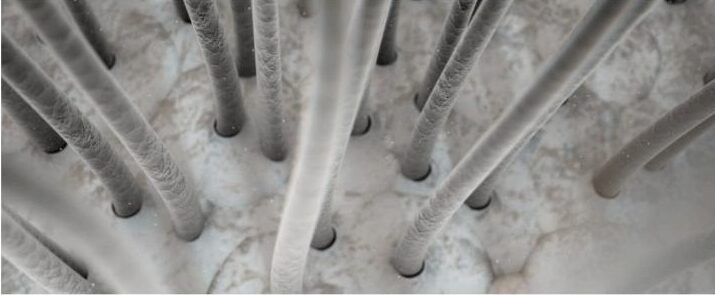
Follicular units exist as natural groupings containing one to four individual hairs, each with its own sebaceous gland and surrounding connective tissue. These groupings are not arbitrary; they represent the scalp’s natural architecture. Preserving these intact units during extraction is essential for achieving results that mirror natural hair growth patterns.
The biomechanical challenge intensifies when considering that follicles do not grow perpendicular to the scalp surface. They emerge at varying angles, curve beneath the skin, and change direction at different depths. Surgeons must anticipate and follow these trajectories to extract complete, undamaged grafts.
Precision Instrumentation: The Critical Relationship Between Follicular Unit Diameter and Punch Sizing
The relationship between natural follicular unit dimensions and surgical punch selection represents one of FUE’s most critical precision variables. Research indicates that single-hair follicular units measure approximately 0.42mm in diameter, while double-hair units reach approximately 0.82mm. This natural variation demands thoughtful instrument selection.
Modern FUE employs micro-punches ranging from 0.6mm to 1.2mm in diameter, with 0.8-0.9mm representing the most commonly used sizes in 2026. The International Society of Hair Restoration Surgery notes that punch sizes spanning 0.7 to 1.2mm are used to harvest follicular units, with success depending heavily on surgeon mastery and experience.
Selecting the optimal punch size requires balancing competing considerations. Punches too small relative to the follicular unit risk transecting the graft during extraction. Punches too large remove excessive surrounding tissue, creating larger wounds that heal more slowly and potentially leave visible scarring.
Punch Design Innovations
Beyond diameter, punch configuration significantly affects clinical outcomes. Sharp punches cut cleanly through tissue but require precise depth control to avoid damaging follicles. Blunt punches separate tissue through spreading action, reducing transection risk but demanding different handling techniques.
Serrated punch designs combine cutting and spreading actions, while newer A-design configurations aim to minimize tissue trauma while maintaining extraction efficiency. Research comparing these designs demonstrates varying wound sizes and healing patterns, even when using identical cutting edge dimensions.
The choice between manual and motorized punch systems adds another variable. Motorized devices can reduce operative time by up to 30% and provide consistent rotational speed, but manual techniques offer surgeons tactile feedback that some practitioners consider essential for following curved follicle trajectories.
Transection Rates: The Benchmark That Separates Elite Surgeons from Average Clinics
Transection rate—the percentage of follicles damaged during extraction—serves as perhaps the most telling metric of surgical precision. When a follicle is transected, it cannot produce hair. High transection rates directly diminish final density and waste precious donor resources.
Elite surgeons achieve transection rates of 3% or lower, which is considered good to excellent. Transection rates above 5% are considered poor. This difference translates directly to patient outcomes. A procedure harvesting 2,000 grafts with a 3% transection rate delivers approximately 1,940 viable grafts. The same procedure with a 5% rate yields 1,900 viable grafts, while a 10% rate produces only 1,800 viable grafts—differences that significantly impact final coverage.
Surgical Skill Variables in Extraction Precision
Multiple technical factors contribute to transection rates. Extraction angle must align with the follicle’s exit trajectory from the scalp, which varies across different scalp regions. Depth control requires surgeons to penetrate precisely to the level of the arrector pili attachment without going deeper and risking damage to the follicle bulb.
Motion technique—whether using rotation, oscillation, or hybrid movements—affects how the punch interacts with surrounding tissue. Each approach has proponents, and surgeon experience with their chosen technique matters more than the specific method selected.
Robotic FUE systems, such as ARTAS, have shown variable transection rates in studies, with averages ranging from 4.4% to 10%. However, the technology represents a tool rather than a replacement for surgical judgment, and outcomes still depend on proper patient selection and treatment planning.
Graft Handling Protocols: Maximizing the 90-95% Survival Window
Once extracted, follicular units face a survival window that demands meticulous handling. FUE graft survival rates typically range from 90-95% when performed by skilled surgeons using modern techniques. The difference between these outcomes often comes down to graft handling protocols.
Research demonstrates that graft viability decreases approximately 1% per hour outside the body. This finding establishes a clear imperative: minimize out-of-body time. Elite practices target keeping grafts outside the body for under two hours, requiring precise coordination between extraction and implantation teams.
Temperature and Environment Control
Holding solution chemistry plays a critical role in maintaining follicle viability. These solutions provide hydration, nutrients, and protection from oxidative stress during the vulnerable period between extraction and implantation. Temperature management keeps grafts cool without freezing, typically maintaining solutions between 4-8 degrees Celsius.
The surgical suite environment itself requires control. Proper humidity levels prevent graft desiccation, while air handling systems minimize contamination risk. Graft inspection and sorting procedures identify damaged units before implantation, ensuring only viable follicles are placed.
Patient Selection and Donor Zone Assessment
Not every patient presents as an ideal FUE candidate, and proper assessment prevents disappointing outcomes. The safe donor zone—located in the mid-occipital region at the back of the head—typically contains 65 to 85 follicular units per square centimeter. According to NCBI research, donor areas with over 80 follicular units per square centimeter represent excellent candidates.
The FOX test grading system (scaled 1-5) helps surgeons evaluate how easily follicles extract from a patient’s scalp. This assessment considers skin laxity, follicle anchoring strength, and tissue characteristics that affect extraction difficulty. Patients with challenging scores may require modified techniques or alternative approaches.
Hair characteristics including curl pattern, shaft diameter, and follicle depth all influence technique customization. Surgeons must adapt punch selection, extraction angles, and handling protocols to each patient’s unique anatomy.
The Hair Transplant Specialists Advantage: Precision Variables in Practice
At Hair Transplant Specialists, the technical principles discussed throughout this article translate into consistent, natural results through a team with over 100 combined years of experience. The practice’s surgical technicians bring 15-18+ years of individual experience—expertise that directly contributes to achieving low transection rates and optimal graft survival.
The proprietary Microprecision Follicular Grafting® technique represents the practice’s commitment to precision at every procedural stage. This approach integrates the biomechanical principles, instrument selection protocols, and graft handling standards that determine outcome quality.
Dr. Sharon Keene, former President of the International Society of Hair Restoration Surgery, has contributed research specifically addressing FUE techniques and safe excision limits. This research background informs the practice’s protocols and reflects a commitment to advancing the field while delivering optimal patient outcomes.
Natural Hairline Design Through Precision Graft Placement
The practice emphasizes that “naturalness is key” in hair restoration. This philosophy manifests in hairline design featuring transitional zones with single-hair grafts placed in the front quarter-inch, followed by progressively larger follicular units moving posteriorly. This approach mimics natural hairline architecture and avoids the “pluggy” or “clumpy” appearance associated with outdated techniques.
Proper graft selection—utilizing natural follicular groupings of one to four hairs without artificial dissection—ensures that transplanted hair grows in patterns indistinguishable from native hair.
Recovery and Results: The Outcome of Precision Engineering
When FUE is performed with proper attention to all precision variables, recovery proceeds smoothly. Most patients experience visible signs of the procedure for up to 10 days, with typical recovery spanning 3-7 days before resuming normal activities.
Hair growth initiation occurs at 3-4 months post-procedure, with full results visible at 9-12 months. The absence of linear scarring allows patients to wear hair as short as desired—a significant advantage over strip methods.
The practice recommends a minimum 8-month waiting period between procedures to allow accurate assessment of growth and precise planning for any additional sessions. This patience ensures optimal placement and prevents over-harvesting of the donor zone.
Conclusion
Follicular Unit Extraction represents precision engineering in its purest medical form. Success depends on mastery of interconnected technical variables: biomechanical principles governing follicle anatomy, punch sizing matched to follicular unit dimensions, transection rate control through surgical skill, and graft handling protocols that maximize the 90-95% survival window.
Natural results stem not from following procedural steps, but from technical mastery applied consistently across thousands of individual graft extractions and placements. The variance in outcomes between providers reflects this reality—the same technique yields dramatically different results depending on the precision brought to each variable.
Understanding these specifications empowers patients to evaluate providers meaningfully and recognize that choosing a skilled surgical team represents the single most important decision in their hair restoration journey.
Take the Next Step Toward Natural Hair Restoration
Hair Transplant Specialists combines technical expertise with patient-centered care at their state-of-the-art facility in Eagan, Minnesota. With board-certified surgeons and surgical technicians representing some of the most experienced professionals in the field, patients receive the precision engineering approach that delivers natural, lasting results.
The practice offers transparent, all-inclusive pricing with flexible financing options starting at $150 per month. To discuss individual candidacy and explore a customized treatment approach, patients may contact Hair Transplant Specialists at (651) 393-5399 or visit INeedMoreHair.com to schedule a consultation.
Office hours are Monday through Thursday from 9:00 AM to 5:00 PM, Friday from 9:00 AM to 3:00 PM, with weekend appointments available by arrangement.