Hair Transplant Temples Recession Treatment: The 10-15° Angle Precision Protocol
Temple recession represents more than a cosmetic concern—it signals the beginning of a complex biological process that affects over 40% of men between ages 18-49. The temples house hair follicles containing 1.5 times more androgen receptors than the occipital region, making them exceptionally sensitive to dihydrotestosterone (DHT) and often the first visible casualty of male pattern baldness.
Yet while temple recession is common, successful temple restoration remains one of the most technically demanding procedures in hair transplantation. The critical challenge lies not in the number of grafts transplanted, but in the precision of their placement. When surgeons fail to master the 10-15 degree backward angle protocol, the results immediately betray their unnatural origin—forward-pointing or perpendicular hair that signals poor surgical execution from across a room.
This article examines the technical precision required for natural temple restoration, the distinction between normal mature recession and pathological hair loss requiring treatment, and the criteria for evaluating surgeons who possess the specialized expertise this challenging procedure demands.
Why Temple Hair Transplants Are the Most Technically Demanding Procedure
The biological architecture of temple hair creates unique surgical challenges that many practitioners prefer to avoid entirely. Temple follicles contain significantly higher concentrations of androgen receptors compared to donor areas, explaining why this region succumbs first to hormonal hair loss while the back of the head remains resistant.
Beyond receptor sensitivity, temple skin presents distinct anatomical challenges. This region features thinner tissue than other scalp areas, requiring specialized expertise to prevent complications and ensure proper healing. The delicate vascular network in this zone means that periorbital edema and ecchymosis occur in 30-40% of temple transplant cases, typically manifesting 3-5 days post-operatively despite glucocorticosteroid prophylaxis.
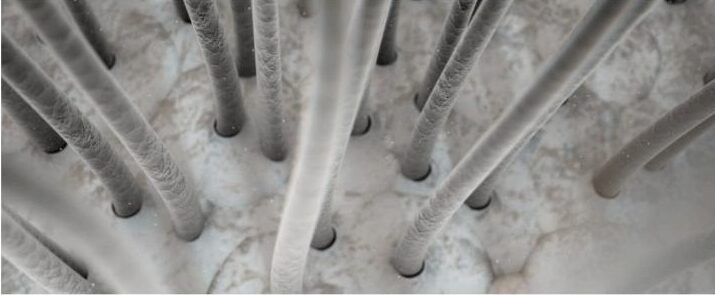
The defining technical challenge involves replicating natural growth patterns. Temple hair grows at extremely acute angles—10-15 degrees—sweeping backward and downward toward the temporal region. This differs dramatically from frontal hairline angles, where hair emerges at higher degrees. Replicating this acute angulation requires specialized instrumentation, extensive experience, and an understanding of three-dimensional hair architecture that many surgeons never develop.
Mistakes in temple work carry disproportionate consequences. Unlike crown or mid-scalp procedures where errors can blend into surrounding density, temple work sits at the facial frame’s edge where every graft remains visible. Forward-pointing or perpendicular growth patterns immediately signal artificial intervention, creating an appearance that no styling technique can adequately camouflage.
The 10-15 Degree Angle Precision Protocol: What Makes Temple Restoration Different
The 10-15 degree backward angle requirement represents the technical foundation separating natural temple restoration from obvious transplant work. This acute angulation creates the characteristic posterior sweep where hair flows backward toward the temporal region rather than projecting forward or standing perpendicular to the scalp surface.
Achieving this angle demands specialized recipient site creation. Standard hairline instruments designed for higher degree angles cannot produce the acute channels required for temple work. Surgeons must employ modified techniques and often custom instrumentation to create recipient sites that guide follicular units into their proper orientation.
Graft selection proves equally critical. Only single follicular units are acceptable for temple points—multi-hair grafts create unnatural density and harsh demarcation lines that immediately betray surgical intervention. The natural temple point features wispy, fine hairs that gradually transition to denser growth patterns. Attempting to replicate this with two or three-hair grafts produces the “pluggy” appearance that characterized earlier transplant techniques.
Density planning for temples requires restraint rather than aggression. While frontal hairlines may accommodate higher densities, temples demand only 30-40 grafts per square centimeter to maintain natural softness. Overbuilding temple density creates a feminized appearance in men, eliminating the natural recession that defines mature masculine hairlines.
The layering technique essential for natural results involves creating transitional zones that gradually progress from single hairs at the temple point to natural follicular groupings further back. This mimics the biological gradient present in unaffected hairlines and prevents the harsh lines that characterize poorly executed work.
Natural Mature Recession vs. Pathological Recession: Understanding What Should Be Treated
Not all temple recession requires treatment. The distinction between natural mature hairlines and pathological recession determines both candidacy and design goals for temple restoration.
A natural mature hairline typically sits 1-2 centimeters higher than the juvenile hairline position most men display in adolescence. This recession represents normal adult development rather than disease progression. Attempting to restore a juvenile hairline in an adult male creates an incongruous, feminized appearance that ages poorly and signals obvious surgical intervention.
Pathological recession, by contrast, progresses beyond normal maturation into patterns classified by the Norwood Scale. Most temple restoration candidates present at Stage 2-3V, where recession has advanced beyond natural maturation but hasn’t progressed to extensive loss. Identifying this distinction requires experience and honest assessment rather than willingness to perform any procedure a patient requests.
Age and stability present additional considerations. Young patients in their early twenties often experience active recession that hasn’t yet stabilized. Performing temple transplants during this phase creates the “chasing effect”—transplanted hair remains permanent while surrounding native hair continues receding, leaving isolated islands of transplanted hair surrounded by progressive loss. This necessitates multiple revision procedures and often produces results worse than the original condition.
Proper candidacy assessment involves documenting stable hair loss patterns over 12-18 months, establishing realistic expectations for age-appropriate design, and ensuring patients understand that surgery addresses current loss but doesn’t prevent future progression.
How to Evaluate a Surgeon’s Temple-Specific Portfolio
Evaluating surgical expertise for temple work requires focused inquiry that goes beyond general before-and-after galleries. The primary criterion involves requesting photographs specifically demonstrating temple point restoration rather than general hairline cases.
When reviewing temple-specific portfolios, patients should examine several critical elements. Natural backward hair flow should be evident even in photographs—hair should sweep toward the temporal region rather than projecting forward or standing upright. Temple points should appear soft with visible single-hair transitions at the anterior edge. Close-up photographs should demonstrate acute angles consistent with natural growth patterns.
Red flags indicating inadequate technique include forward-pointing temple hair, perpendicular growth patterns creating a “wall” effect, harsh demarcation lines between transplanted and native hair, and excessive density creating an unnaturally “filled-in” appearance. Any of these findings suggest the surgeon lacks specialized temple expertise.
Direct questions reveal technical understanding. Asking surgeons to explain their approach to 10-15 degree angle placement and why it matters distinguishes practitioners who genuinely understand temple architecture from those performing generic graft placement. Surgeons should discuss facial proportions, age-appropriate design considerations, and the distinction between mature and juvenile hairline positioning without prompting.
Warning signs that a surgeon may avoid difficult temple work include emphasis solely on graft numbers, absence of temple-specific examples in their portfolio, and reluctance to discuss angle precision or growth direction. These indicators suggest the practice may lack the specialized expertise temple restoration demands.
Temple Hair Transplant Procedure: Technical Requirements and Expectations
Temple restoration typically requires 200-500 grafts per temple point for early recession classified as Norwood Stage 2, with more extensive work requiring 800-1,200 total grafts. These numbers vary based on individual anatomy, degree of recession, and design goals established during consultation.
Follicular Unit Extraction (FUE) offers particular advantages for temple work. The technique permits extraction of individual follicular units without linear scarring, allows precise donor selection to match temple hair characteristics, and provides flexibility in graft placement that strip harvesting cannot match. Direct Hair Implantation (DHI) techniques achieve 90-97% survival rates by reducing the time grafts spend outside the body, minimizing dehydration that compromises delicate single-hair grafts essential for temple points.
Procedure duration for temple-focused work typically spans 3-4 hours, performed while patients remain awake under local anesthesia. Modern facilities offer amenities including entertainment systems and comfort services that make extended procedures manageable.
When scalp donor supply proves limited, alternative sources may supplement temple restoration. Nape hair often creates softer temple points than standard donor hair, while beard hair may serve specific purposes in experienced hands. These decisions require careful assessment of hair characteristics and realistic discussion of expected outcomes.
Recovery follows predictable patterns: visible signs persist for 7-10 days, transplanted hair typically sheds within 2-4 weeks before entering growth phase, new growth becomes visible at 3-4 months, and full results mature at 9-12 months. Patients should expect 85-95% graft survival with proper technique, though recent research indicates 91% of patients show some density reduction within 4 years due to recipient site influence on transplanted follicles.
Non-Surgical Alternatives: When to Try Medical Treatment First
Medical therapy should precede surgical intervention for early-stage temple recession. Finasteride reduces scalp DHT by 64%, directly addressing the hormonal mechanism driving temple hair loss. This medication demonstrates improvement in approximately 86% of patients and stabilization in approximately 98% of patients after five years of consistent use, making it the foundation of non-surgical management.
Minoxidil proves moderately to very effective in 84% of male pattern baldness cases, with particular efficacy for early temple recession where follicles retain capacity for stimulation. Combination therapy pairing Finasteride with Minoxidil provides synergistic benefits exceeding either medication alone.
Adjunct treatments including Low-Level Light Therapy (LLLT) and Platelet-Rich Plasma (PRP) therapy support both native hair retention and transplanted hair survival. These modalities work best as components of comprehensive treatment plans rather than standalone solutions.
Medical treatment trials should extend 6-12 months minimum before considering surgical options. This timeline allows adequate assessment of medication response and helps stabilize active recession that would compromise surgical outcomes. Patients must understand that surgery doesn’t halt progression—medical therapy typically continues post-transplant to protect remaining native hair from ongoing loss.
Cost Considerations and Value of Technical Expertise
Temple restoration costs reflect the specialized expertise required rather than simple graft mathematics. United States pricing ranges from $6,000-$12,000 for procedures involving 800-1,200 grafts, while United Kingdom costs typically fall between £3,000-£4,500. International destinations offer lower pricing, though significant quality variations exist.
Temple work commands premium pricing because it demands exceptional precision, artistic judgment, and specialized skills many surgeons never develop. The acute angles, single-hair graft requirements, and high visibility of results mean that only practitioners with extensive temple-specific experience consistently produce natural outcomes.
The cost of correction procedures illustrates the value of initial expertise. Fixing poorly executed temple work often costs two to three times the original procedure due to scar tissue, depleted donor supply, and the complexity of revising established growth patterns. Patients who prioritize initial savings frequently spend more over time while enduring years of unnatural appearance.
Financing options make quality temple restoration accessible. Many established practices offer payment plans, with monthly payments starting around $150 for qualified patients. This approach allows patients to prioritize expertise over immediate cost savings.
Long-Term Outcomes and Maintenance Considerations
Realistic expectations for temple restoration longevity require understanding both successes and limitations. Properly transplanted temple hair lasts 10-20 years, though research demonstrates that 91% of patients experience some density reduction within four years. This finding challenges traditional donor dominance theory, suggesting recipient site characteristics influence transplanted hair behavior more than previously believed.
Maintenance requirements extend beyond the procedure itself. Continued medical therapy protects surrounding native hair from progressive recession that would isolate transplanted grafts. Annual follow-up appointments allow monitoring of both transplanted hair retention and native hair progression.
Touch-up procedures become necessary for many patients after 4-5 years to maintain optimal density. A minimum 8-month waiting period between procedures ensures accurate assessment of existing graft survival before additional placement. Patients undergoing temple restoration in their twenties should anticipate multiple procedures over their lifetime as their pattern continues evolving.
Conclusion
Temple hair transplant success depends primarily on surgical precision—specifically the 10-15 degree backward angle protocol that replicates natural growth patterns. While many clinics emphasize graft numbers as their primary metric, angle precision determines whether results appear natural or immediately signal surgical intervention.
The technical difficulty of temple work means many surgeons avoid it entirely, making temple-specific expertise a primary criterion for surgeon selection. Evaluating dedicated temple portfolios, understanding the distinction between natural mature recession and pathological loss, and recognizing age-appropriate design principles transforms patients into informed participants in their restoration journey.
Proper temple restoration requires both technical expertise and artistic sensibility. Investing in surgeon expertise prevents a lifetime of unnatural appearance and costly correction procedures, making initial quality the most economical long-term choice.
Take the Next Step Toward Natural Temple Restoration
Hair Transplant Specialists brings board-certified surgeons with over 100 combined years of experience to the precise challenge of temple restoration. The proprietary Microprecision Follicular Grafting® technique specifically addresses natural angle precision and single follicular unit placement essential for temple work.
Dr. Sharon Keene, former President of the International Society of Hair Restoration Surgery, leads a team recognized internationally for technical excellence in hair restoration. Surgical technicians with 15-18 years of specialized experience execute the precise angle placement that natural temple restoration demands.
Prospective patients are invited to schedule consultations to review temple-specific portfolios and discuss age-appropriate restoration design tailored to individual facial proportions and goals. Contact Hair Transplant Specialists at (651) 393-5399 to begin the conversation, or visit the Eagan, Minnesota facility where two state-of-the-art surgical suites support comprehensive hair restoration services.
Flexible financing options starting at $150 monthly make expert temple restoration accessible, while transparent all-inclusive pricing eliminates hidden costs. Visit INeedMoreHair.com to view temple restoration results and schedule a personalized consultation with surgeons who understand that natural appearance—not graft volume—defines successful temple restoration.