Pluggy Hair Transplant Repair: The 3-Phase Correction Protocol for a Natural Hairline
Introduction: When Your Hair Transplant Becomes the Problem
For thousands of patients, the decision to undergo a hair transplant represented hope, investment, and trust in a surgeon’s expertise. When that procedure results in an unnatural, “pluggy” appearance, the emotional devastation is profound. Instead of restored confidence, these patients find themselves living with a visible surgical failure that draws attention for all the wrong reasons.
The misconception that pluggy hair transplants are relics of the 1980s no longer holds true. According to the ISHRS 2025 Practice Census, repair cases rose to 6.9% of all hair transplants in 2024, up from 5.4% in 2021. This increase is directly tied to a surge in unqualified modern operators and black market clinics performing substandard procedures.
This article presents a concrete three-phase corrective framework that qualified repair specialists use to transform pluggy results into natural hairlines. The protocol encompasses assessment and donor inventory, graft recycling and extraction, and precision re-implantation using the three-zone density ramp. Understanding this process is essential because, for many patients, this represents a one-chance correction due to finite donor supply.
The stakes extend beyond aesthetics. Repair surgery requires protecting an irreplaceable biological resource while addressing the emotional cost, financial reality, and clinical complexity of correcting another surgeon’s mistakes.
What Makes a Hair Transplant Look ‘Pluggy’
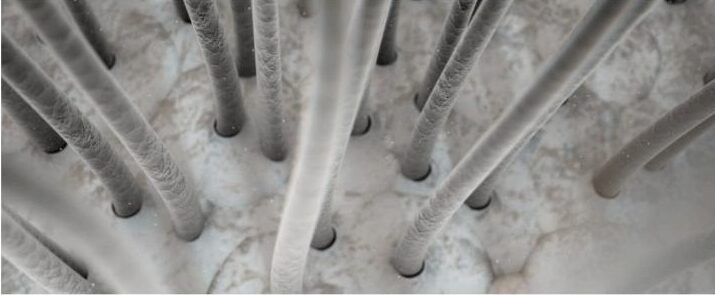
A pluggy appearance manifests as unnatural density clustering, abrupt hairline edges, lack of soft gradation, hair growing in wrong directions, and in severe cases, a cobblestoned scalp texture. For patients unfamiliar with the technical aspects, the result simply looks artificial and immediately identifiable as surgical.
The historical origin traces to the 1960s through 1980s, when surgeons used large circular punches of 4 to 10mm to harvest grafts containing 10 to 20 hairs each. This created the classic “doll’s hair” or “corn row” appearance that became synonymous with obvious transplants.
However, the modern problem differs significantly. Today’s pluggy results stem from unqualified operators, high-volume overseas clinics, and black market procedures rather than outdated techniques alone. The ISHRS 2025 data reveals that 59% of ISHRS members reported black market clinics operating in their cities in 2025, and 10% of all repair cases now link to black market procedures, up from 6% in 2021.
Wrong angulation and curvature of transplanted grafts represent a common cause of unnatural results even in modern FUE procedures. Technical precision, not just graft size, determines whether a result appears natural or artificial.
The timing compounds patient distress. The pluggy look typically becomes fully apparent around 12 months post-surgery, meaning patients may not realize their outcome is problematic until nearly a year after their procedure. Additionally, a hairline designed for a 25-year-old may look increasingly unnatural at 45, creating a problem that worsens over time.
The Hidden Toll: Living With a Visible Transplant Failure
The psychological dimension of pluggy results demands direct acknowledgment. A 2025 peer-reviewed narrative review in the Journal of Cosmetic Dermatology confirms that hair loss is associated with significant psychological distress including depression, anxiety, and social withdrawal.
For patients with botched transplants, this burden compounds. They experience not only the original hair loss anxiety but also the additional distress of a visible surgical failure that may attract unwanted attention. The shame of a bad result often prevents patients from seeking correction, trapping them in prolonged suffering.
The ISHRS 2025 Practice Census indicates that 95% of first-time hair restoration patients in 2024 were between ages 20 and 35. This means many patients with pluggy results from procedures performed between 2015 and 2022 are still relatively young and highly motivated to correct their outcomes.
The encouraging counterpoint emerges from the same 2025 review, which found that over 95% of hair transplant patients experience measurable emotional benefit post-procedure when expectations are well managed. Specifically, 55.7% report a “highly positive” impact on social confidence, and 39.5% report a “positive” impact.
Successful repair surgery therefore represents not just a cosmetic fix but a restoration of confidence and quality of life. The decision to seek repair requires courage, as patients must revisit a painful experience. Understanding the corrective process reduces fear and empowers better decisions.
The Financial Reality of Pluggy Hair Transplant Repair
Transparency about costs serves patients better than vague reassurances. Revision hair transplants command a 30 to 60% cost premium over standard procedures, averaging $6.50 per graft. Specialist revision surgeons may charge $8 to $10 per graft due to the corrective nature of the work.
For context, standard hair transplants in the US range from $8,000 to $15,000 or more. Repair procedures typically exceed these figures due to added complexity, staging requirements, and depleted donor management.
The cost premium reflects genuine clinical challenges. Existing scarring, depleted donor supply, the need for multi-stage planning, and the higher skill level required all contribute to increased expense. Some repair cases require multiple staged procedures, further increasing the financial commitment.
The irony proves instructive. Patients who sought cheap initial procedures to save money frequently face far more expensive corrections, making the total cost of a botched transplant significantly higher than a quality first procedure would have been.
Financing options exist to make corrective care accessible. Hair Transplant Specialists offers procedures for as little as $150 per month, with flexible payment plans designed to reduce financial barriers to quality repair work.
Why Repair Surgery Is a One-Chance Decision: The Donor Depletion Risk
Each person possesses a limited lifetime supply of approximately 6,000 transplantable grafts from the scalp donor zone. This biological reality shapes every aspect of repair planning.
A botched first procedure can permanently deplete donor resources through overharvesting, poor extraction technique, or damage to surrounding follicles. Repair surgery itself consumes additional donor grafts, meaning every corrective procedure further reduces what remains for future restoration.
When scalp donor supply has been depleted, beard and body hair can serve as supplemental donor sources. While these alternatives offer important options, they present limitations in texture, caliber, and yield compared to scalp hair.
The one-chance nature of repair cannot be overstated. Choosing the wrong repair surgeon can exhaust remaining donor supply without achieving a satisfactory result, leaving the patient with no further options. In cities like Istanbul, over 1,000 hair transplant clinics operate, but only 20 to 30 qualified hair surgeons practice there. This quality gap illustrates why the three-phase protocol and surgeon expertise matter profoundly.
The 3-Phase Correction Protocol for a Natural Hairline
Qualified repair specialists follow a structured, methodical process rather than a single procedure. This clinical roadmap requires careful planning, staged execution, and biological support to transform pluggy results into natural hairlines.
Phase 1: Assessment and Donor Inventory
The first phase is entirely diagnostic. No grafts are moved until a comprehensive picture of the patient’s current state is established.
Key assessment components include photographic analysis of the existing hairline, scalp examination for cobblestoning or scarring, and microscopic evaluation of existing graft placement, angle, and direction.
Donor inventory represents a critical step. Surgeons map the remaining scalp donor zone, assess density and quality, and determine how many viable grafts remain for redistribution or new placement. Evaluation of beard and body hair as potential supplemental donor sources occurs when scalp supply appears limited.
Leading clinics utilize AI-assisted planning tools and density mapping to optimize graft allocation across correction zones. This technology helps surgeons determine which existing grafts can be recycled versus which must be removed entirely.
Hairline design mistakes account for approximately 20% of all corrective surgeries. Redesigning the hairline to be both natural and age-appropriate emerges as a key output of this assessment phase. Hair Transplant Specialists requires a minimum 8-month waiting period between procedures to allow accurate assessment of prior results before planning correction.
Phase 2: Graft Recycling and Extraction
Graft recycling represents one of the most technically impressive aspects of modern repair. Large old plugs are carefully extracted using precision FUE instruments, then micro-dissected under magnification into individual follicular units that can be re-implanted at correct angles, spacing, and direction.
Two concurrent repair strategies may be employed depending on the case. The first involves thinning over-dense plugs by removing excess follicles. The second involves transplanting refined follicular units into surrounding bare areas to create natural groupings.
Electrolysis serves as a supplementary removal method for offending multi-hair grafts that cannot be safely extracted surgically. This combination approach provides flexibility in addressing various types of pluggy results.
Sapphire FUE has emerged as a preferred instrument for delicate corrective extraction. According to research published in BMC Surgery in 2024, Sapphire FUE improves graft survival by 10 to 15% and reduces postoperative inflammation by approximately 30% versus standard FUE.
Extracting grafts from previously operated scalp tissue presents technical challenges. Scarring, altered vascularity, and irregular follicle angles all complicate the process, which explains why repair requires a higher skill level than primary procedures.
Phase 3: Precision Re-Implantation Using the Three-Zone Density Ramp
The three-zone density ramp serves as the architectural framework separating natural hairlines from unnatural ones.
Zone 1 encompasses the front 0.5 to 1cm. This area receives exclusively single-hair follicular units placed with intentional micro-irregularity to mimic the soft, feathered leading edge of a natural hairline. No straight lines or uniform spacing appear in this zone.
Zone 2 functions as the transition zone. Two-hair follicular units are placed with gradually increasing density, creating the visual bridge between the delicate front edge and the fuller body of the hairline.
Zone 3 constitutes the body of the hairline. Three to four hair follicular units provide coverage and density, delivering the visual mass that makes the hairline look full and healthy from a normal viewing distance.
Natural hairlines are never perfectly uniform. Intentional variation in graft placement, spacing, and angle creates the illusion of naturally growing hair. This principle of macro and micro irregularity distinguishes expert repair work from mediocre results.
Correct angulation and curvature remain critical technical factors. Grafts must be placed at the correct angle relative to the scalp surface and in the correct direction of natural hair growth to avoid the stiff, upright appearance common in pluggy results.
The hybrid protocol provides biological support for re-implantation. Combining surgical precision with PRP, exosome therapy, and LLLT has become the dominant treatment philosophy in 2025 and 2026. Modern top clinics achieve 95 to 98% graft survival rates using these advanced techniques, compared to the industry average of 85 to 95%.
What to Expect During Recovery and the Timeline to Results
Visible signs of the procedure typically last up to 10 days, with most patients resuming normal activities within a few days. The transplanted hair will shed in the weeks following the procedure. This shedding is normal and expected, not a sign of failure.
Hair growth begins at 3 to 4 months post-procedure, with full results visible at 9 to 12 months. Repair results may take longer to fully evaluate than primary procedures due to the complexity of corrective work and the need for surrounding tissue to settle.
Ongoing non-surgical support plays an important role in maintaining and maximizing results. Options include finasteride, minoxidil, LLLT, Alma TED, and PRP therapy. Complex repair cases may require more than one surgical session, with minimum waiting periods between stages to allow accurate assessment.
Post-procedure follow-up appointments remain essential for monitoring graft survival, healing, and overall progress toward the desired outcome.
Choosing the Right Repair Surgeon: What Qualifications Actually Matter
Given donor depletion risk, the choice of repair surgeon is arguably more consequential than the choice of primary surgeon.
Key qualifications include board certification, membership in the ISHRS, demonstrated experience specifically with repair and corrective cases, and a portfolio of before-and-after results from repair patients. Repair requires a different and higher skill set than primary procedures due to existing scarring, depleted donor supply, recycled graft handling, and the need for artistic redesign.
Approximately 25 to 40% of patients at leading repair-specialist practices seek corrective work, indicating that true repair specialists exist and can be identified.
Red flags include clinics that downplay the complexity of repair, promise complete correction in a single session without thorough assessment, or offer unusually low pricing for corrective work. Patients considering hair transplant overseas should be especially cautious about the quality gap between high-volume clinics and qualified surgeons.
Hair Transplant Specialists brings exceptional credentials to repair cases. Their team includes board-certified surgeons such as Dr. Sharon Keene, former ISHRS President from 2014 to 2015, along with Dr. Roy Stoller and Dr. Paul Rose. The team combines over 100 years of practice experience, with surgical technicians averaging 15 to 18 years of specialized expertise.
The practice’s proprietary Microprecision Follicular Grafting® technique emphasizes natural hairline design with transitional zones, directly aligned with the three-zone density ramp protocol. Two state-of-the-art surgical suites, advanced non-surgical adjunct therapies, and a patient-centered care philosophy complete the comprehensive approach.
Conclusion: From Regret to Restoration
Pluggy hair transplant results represent a growing modern problem, not just a historical artifact. The three-phase framework of assessment and donor inventory, graft recycling and extraction, and precision re-implantation using the three-zone density ramp offers a proven path to correction when executed by qualified specialists.
Successful repair surgery restores not just the appearance of a natural hairline but the confidence and quality of life that a visible transplant failure erodes. While financial and biological stakes require careful surgeon selection, the outcome proves worthwhile for most patients.
The same peer-reviewed research documenting the psychological distress of hair loss confirms that over 95% of patients experience measurable emotional benefit from successful hair restoration, including corrective procedures.
Ready to Correct Your Hair Transplant Result? Start With a Consultation
Patients living with pluggy, unnatural, or disappointing hair transplant results deserve a thorough, honest assessment from a qualified repair specialist.
Hair Transplant Specialists at INeedMoreHair.com provides board-certified surgeons with deep expertise in natural hairline design, corrective FUE, and the full spectrum of surgical and non-surgical repair support. The consultation offers a no-pressure, information-first step where patients receive an honest evaluation of their donor inventory, a realistic picture of what correction can achieve, and a clear understanding of the process and timeline.
Contact Hair Transplant Specialists at (651) 393-5399 or visit INeedMoreHair.com. The Eagan, Minnesota office serves patients throughout the region, with additional availability on Long Island through Dr. Roy Stoller.
Financing options make corrective care accessible, with procedures available for as little as $150 per month. At Hair Transplant Specialists, the focus extends beyond the procedure itself to the patient’s full journey, including getting the result right.