Hair Transplant Scabbing Removal Timeline: The 5-Phase Biology-to-Washday Protocol That Ends Graft Panic
Introduction: Why Scabbing Sends Patients Into Panic, and Why It Shouldn’t
The morning after a hair transplant, patients often wake to find reddish-brown crusts forming around each graft site. Alarm sets in almost immediately. This universal patient experience triggers anxiety that can persist for days, yet understanding the hair transplant scabbing removal timeline transforms panic into confidence.
Here is the core reassurance every patient needs: scabbing occurs in 100% of patients after both FUE and FUT procedures. It is a normal, expected biological response, not a complication or sign of failure. The body is doing exactly what it should.
The number one source of patient panic stems from a mistaken belief: that hair strands falling off with scabs means grafts are being lost. This article debunks that myth with biology-first explanations that provide lasting peace of mind.
The 5-phase protocol framework presented here goes far beyond generic “wash gently” advice. Each phase delivers precise, stage-by-stage guidance grounded in wound healing science and clinical best practices.
The emotional reality deserves direct acknowledgment. Self-consciousness about visible scabbing, fear of graft loss, and the intense urge to pick are normal psychological responses. These feelings are valid, and patients experiencing them are not alone.
By the end of this article, patients will understand the biology behind every scab, know exactly what to do (and not do) at each phase, and feel confident rather than anxious about their recovery journey.
The Biology Behind the Scab: What Is Actually Happening Under the Skin
A hair transplant creates thousands of micro-incisions in the scalp. Each graft placement site represents a tiny wound that triggers the body’s natural healing cascade.
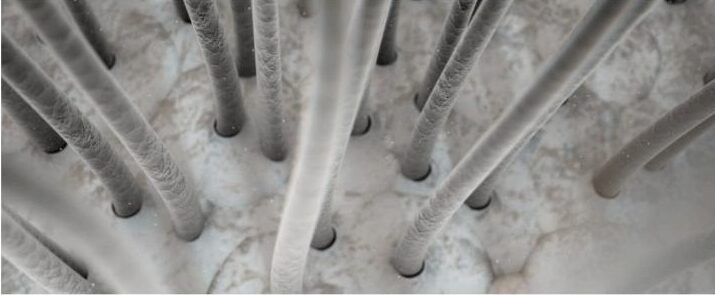
The critical anatomical distinction patients must understand: the scab forms on the surface of the skin (the epidermis), while the graft sits below the skin surface, anchored in the dermis. The scab and the graft are not the same thing.
Three overlapping wound-healing phases drive the scabbing process:
- Hemostasis (first 24 to 72 hours): Blood clotting and fibrin formation create the initial crust.
- Inflammation (days 1 to 7): The immune response causes redness, swelling, and scab hardening.
- Re-epithelialization (days 5 to 14): New skin cells migrate under the scab, eventually causing it to lift and shed naturally.
Transplanted grafts begin re-establishing blood supply around days 3 to 5 through a process called re-vascularization. Until then, grafts survive on oxygen diffusion from surrounding tissue. This explains why the first 72 hours represent the highest-risk period for mechanical trauma.
Research published in PMC/NIH confirms that graft survival rates of 90% or higher are achievable under ideal post-operative conditions.
When a hair strand falls off with a scab, it is the hair shaft shedding through a process called anagen effluvium. This is a normal, temporary occurrence. The follicle remains intact below the skin and will produce new hair in 3 to 6 months.
Consider this analogy: the scab is like packaging around a seed. The seed (the follicle) sits safely below the surface, and the packaging eventually falls away as new growth begins.
Scabbing by Procedure Type: FUE, FUT, DHI, and Sapphire FUE Compared
Scab appearance, density, and resolution timeline vary slightly depending on the procedure performed.
FUE (Follicular Unit Extraction): Small, circular scabs form at each individual extraction site in the donor area and at each recipient site. Scabs are numerous but small. FUE crusts typically resolve by days 10 to 12.
FUT (Follicular Unit Transplantation): The donor area produces a longer linear scab along the strip excision site, plus recipient site scabs. FUT recovery is slightly longer due to sutures and a larger wound.
DHI (Direct Hair Implantation): Patients typically experience slightly less scabbing and itching than with standard FUE, due to minimized scalp trauma from the Choi implanter pen.
Sapphire FUE: The V-shaped incisions made by sapphire blades cause less tissue trauma, and scabs may fall off 1 to 2 days earlier than with standard FUE.
Regardless of technique, the fundamental scabbing biology and care principles remain the same. Patients undergoing mega-sessions (3,000 or more grafts) will experience more extensive scabbing coverage and should expect more intensive aftercare demands.
The 5-Phase Hair Transplant Scabbing Removal Timeline
This framework provides a biology-grounded, phase-by-phase breakdown of what patients experience from surgery day through complete scab resolution. Individual variation exists based on skin type, graft count, procedure type, and aftercare compliance.
Phase 1: The Formation Window (Hours 0 to 72): Do Not Touch
Biology: Hemostasis is active. The body is forming fibrin clots at each micro-wound site. Grafts are at maximum vulnerability, held in place only by the clot and surrounding tissue pressure.
What patients see and feel: Redness, mild swelling, possible oozing at graft sites, and early crust formation beginning around 24 hours. Some patients report tightness or tenderness.
The golden rule of Phase 1: Do not wash, touch, or disturb the scalp in any way for the first 72 hours. This is the highest-risk window for graft dislodgement.
Many clinics recommend applying saline spray every 2 to 3 hours during this phase to keep forming scabs moist. This prevents them from becoming jagged, tight, and harder to shed later.
Sleep position matters significantly. Patients should sleep with the head elevated at 45 degrees to reduce swelling and avoid rolling onto the recipient area.
The urge to check, touch, or examine grafts is intense during this phase. Every graft that stays in place during Phase 1 is a graft that will grow.
Phase 2: First Wash and Early Scab Management (Days 3 to 5): The Patting Protocol
Biology: Re-vascularization has begun. Grafts are becoming more stable but remain vulnerable to mechanical force. Scabs are hardening and may appear darker.
Most clinics recommend the first wash between days 3 to 5. Patients should follow their specific clinic’s instructions. Hair Transplant Specialists provides personalized post-operative guidance for each patient.
Key washing guidelines:
- Water temperature: Lukewarm only. Hot water increases blood flow and swelling; cold water causes vasoconstriction.
- Shampoo type: Use only a mild, sulfate-free baby shampoo or clinic-provided medical shampoo. Avoid anti-dandruff shampoos, alcohol, sulfates, or fragrances.
- The patting technique: Apply diluted shampoo with fingertips using a gentle patting or tapping motion. Never rub or use circular massage at this stage.
- Water pressure: Do not allow direct shower stream pressure on the recipient area. Use a cup or gentle pour to rinse.
- Frequency: Once daily is typical for this phase.
Phase 3: Peak Scabbing and Stabilization (Days 5 to 9): Patience Is the Protocol
Biology: Scabs reach peak size and density around days 3 to 7. Re-epithelialization is underway beneath the scabs. Grafts are progressively more anchored from day 7 to 10 onward.
What patients see and feel: The scalp may look its most alarming during this phase, with dense crusting, possible itching, and visible scabs across the recipient area. This is the peak of the psychological challenge.
Itching management: Itching is caused by histamine release and the healing process. Management strategies include cooling foams, gentle tapping (never scratching), and saline sprays.
Continue the patting washing protocol from Phase 2. Consistency matters more than intensity.
The picking temptation: The urge to pick or peel scabs is nearly universal. Data indicates scab picking causes localized graft damage in an estimated 12% of all cases. One moment of picking can undo weeks of healing.
Avoid during this phase:
- UV exposure (can bake scabs onto skin)
- Smoking (reduces blood flow)
- Alcohol (increases inflammation)
- Styling products of any kind
Phase 4: Natural Shedding and Active Removal (Days 10 to 14): Introducing Light Massage
Biology: Grafts are now well-anchored. Re-epithelialization is largely complete beneath the scabs. The body is naturally lifting scabs from below as new skin forms.
The technique upgrade: From around day 10, light circular fingertip massages during washing are generally safe and help encourage natural scab shedding.
Pre-wash softening: Applying an emollient or moisturizer to the scalp 30 to 45 minutes before washing can help soften stubborn scabs and encourage safe, natural shedding without force.
What patients see: Scabs will begin falling off in increasing numbers. Hair shafts may fall off with scabs. This is normal shock loss, and the follicle remains safe below the skin.
According to Medart Hair, 95% of patients achieve complete scab resolution within 14 days when following correct aftercare protocols.
Phase 5: Final Resolution and Skin Normalization (Days 14 to 21+): The Finish Line
Biology: Surface healing is complete for the vast majority of patients by day 14. New hair growth from transplanted follicles typically begins at 3 to 4 months, with full density visible at 9 to 12 months.
What patients see: The scalp should be largely or completely clear of scabs. Some residual pinkness is normal and will fade over time.
Washing can transition to a more normal routine with gentle, sulfate-free shampoo. Harsh products should be avoided for at least the first month.
An important consideration: leaving scabs beyond 3 weeks can theoretically suffocate the skin, increase infection risk, and trap new emerging hairs beneath the crust. Controlled removal via proper washing after the first week is recommended.
Normal vs. Not Normal: When to Call the Clinic
Normal signs:
- Reddish-brown or brownish scabs forming within 24 to 72 hours
- Scabs peaking in size around days 3 to 7
- Itching during the healing phase
- Hair shafts falling off with scabs (shock loss)
- Mild redness after scabs resolve
- Scabs shedding progressively from day 10 to 14
Call the clinic if any of the following are observed:
- Scabs persisting beyond 21 days without resolution
- Yellow or green coloration (possible infection)
- Pus, unusual odor, or discharge
- Increasing pain after day 5
- Spreading redness beyond the treated area
- Fever
- Active bleeding that does not resolve
Post-transplant infection is rare, with an incidence of less than 1%, but it can be linked to excessive crust formation or poor hygiene according to NIH/PMC research.
5 Scabbing Myths That Are Making Recovery Harder
Myth 1: “Hair falling off with scabs means the grafts are gone.”
Fact: The hair shaft sheds; the follicle remains safely below the skin. New hair growth begins in 3 to 6 months.
Myth 2: “Scabs must be left to fall off completely on their own.”
Fact: Gentle, protocol-compliant washing from days 3 to 5 onward is recommended. Leaving scabs beyond 3 weeks can cause follicle suffocation.
Myth 3: “More scabbing means better protection.”
Fact: Prolonged scabbing is a risk, not a benefit. The goal is controlled, timely resolution.
Myth 4: “Applying oils or natural remedies will speed up scab shedding safely.”
Fact: Unapproved topical products can introduce bacteria and interfere with healing.
Myth 5: “If the scalp is visible through the scabs, something went wrong.”
Fact: Visible scalp between graft sites is entirely normal. Density increases as hair grows over 9 to 12 months.
Lifestyle Factors That Affect the Scabbing Timeline
Several factors within patient control meaningfully influence recovery speed:
- Smoking: Reduces blood flow and oxygen supply. Smokers experience slower scab resolution and higher infection risk.
- Alcohol: Increases inflammation and causes dehydration. It should be avoided during the first two weeks.
- Hydration and nutrition: Adequate hydration supports skin cell regeneration. Vitamin C and zinc are particularly relevant to wound healing.
- Diabetes and immunosuppression: These conditions can delay scab resolution. Patients should discuss specific modifications with their surgical team.
- UV exposure: Sunlight can bake scabs onto the skin. A loose hat or SPF protection should be used during recovery.
High adherence to post-operative protocols is linked to better cosmetic outcomes, faster healing, and more predictable graft survival.
The Emotional Side of Scabbing: What Patients Are Often Not Told
The psychological experience of post-transplant scabbing deserves direct acknowledgment. Common emotional experiences include self-consciousness about visible scabbing, fear of graft loss when hair sheds, anxiety about whether the procedure worked, and the intense urge to pick or examine scabs.
Every one of these emotional responses is normal. They do not mean something is wrong with the procedure or with the patient.
Self-consciousness about scabs is understandable, but the scabs are temporary. They are evidence that healing is happening exactly as it should. The fear of graft loss when hair sheds is biologically unfounded; the follicle is intact below the skin.
Hair Transplant Specialists embodies the philosophy: “It’s not just about the procedure; it’s about YOU and your journey.” Supporting patients through every phase of recovery, including the emotional dimensions, is a core part of their patient care philosophy.
The scabbing phase lasts 7 to 14 days. The results last a lifetime.
Conclusion: From Scab Panic to Confident Recovery
Scabbing is not a threat to grafts. It is biology working exactly as designed. The scab is on the surface; the graft is safely below.
Quick-reference 5-phase summary:
- Phase 1 (Hours 0 to 72): No touch, saline spray only
- Phase 2 (Days 3 to 5): First wash, patting technique, lukewarm water
- Phase 3 (Days 5 to 9): Continue patting protocol, manage itching without scratching
- Phase 4 (Days 10 to 14): Introduce light circular massage, support natural shedding
- Phase 5 (Days 14 to 21+): Transition to normal gentle washing, protect from sun
The urge to panic, pick, or intervene is understandable. The most powerful action a patient can take for their grafts is to follow the protocol, trust the biology, and give the healing process time.
The scabbing phase is a brief, manageable chapter in a transformative journey. With the right protocol and the right mindset, patients move through it with confidence.
Ready to Start a Hair Restoration Journey With Confidence?
Hair Transplant Specialists serves as the partner patients want for every phase of their journey, from the first consultation through the final result. The team brings combined 100+ years of experience, board-certified surgeons including former ISHRS President Dr. Sharon Keene, and surgical technicians with 15 to 18+ years of experience.
Patients receive detailed, personalized post-operative protocols rather than generic advice, ensuring they know exactly what to do at every stage of recovery. The proprietary Microprecision Follicular Grafting® technique reflects the clinic’s commitment to natural results: “naturalness is key” from the first incision through the final hair growth.
Schedule a complimentary consultation at Hair Transplant Specialists. Call (651) 393-5399 or visit INeedMoreHair.com to take the first step and receive expert guidance for every step that follows.
“Experience you can trust, prices you can afford,” with financing available from as little as $150 per month.
Office hours: Monday through Thursday 9 AM to 5 PM, Friday 9 AM to 3 PM, weekends by appointment. Located in Eagan, MN.