Hair Transplant Procedure Awake: Why Skipping General Anesthesia Makes Your Results Better
Introduction: Being Awake During Your Hair Transplant Is Not a Compromise — It Is the Clinical Standard
The question surfaces in nearly every consultation: “I have to be awake for four to eight hours during surgery?” The concern is entirely understandable. The thought of remaining conscious through a lengthy medical procedure triggers anxiety for many prospective patients. Yet this concern deserves immediate reframing.
Being awake during a hair transplant is not a limitation of the procedure. It is a deliberate, medically superior approach endorsed by the International Society of Hair Restoration Surgery (ISHRS) and the American Society of Plastic Surgeons. General anesthesia is never required for hair transplants, and remaining awake actively produces better aesthetic results alongside a safer overall experience.
For patients concerned about discomfort or anxiety, modern comfort sedation protocols provide the solution. Being awake does not mean being uncomfortable, anxious, or in pain. The hair transplant procedure awake comfort sedation free experience represents the gold standard in the field, where “free” refers to freedom from discomfort rather than the absence of sedation options.
This article examines why the awake protocol is medically superior, how pain is eliminated through a progressive comfort ladder, what the experience actually feels like hour by hour, and how leading practices have built patient comfort into their standard of care.
Why Hair Transplants Are Always Performed While Patients Are Awake
The universal clinical standard is clear: the American Society of Plastic Surgeons confirms that hair transplant surgery “is usually performed using a local anesthesia along with sedation to make you relaxed and comfortable.” General anesthesia is never required.
Local anesthesia, typically using lidocaine and bupivacaine, numbs only the scalp. The patient remains fully conscious, alert, and able to communicate with the surgical team throughout the four to eight hour procedure. This is not a compromise or a cost-saving measure. It is the medically recommended approach.
The ISHRS explicitly states that general anesthesia is “rarely used” in hair restoration surgery and that “it is better if the patient can respond to instruction from the physician during surgery.” This guidance comes from the leading international authority on hair restoration.
Some overseas clinics use general anesthesia against best practices, a concern that reputable U.S. clinics explicitly warn patients about. Dr. Marco Barusco, a board-certified hair restoration surgeon, summarizes the clinical consensus: “There is no benefit to putting a patient fully to sleep for this procedure.”
The evidence points in one direction: being awake is not merely acceptable. It is functionally necessary for optimal outcomes.
The Medical Case for Awake: Four Clinical Reasons General Anesthesia Is Contraindicated
Understanding why general anesthesia is avoided requires examining the specific clinical rationale that most patient education materials overlook.
Reason 1: Prolonged General Anesthesia Carries Significant Perioperative Risk
Hair transplant procedures last four to eight hours. At this duration, prolonged general anesthesia significantly increases perioperative risk, including respiratory complications, cardiovascular stress, and extended post-anesthesia recovery time.
Patients with conditions such as high blood pressure, diabetes, and obesity face even greater risk from general anesthesia. These conditions are common in the hair loss demographic. Local anesthesia eliminates all of these systemic risks entirely. It numbs only the scalp, leaves all other body systems unaffected, and requires no intubation or respiratory monitoring.
A study published in the Journal of Cutaneous and Aesthetic Surgery confirmed that local anesthesia for hair transplantation is generally very safe with a low incidence of adverse effects.
Reason 2: Real-Time Hairline Confirmation Requires a Conscious Patient
The hairline design represents a permanent aesthetic decision. Once grafts are placed, the result is irreversible.
Surgeons need patients to be upright, alert, and able to evaluate and confirm the hairline design before and during graft placement. A patient under general anesthesia cannot provide this real-time feedback, removing a critical quality-control step that directly affects the final aesthetic outcome.
This consideration is particularly important for natural hairline design. At Hair Transplant Specialists, the transitional zone uses single hair grafts in a quarter-inch front zone, requiring precise placement decisions that benefit from patient input. This is not a minor procedural detail. It is a permanent decision affecting how patients look for the rest of their lives.
Reason 3: Patient Repositioning Is Required Throughout the Procedure
Hair transplant surgery requires patients to move between multiple positions: seated, prone (face down), and supine. The surgeon works on different scalp zones throughout the procedure.
A patient under general anesthesia cannot safely reposition and requires mechanical repositioning, adding procedural complexity and risk. An awake patient can shift positions naturally on instruction, maintaining comfort and surgical access without interruption.
This functional requirement makes general anesthesia not just unnecessary but operationally incompatible with the procedure as performed by skilled surgeons.
Reason 4: A Calm, Awake Patient Produces Better Graft Survival Rates
Dr. Amiya Prasad, a cosmetic surgeon specializing in hair restoration, notes a critical clinical observation: a calm patient has lowered blood pressure during the transplant, which minimizes bleeding and allows grafts to be placed more easily.
When bleeding is minimized, donor hairs spend less time outside the body, directly improving transplant efficacy and graft survival. Hair transplant success rates, when performed by skilled professionals using proper anesthetic protocols, exceed 95 to 98 percent.
The link between patient relaxation and graft survival is clinically significant. The question then becomes not “can the patient be awake?” but “how can the clinic ensure the patient is comfortable and relaxed while awake?”
The Comfort Ladder: How Hair Transplant Specialists Eliminates Pain and Anxiety Step by Step
The comfort ladder represents a tiered, progressive protocol that addresses pain and anxiety at every level. From the mildest intervention to optional sedation for the most anxious patients, each patient’s comfort level is assessed and accommodated.
Step 1: Topical Numbing — Pre-Anesthesia Comfort
Before any injection occurs, topical anesthetic cream is applied to the scalp to pre-numb the skin surface. This reduces the sensation of the initial injection phase, the step most patients anticipate with the greatest anxiety.
The topical anesthetic takes effect within 20 to 30 minutes and significantly lowers the perceived intensity of the local anesthetic injection. This step alone addresses a major psychological barrier: the fear of the first needle is substantially reduced.
Step 2: Needle-Free Jet Injection — The Solution for Needle Phobia
Trypanophobia, or needle phobia, is a documented clinical barrier affecting 10 to 25 percent of adults. It represents one of the most common reasons patients delay or avoid hair transplant surgery.
A global PLOS ONE survey of 2,098 adults found that 63.2 percent reported experiencing needle fear, with general anxiety (96.1 percent) and anticipated pain (95.5 percent) as the primary drivers.
Jet injection technology delivers local anesthetic via high-pressure air, with no needle puncture and no visible syringe. This eliminates the most anxiety-provoking step for needle-phobic patients. Hair Transplant Specialists specifically offers this option, recognizing that one in four adults experiences needle fear.
Step 3: Local Anesthetic — Complete Scalp Numbing
Local anesthetic (lidocaine and bupivacaine) is administered to fully numb the scalp. This is the primary anesthetic used throughout the procedure.
Once administered, the scalp is completely numb: patients feel no pain during graft extraction or implantation. Clinical data shows over 90 percent of patients report a pain level of 2 out of 10 or lower during the actual surgery once local anesthesia is administered.
The initial injection phase, the most uncomfortable part of the entire procedure, typically spans only 10 to 20 minutes at the start of the four to eight hour procedure. That represents 10 to 20 minutes of mild discomfort within four to eight hours of a pain-free, relaxed experience.
Research from Vera Clinic confirms that early nerve blockade lowers overall pain perception and anxiety. Most hair transplant discomfort occurs during the first minutes of anesthesia administration, not during surgery itself.
Step 4: Optional Oral Sedation — For Patients Who Want Extra Reassurance
For patients with higher anxiety levels, optional oral sedation (benzodiazepines) is available before or during the procedure.
The sedoanalgesia protocol, combining local anesthesia with oral or IV benzodiazepines, reduces anxiety, raises the pain threshold, and induces partial amnesia of the injection phase. Approximately 95 percent of sedated patients do not recall any discomfort during the procedure.
The ISHRS recommends pre-operative anti-anxiety medication to address procedural anxiety. This is an evidence-based, guideline-supported option. NIH/PMC practice guidelines confirm that some surgeons use parenteral sedatives to create conscious sedation during local anesthesia administration, with a qualified anesthetist present when sedation is used.
The critical distinction: oral sedation keeps patients conscious and communicative. They are relaxed and comfortable, not unconscious. This preserves all the clinical advantages of being awake.
What Being Awake During a Hair Transplant Actually Feels Like: A Realistic Timeline
Fear of the unknown remains one of the primary barriers to booking a hair transplant. Transparent pre-procedure education directly reduces this barrier.
Phase 1 (First 10 to 20 minutes): Topical numbing is applied, followed by jet injection or local anesthetic administration. Patients may experience mild pressure or a brief sting. This is the peak of any discomfort.
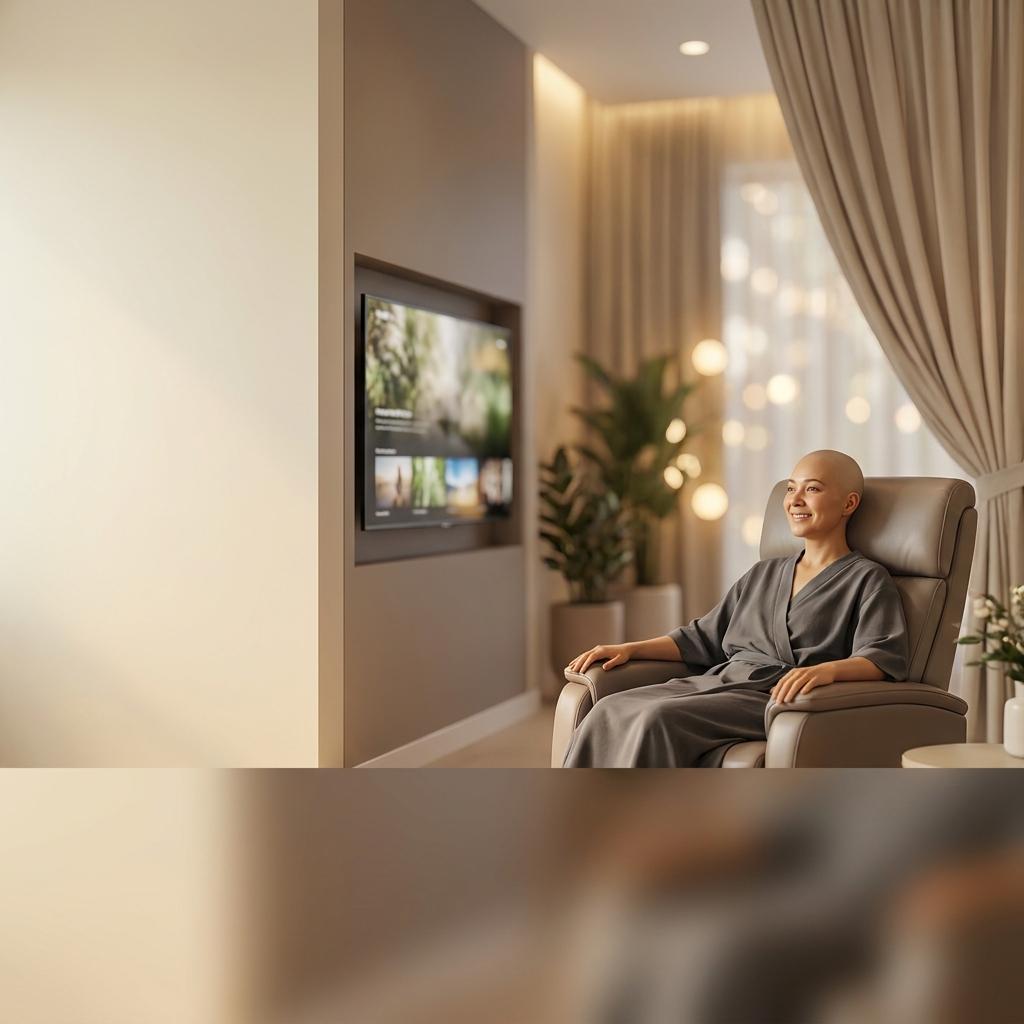
Phase 2 (Remainder of the procedure, three to seven-plus hours): The scalp is fully numb. Patients are comfortable and relaxed. Common activities include watching movies on a 65-inch flat screen TV, listening to music via Sonos, sleeping lightly, working on a laptop, or conversing with the surgical team.
At Hair Transplant Specialists, the environment is purpose-built for comfort: Netflix, a Sonos music system, and complimentary beverage and meal service. The experience is designed to feel like a comfortable, extended appointment rather than a surgical ordeal.
The comparison most patients find reassuring: the experience is often described as more like a long dental appointment than major surgery.
A 2025 peer-reviewed narrative review confirmed that hair loss is associated with significant psychological distress. The comfort-focused environment addresses both the physical and emotional aspects of the patient journey. Patient testimonials consistently emphasize comfortable facilities, professional and kind staff, and the common sentiment that they wished they had done it sooner.
The Recovery Advantage: Why Awake Patients Recover Faster
Local anesthesia recovery differs dramatically from general anesthesia recovery.
With local anesthesia, patients are discharged the same day. Many can return to work the following day. There is no nausea or grogginess from anesthesia, and no extended monitoring is required.
General anesthesia recovery adds days to the timeline. It introduces nausea, grogginess, and cognitive fog, and it requires additional post-anesthesia monitoring. None of this provides any clinical benefit for a hair transplant.
Post-operative discomfort is typically mild. Most patients report no more than mild discomfort after surgery, manageable with over-the-counter ibuprofen or acetaminophen. Prescription pain medication is rarely needed. Most patients resume normal activities within a few days, and visible signs of the procedure resolve within up to 10 days.
Hair growth begins at three to four months post-procedure; full results are visible at nine to 12 months.
Why Hair Transplant Specialists’ Awake Protocol Sets the Standard
Hair Transplant Specialists (INeedMoreHair.com) has built the awake protocol into every aspect of patient care.
The surgical team’s credentials form the foundation of a safe, comfortable experience: board-certified surgeons, a combined 100-plus years of practice, and surgical technicians with 15 to 18-plus years of experience. Dr. Sharon Keene, a former President of the ISHRS (2014 to 2015) and recipient of the Platinum Follicle Award for outstanding research, brings world-class expertise to every procedure.
The Microprecision Follicular Grafting® technique requires a conscious, communicative patient to achieve natural results. The awake protocol and the proprietary technique are clinically inseparable. Natural hairline design, with transitional zones using single hair grafts in the front quarter-inch, depends on real-time patient confirmation.
The facility environment supports the awake experience: two state-of-the-art surgical suites, 65-inch flat screen TVs, Netflix, a Sonos music system, and complimentary meal and beverage service.
According to the ISHRS 2025 Practice Census, 95 percent of first-time hair restoration surgery patients in 2024 were aged 20 to 35, a demographic with high anxiety sensitivity. Hair Transplant Specialists’ comfort protocol is specifically suited to this patient profile.
The patient-centered mission, “It’s not just about the procedure; it’s about YOU and your journey,” means the awake, comfortable experience is an expression of core values, not an afterthought.
Addressing Common Concerns: Questions Patients Ask About Being Awake
“What if I panic or feel claustrophobic during the procedure?”
Sedation options are available at every level. Patients can communicate with the team at any time. The relaxed, non-clinical atmosphere with entertainment options helps patients feel at ease.
“What if the anesthesia wears off mid-procedure?”
Local anesthetic is re-administered as needed throughout the procedure. The surgical team monitors comfort continuously.
“I have a needle phobia. Can I still have a hair transplant?”
Yes. The jet injection option and topical pre-numbing protocol address trypanophobia directly. Needle phobia is not a barrier at a clinic equipped with needle-free technology.
“Will I be bored or anxious for four to eight hours?”
The entertainment environment (Netflix, Sonos, meal service) keeps patients engaged. Many patients sleep lightly or find the time passes quickly.
“Is being awake safe for the entire duration?”
Local anesthesia is the medically recommended standard, with a safety profile confirmed by the ISHRS, the American Society of Plastic Surgeons, and peer-reviewed literature.
“Some clinics offer general anesthesia. Is that not better?”
General anesthesia is used by some overseas clinics against best practices. Reputable U.S. clinics explicitly warn against it. It introduces risk without any clinical benefit.
Conclusion: Awake Is Not a Compromise — It Is the Medically and Aesthetically Optimal Standard
Being awake during a hair transplant is not something patients should merely accept. It is the approach that produces safer procedures, better aesthetic outcomes, and faster recovery.
The four clinical reasons general anesthesia is contraindicated are clear: systemic risk from prolonged sedation, inability to confirm hairline design, inability to reposition safely, and reduced graft survival from higher intraoperative blood pressure.
The comfort ladder, from topical numbing through jet injection to local anesthetic to optional oral sedation, virtually eliminates pain and anxiety for every patient, including those with needle phobia.
Hair loss carries significant psychological weight. The decision to pursue a hair transplant is an investment in confidence and quality of life. Patients deserve a procedure environment that honors that investment. An awake, relaxed, expert-guided experience delivers exactly that.
With a 95 to 98 percent success rate, a medically sound comfort protocol, and a surgical team with a combined 100-plus years of experience, patients at Hair Transplant Specialists are in the best possible hands: awake, relaxed, and in control of their results.
Ready to Experience a Hair Transplant the Right Way? Schedule a Consultation at Hair Transplant Specialists
A consultation at Hair Transplant Specialists (INeedMoreHair.com) provides the opportunity to discuss hair restoration goals and comfort preferences with the surgical team. A consultation is a conversation, not a commitment. Prospective patients can ask every question about the awake protocol, comfort sedation options, and what to expect before making any decision.
Contact Information:
- Phone: (651) 393-5399
- Website: INeedMoreHair.com
- Location: 2121 Cliff Dr. Suite 210, Eagan, MN 55122
Financing is available for as little as $150 per month. Prospective patients can also take a virtual tour of the facility on the website to see the surgical suites, entertainment setup, and patient environment before their visit.
The most common thing patients say after their procedure is that they wish they had done it sooner.