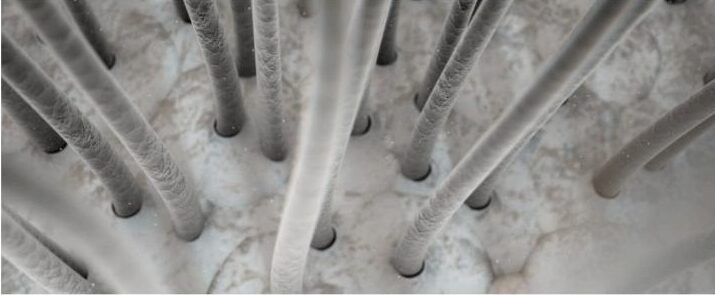
Hair Transplant Graft Placement Angle and Direction: The Two-Variable Framework That Separates Natural Results From Permanent Mistakes
Introduction: The Two Variables That Determine Whether a Hair Transplant Looks Real or Artificial
Most patients evaluate a hair transplant the way they evaluate a financial transaction: by counting units. How many grafts? What is the survival rate? These metrics matter, but in 2026 they no longer separate good clinics from great ones. When top practices routinely achieve 95 to 98 percent graft survival, the variable that actually determines whether a result looks real or artificial is something far less discussed: the surgical artistry of placement angle and direction.
Angle and direction are not one combined concept. They are two independently mastered surgical variables, each with its own distinct failure modes and zone-specific biological targets. A surgeon can control one perfectly and botch the other, and the result will still look wrong.
The most counterintuitive finding is this: angle errors are permanently locked in during channel creation, before a single graft is ever placed. That means a technician’s placement skill is irrelevant to correcting them. The damage is done at the incision stage.
The stakes are rising. According to the 2025 ISHRS Practice Census, repair procedures climbed to 6.9 percent of all hair transplants in 2024, up from 5.4 percent in 2021, with improper angulation and direction cited among the leading aesthetic failure drivers. This article separates the two variables, explains their zone-specific targets, examines the crown’s unique technical demands, and explains why flatter angles are a medical imperative rather than a stylistic preference.
Defining the Two Variables: Angle and Direction Are Not the Same Thing
Understanding the difference between these two variables is the first step toward evaluating any clinic’s work.
Angle refers to the anterior-posterior tilt of the graft relative to the scalp surface. It describes how flat or upright the follicle sits, measured in degrees from the skin plane.
Direction refers to the lateral compass rotation of the follicle as it exits the scalp. It describes which way the hair points when it emerges and grows outward.
Conflating them is a critical error. A graft can be inserted at a perfectly correct angle while pointed in the wrong direction, and the result will still look unnatural. Both must be right simultaneously.
These two variables sit inside what specialists call the 4-Variable Placement Matrix: angle, direction, depth, and density distribution, all of which must be controlled at once. Angle and direction, however, are the two most visible determinants of a natural appearance.
Hair does not grow straight up from the scalp. It emerges at angles ranging from 10 to 90 degrees depending on anatomical location, and each scalp zone has its own directional flow pattern that transplanted grafts must replicate exactly.
A simple analogy makes the distinction tangible: angle is like the lean of a single blade of grass, while direction is like which way the wind is blowing it. Two separate properties, both visible, both essential.
Why Angle Errors Are Permanent: The Channel Creation Problem
In pre-made slit techniques, the surgical sequence is straightforward. The surgeon creates incisions, called channels, first. Grafts are placed into those channels afterward.
This sequence carries a profound consequence: the angle of every channel is determined entirely during the incision phase, before a single graft is placed. No matter how skilled the placement technician is, they can only insert a graft into a channel that already exists at a fixed angle. They cannot change the angle of a pre-made incision.
This is why angle errors are irreversible without surgical revision. By contrast, DHI using the Choi Implanter Pen, developed in 1992 at Kyungpook National University in South Korea, allows simultaneous channel creation and graft placement in a single “stick-and-place” motion. This gives the operator real-time control over depth, angle, and direction, making it especially effective for hairlines and other high-visibility zones.
The errors compound. A 10-degree deviation in angle across hundreds of grafts creates a uniformly artificial appearance that no amount of styling can correct. This is why the surgeon’s judgment during channel creation, not the technician’s dexterity during placement, is the irreversible determinant of angular outcome. Peer-reviewed literature indexed by the NIH confirms that even small grafts will appear unnatural if placed at the wrong angle, regardless of graft quality.
The Biology of Angle: Why Flatter Is Not Just More Beautiful, It’s Medically Superior
Research published in the Journal of Cosmetic Dermatology demonstrated that tissue injury decreases as insertion angle decreases. Flatter angles create smaller, less traumatic incisions.
The biological mechanism is direct. Flatter incisions preserve more of the surrounding blood supply, which improves graft survival by maintaining the vascular environment grafts depend on during the critical healing period. This finding elevates angle precision from an aesthetic preference to a medical imperative. The surgeon who achieves the correct flat angle is simultaneously producing better-looking and better-surviving grafts.
When grafts are placed too perpendicular to the scalp, the incision is larger and more traumatic, tissue injury is greater, and the hair grows upward or outward instead of lying flat. The result is the well-known “doll hair” or “toothbrush” appearance.
Density carries biological consequences as well. Graft survival drops from near-complete at 30 grafts per square centimeter to roughly 84 percent at 50 grafts per square centimeter, and exceeding 50 to 60 grafts per square centimeter risks vascular competition and tissue necrosis. Correct flat angles simultaneously maximize aesthetic naturalness and optimize graft survival biology, making them the single most impactful technical variable in the placement phase.
Zone-Specific Angle and Direction Targets: Why One Setting Does Not Fit All
Each anatomical zone of the scalp has non-negotiable angle and direction targets derived from how native hair naturally grows in that region. Pre-surgical directional assessment is its own discipline, involving multiple partings of the patient’s existing hair to map their unique native flow. Peer-reviewed literature confirms that surgeons should nearly always mimic the scalp hair directions and angles seen in nature.
The Frontal Hairline Zone: The Most Visible and Most Unforgiving
Angle target: 10 to 20 degrees, nearly parallel to the skin surface, the flattest angle used anywhere on the scalp.
Direction target: forward-pointing, following the natural anterior flow of frontal hair, with subtle lateral fanning at the temples.
This zone is the most unforgiving because the hairline sits at eye level and is examined at close range. Any deviation from a flat, forward-pointing angle is immediately visible. ISHRS clinical literature establishes that “the hairline is the surgeon’s signature.”
Single-hair grafts are placed in the transitional zone at the very front using natural follicular groupings. Artificial dissection of multi-hair grafts for this zone is a red flag for inferior technique. There is also a physics dimension: interdigitated, triangular graft placement combined with the correct flat angle creates an optical illusion of density far greater than either variable achieves alone, because the flat angle allows hair to overlap and block light. Linear or grid-based placement fails to block light effectively and creates visible patterns.
The Mid-Scalp Zone: Transitional Angles and Consistent Directional Flow
Angle target: 30 to 45 degrees, a moderate angle bridging the extreme flatness of the hairline and the more upright angles sometimes used in the crown.
Direction target: generally forward-flowing, following the anterior direction of mid-scalp native hair.
The challenge here is transition. The mid-scalp must bridge the flat hairline angles and the radially variable crown angles without creating a visible seam. Direction errors in the mid-scalp are often more socially visible than angle errors because they affect how hair behaves during everyday styling, producing visible seams, unnatural partings, and areas where hair refuses to lie flat.
The Temporal Points: The Most Acute Angle in the Entire Framework
Angle target: 5 to 10 degrees, the most acute and flattest angle used anywhere in hair transplantation.
Temporal point hair lies almost completely flat against the skin in native anatomy. Any deviation toward a more upright angle is immediately visible as artificial. Peer-reviewed clinical study findings note that improper ring-finger grip technique during implanter use causes unintentional upright angles at the temples and sideburns, directly producing unnatural results.
Direction target: downward and slightly forward, following the natural inferior flow of temporal hair.
Because temporal points frame the face and appear in profile, errors here affect overall facial framing and are noticed even by people unfamiliar with hair transplantation.
The Crown (Vertex): The Most Technically Demanding Zone in Hair Transplantation
Unlike every other scalp zone, the crown has no single consistent angle and no uniform directional flow. It features a spiral whorl pattern where angles and directions must vary continuously as they radiate outward from a central whorl point.
The anatomy varies between individuals. A case-control study of 501 people found that approximately 70.3 percent have a clockwise vertex whorl, 15.7 percent have a counterclockwise whorl, and 12.4 percent have two whorls. Each pattern requires a completely different directional mapping strategy.
Where the frontal hairline applies a consistent 10 to 20 degree forward angle across the zone, the crown requires the surgeon to continuously adjust both angle and direction as each graft moves further from the whorl center.
This introduces the Vertex Transition Zone (VTZ): the area where mid-scalp forward-flowing hair transitions to the radial whorl of the crown. It is one of the most technically demanding areas in hair restoration, and errors here create a visible seam between zones. The VTZ requires a graduated shift from 30 to 45 degree forward angles to the radial, multi-directional crown pattern. There is no single transition point; it must be a continuous gradient.
This is precisely why template-driven, high-volume clinic models fail in the crown. Individualized real-time directional mapping and continuous adjustment are structurally incompatible with assembly-line placement. The crown is frequently overlooked in competitor content, despite being the zone most likely to reveal placement artistry deficiencies in long-term results.
The Two Distinct Failure Modes: What Angle Errors and Direction Errors Look Like
Angle errors and direction errors produce different, recognizable failure patterns. Understanding both helps patients evaluate results and identify problems.
Angle Error Failure Mode: The “Doll Hair” or “Toothbrush” Appearance
The visual signature is hair growing upward or outward instead of lying flat against the scalp, creating the immediately recognizable “doll hair” or “toothbrush” appearance associated with older or inferior transplants.
The mechanism: grafts placed too perpendicular to the scalp emerge at an upright angle that native hair in that zone never adopts, producing a result visually incongruent with surrounding hair. Because the angle was locked in during channel creation, this failure cannot be corrected through styling, products, or aftercare. It requires surgical revision. The problem compounds: a 10-degree deviation across hundreds of grafts creates uniform artificiality across an entire hairline. Improper angulation is cited as the most common aesthetic failure driving the 6.9 percent repair rate reported in the 2025 ISHRS Practice Census.
Direction Error Failure Mode: Visible Seams, Unnatural Partings, and Unstyled Hair
The visual signature is hair that refuses to lie flat in certain areas, visible seams where directional flow changes abruptly, and unnatural partings that appear regardless of styling.
Direction errors are often more socially visible than angle errors because they affect how hair behaves during everyday activities such as washing, drying, and styling, not just its static appearance in photographs. When grafts are oriented in a direction that conflicts with adjacent native hair or the natural flow of the zone, a visible boundary appears between natural and transplanted hair. Patients frequently spend considerable effort styling around the problem, which draws further attention to it. Direction errors in the crown are especially visible because the whorl is a natural focal point, and any disruption to the radial flow is immediately apparent.
How Expert Surgeons Map Angle and Direction Before the First Incision
Pre-surgical directional mapping is a distinct, critical pre-operative discipline, not a quick glance before surgery.
The mapping process involves multiple partings of the patient’s existing hair under raking light to reveal native directional flow, dermoscopy for vellus hair direction analysis in thinning areas where native hair is difficult to assess, and digital whorl mapping for the crown. No two patients share identical directional flow patterns, so the process must capture the patient’s unique anatomy rather than apply a generic template. Peer-reviewed literature confirms that surgeons should nearly always mimic the directions and angles seen in nature, establishing directional mimicry as the clinical standard.
This map becomes the blueprint for every incision, determining the angle and compass orientation of each channel before the first cut. The surgeon who creates the channels makes the irreversible angle and direction decisions; the technician who places the grafts executes within those pre-determined parameters. This is why high-volume, technician-driven clinic models are structurally incompatible with the process. Individualized real-time mapping and adjustment require surgeon-level judgment that cannot be delegated to assembly-line placement teams. For a deeper look at how this division of responsibility affects outcomes, see our analysis of hair transplant surgeon vs. technician roles.
Special Considerations: Curly and Afro-Textured Hair
Afro-textured and curly hair follicles curve beneath the scalp surface, creating a fundamental difference in how the follicle’s subsurface geometry relates to its surface emergence angle.
The failure mode: implanting a curved follicle at an angle designed for straight hair produces an unnatural growth direction, because the curve redirects the hair’s path after it exits the scalp. The technical requirements include specialized punches, such as the UPunch Curl, designed to follow the curved follicle path during extraction, and modified implantation angles that account for the subsurface curve during placement.
Pre-surgical assessment must therefore evaluate not just surface directional flow but the subsurface follicle curvature pattern, which varies by individual and by scalp zone. This illustrates a broader principle: placement technique must be individualized to each patient’s specific hair characteristics. A one-size-fits-all angle and direction protocol produces inferior results across all hair types.
The Rising Cost of Getting It Wrong: Repair Procedures and Permanent Mistakes
The data tells the story. Repair procedures rose to 6.9 percent of all hair transplants in 2024, up from 5.4 percent in 2021, a statistically significant increase reflecting the growing consequences of placement artistry failures. The primary driver is poor placement artistry, with improper angulation and direction listed as the leading aesthetic failure mode requiring corrective procedures.
The black market contributes as well: 10 percent of repair cases now stem from prior black-market procedures, up from 6 percent in 2021, and 59 percent of ISHRS members reported black-market clinics operating in their cities. A 2026 study in Frontiers in Medicine confirmed that unnatural results are among the most frequent aesthetic complications of FUE, with inaccurate graft angulation and direction listed as primary iatrogenic causes.
Repair is complex. Correcting angle errors requires creating new channels at the correct angle, but the original misplaced grafts may need to be extracted first, consuming donor supply that cannot be replaced. The scalp has a finite number of donor follicles. A failed primary procedure that requires repair consumes donor grafts twice: once for the failed placement and once for the correction, potentially leaving the patient with insufficient donor supply for a complete result. The NIH StatPearls clinical reference lists unnatural hairlines as a key risk of hair transplantation, establishing this as a recognized medical complication, not merely an aesthetic disappointment. Patients concerned about this risk should understand the signs of a failed hair transplant procedure before choosing a provider.
What Separates Expert Placement From Template-Driven Approaches
With survival rates converging at 95 to 98 percent across top clinics, survival alone is no longer a differentiator. Surgical artistry in angle and direction has become the primary standard separating acceptable outcomes from genuinely natural ones.
The ISHRS has stated that hairline and beard design is “80 percent art and 20 percent surgery,” establishing that the judgment required for proper placement is fundamentally artistic as well as technical. The credential context reinforces the rarity of this expertise: ABHRS certification, the only internationally recognized board specifically for hair restoration, has only 274 certified diplomates worldwide and 83 in the United States as of 2025.
Expert placement looks like continuous real-time adjustment of angle and direction across zones, individualized mapping rather than template application, and surgeon-level oversight of the channel creation phase. Template-driven approaches look like standardized angle settings applied uniformly across zones, delegation of channel creation to less experienced team members, and high-volume throughput that structurally prevents individualized assessment.
The Choi Implanter Pen’s simultaneous channel-and-placement motion allows real-time angle and direction adjustment that pre-made slit techniques cannot match, making it particularly valuable for hairlines and temporal points. A 2023 clinical study in Clinical, Cosmetic and Investigational Dermatology outlined 11 principles for sharp implanter graft placement, covering grip technique, working direction, and depth management as codified competencies, not improvised skills. Expert placement follows a rigorous, teachable discipline.
Questions to Ask a Surgeon About Angle and Direction
Knowing the right questions helps prospective patients distinguish surgeons who have mastered these variables from those who treat them as a checklist item.
- How is the patient’s native hair direction mapped before surgery, and how does that map inform channel creation? (Tests whether pre-surgical mapping is a formal process or a visual estimate.)
- Who creates the incision channels, the surgeon or a technician, and what is their specific training in angle and direction control? (Tests whether the surgeon retains control of the irreversible angle-setting phase.)
- What angle targets are used for the hairline, mid-scalp, and crown, and how is the transition between zones managed? (Tests zone-specific knowledge versus generic ranges.)
- How is the vertex transition zone between the mid-scalp and crown handled? (Tests awareness of the VTZ seam problem.)
- Can examples of crown results specifically be provided, not just hairline results? (The crown is where placement deficiencies most often appear in long-term results.)
- Does the practice use DHI, pre-made slits, or both, and how does that choice affect angle and direction control in different zones? (Tests understanding of how technique choice affects precision.) For a detailed comparison of these approaches, see our guide on FUE vs. FUT.
Surgeons who treat these as surprising or overly technical questions may not have the depth of expertise these variables require.
Conclusion: Angle and Direction Are Where Natural Results Are Won or Lost
Angle (the tilt of the follicle relative to the scalp) and direction (the compass orientation of hair growth) are independently mastered variables with distinct failure modes, zone-specific targets, and compounding consequences. Angle errors are locked in during channel creation before placement begins, making the surgeon’s judgment during incision the irreversible determinant of angular outcome, not the technician’s skill.
Flatter angles are not just aesthetically superior; they are medically superior, producing less tissue injury and better graft survival. The crown’s spiral whorl pattern demands continuously variable angle and direction control that no template can replicate. In 2026, when graft survival is no longer a differentiator, placement artistry in angle and direction is the primary variable separating natural results from permanent mistakes. Understanding these two variables gives prospective patients the framework to ask the right questions and make an informed decision about who should perform their procedure.
Ready to See What Precision Placement Looks Like in Practice?
The principles described here, including individualized directional mapping, zone-specific angle targets, surgeon-controlled channel creation, and crown-specific expertise, are the standards Hair Transplant Specialists applies to every procedure. The surgical team includes a former ISHRS President, surgeons with a combined 100-plus years of practice, and surgical technicians with 15 to 18-plus years of experience: the depth of expertise these variables genuinely require.
A consultation is an opportunity to have the patient’s unique scalp anatomy mapped, directional flow assessed, and a personalized restoration plan developed, not a template applied.
To schedule a consultation, visit INeedMoreHair.com or call (651) 393-5399. The Eagan, Minnesota office is open Monday through Thursday from 9:00 AM to 5:00 PM and Friday from 9:00 AM to 3:00 PM, with weekend appointments available by request.