Hair Transplant Graft Placement Angle: The Zone-by-Zone Precision Map That Determines Natural Growth
Introduction: Why Graft Placement Angle Is the Defining Variable in Hair Transplant Outcomes
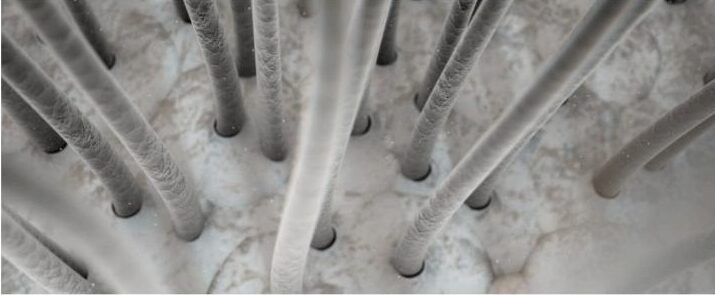
Natural hair does not grow straight up from the scalp. It emerges at precise, zone-specific angles ranging from 10 to 45 degrees, creating the flow, volume, and coverage that characterize a full head of hair. Replicating this natural emergence pattern represents the central challenge of hair restoration surgery—and the defining variable that separates exceptional outcomes from detectable ones.
The stakes are significant: a technically flawless graft can still produce an unnatural result if placed at the wrong angle. This makes angulation arguably more consequential than graft count alone. A transplant with 3,000 grafts placed at incorrect angles will appear less natural than one with 2,000 grafts positioned with biomechanical precision.
This article provides an in-depth exploration that goes beyond basic angle ranges. It examines the biomechanical reasoning behind each zone’s requirements, the multi-axis nature of angulation, and the post-operative factors that can alter even correctly placed grafts. Key concepts include the shingling effect, the surface versus subcutaneous angle distinction, the crown whorl as a separate technical challenge, interdigitation principles, micro-angulation techniques, and revision considerations.
Angulation represents both a surgical discipline and an artistic one. The human scalp contains approximately 100,000 follicles, each with its own unique angle and trajectory. Precise replication demands both scientific knowledge and artistic vision—qualities that distinguish elite hair restoration specialists from average practitioners.
The Biomechanics of Natural Hair Growth Angle: What the Scalp Is Actually Doing
Natural hair growth angles are not arbitrary. They are biomechanically optimized to maximize coverage, direct water and debris away from the scalp, and create the layered, shingled appearance that gives hair its visual density.
The shingling effect explains why angle matters so profoundly. When hair lies at acute angles, each strand overlaps the one behind it like roof shingles. This overlap blocks light from reaching the scalp, creating the illusion of greater density than the actual follicle count would suggest. A transplant that ignores this principle wastes the cosmetic potential of every graft placed.
The directional growth of transplanted hair is entirely determined by the direction of the surgeon’s incision. This makes recipient site creation the single most consequential technical decision in the procedure. Every subsequent step—graft preparation, placement, and post-operative care—depends on the precision established during incision.
A critical distinction exists between surface exit angle and subcutaneous follicular trajectory. The angle at which a hair exits the scalp surface is not the same as the angle of the follicle beneath the skin. Follicles often curve as they descend into deeper tissue, and this curvature varies by patient, scalp region, and hair type. Surgeons must orient incisions to match the follicle’s internal trajectory, not just its visible surface angle. Failure to do so increases transection risk during FUE extraction and leads to misaligned growth post-implantation.
Zone-by-Zone Precision Map: The Correct Angles for Each Scalp Region
The scalp functions as a multi-zone map where each region has distinct angulation requirements. Applying a uniform angle across zones is a hallmark of inferior technique and produces immediately detectable results. Understanding these zones is essential for prospective patients evaluating surgeons and clinics.
The Frontal Hairline Zone: 10–20 Degrees and the Art of the Feathered Edge
The frontal hairline requires the most acute angles of any scalp region. Grafts should be placed at 10–20 degrees directed forward, nearly parallel to the scalp surface. Clinical guidance confirms that hair along the frontal hairline typically angles forward at 15–20 degrees.
These extreme acute angles maximize the shingling effect at the most visible and scrutinized zone of the transplant, creating a soft, natural-looking leading edge. Elite surgeons apply the principle of intentional randomness, deliberately varying angles slightly along the hairline rather than using a uniform angle. This creates the organic, feathered appearance of a natural hairline rather than a detectable uniform line.
Hairline design has a greater impact on perceived naturalness than total graft count. Even a dense result appears artificial if angles are uniform or if the line is drawn too straight. Additionally, push-out pressure during implantation is significantly greater anteriorly due to these acute angles, adding a technical execution challenge beyond planning.
The Temple Zone: 5–10 Degrees and the Most Delicate Reconstruction
The temporal hairline requires the flattest angles of any scalp zone—approximately 5–10 degrees—making it the most technically demanding area to recreate. Temporal hair naturally points downward and forward at extremely shallow angles. Any deviation creates immediately visible unnaturalness in a highly exposed area.
The temple zone is frequently underserved in clinical discussions despite being one of the most critical zones for overall facial framing and perceived naturalness. Single-hair grafts are exclusively used in this zone, and the combination of ultra-acute angle, shallow depth, and fine graft type demands exceptional precision from both surgeon and implantation team.
The Mid-Scalp Zone: 30–40 Degrees and the Transition to Coverage
The mid-scalp region uses incision angles of approximately 30–40 degrees—steeper than the hairline zones—reflecting the natural growth pattern of hair in this region. This zone serves as a transition between the acute-angle hairline and the complex spiral of the crown, requiring surgeons to manage a gradual angular shift rather than abrupt changes.
Multi-hair follicular units (2–4 hairs) are more commonly used here, and the angle interacts with graft size to influence coverage density. Interdigitation—placing grafts in interwoven, triangular patterns rather than linear rows—is essential in this zone. This technique allows light to filter through and creates a three-dimensional appearance that mimics natural hair distribution.
The Crown Whorl: A Separate Technical Challenge Requiring Spiral-Axis Precision
The crown whorl (cowlick) represents the single most technically complex angulation challenge in hair transplantation and deserves treatment as a distinct zone with its own principles.
Recreating a crown whorl requires every recipient site incision to be precisely angled around a central spiral axis, with every subtle shift in direction accounted for. This cannot be reduced to a single angle value. Because the natural separation of hairs in a whorl pattern exposes more scalp than straight-direction zones, higher graft density is required in the crown to achieve equivalent visual coverage.
The crown is often the last zone treated in a transplant session, and some surgeons recommend staged procedures for this zone specifically. The common patient complaint of crown thinning reappearing post-transplant is often attributable to both progressive hair loss and the technical difficulty of achieving lasting, natural-looking coverage in this zone.
The Shingling Effect: The Biomechanical Principle That Separates Density Illusion from Reality
The shingling effect deserves dedicated attention as the mechanism by which acutely angled hair strands overlap each other to block light and create the visual impression of greater scalp coverage.
Just as roof shingles overlap to create a waterproof barrier from individual tiles, acutely angled hair strands create a coverage barrier from individual follicles. Angle therefore directly multiplies the effective coverage of each graft. A transplant with correctly acute angles can appear significantly denser than one with the same graft count but steeper, more perpendicular angles—making angulation a force multiplier for the patient’s investment.
The shingling effect is most critical at the frontal hairline and temple zones, where coverage illusion is most visible, and least critical at the crown, where the whorl pattern inherently limits shingling. Hair should never be transplanted perpendicular to the scalp. A perpendicular graft not only looks unnatural but also fails to contribute to the shingling coverage effect, wasting the graft’s cosmetic potential.
Surface Angle vs. Subcutaneous Trajectory: The Hidden Dimension of Follicle Placement
Surgeons who orient incisions only to the visible surface angle risk creating a mismatch between the incision channel and the graft’s natural shape. This increases transection risk and reduces graft survival. Experienced surgeons use visual assessment, tactile feedback, and in some cases high-magnification microscopy to anticipate the subcutaneous trajectory before making incisions.
This challenge is particularly pronounced for Afro-textured hair, where naturally curved or C-shaped follicles create significant divergence between surface and subcutaneous angles. These cases require specialized punch techniques and adapted angulation approaches.
Micro-Angulation: The Emerging Standard for Elite Natural Results
Micro-angulation involves adjusting each individual graft’s angle, direction, and rotational orientation. Three separate variables must all be correct simultaneously: angle (the tilt relative to the scalp surface), direction (forward, lateral, or posterior), and rotation (the clockwise or counterclockwise orientation of the follicular unit).
DHI using the Choi Implanter Pen enables superior micro-angulation control by allowing the surgeon to create the channel and place the graft simultaneously. This eliminates the time gap between incision and implantation that can allow channels to partially close and alter graft angle.
How Post-Operative Factors Can Alter a Technically Correct Graft Angle
Even when surgery is performed with perfect angulation technique, post-operative factors can shift graft angles during the healing process—producing unnatural direction that is not the result of surgical error.
Sleeping position matters significantly. Patients who sleep directly on the transplanted area in the first two weeks risk mechanical displacement of grafts, including angular shift. Surgeons universally advise sleeping elevated and on the back. Similarly, wearing tight hats or helmets too early can flatten or redirect emerging grafts before they have anchored in their intended position.
These risks are managed through post-operative care protocols. Patient compliance with aftercare instructions directly impacts the angular accuracy of the final result.
Angulation Errors: How They Manifest and What Revision Looks Like
Visible signs of angulation errors include hair growing in the wrong direction, a “pluggy” or brush-like appearance, visible rows or lines, hair that points away from the face rather than forward, or a crown that lacks natural whorl flow. These errors are most visible in the hairline and temples because these areas require the most acute angles for a soft, natural appearance.
In some cases, existing misangled grafts can be excised and reimplanted at correct angles through re-angling procedures. However, this is technically demanding and not always possible depending on scar tissue and available donor supply. Industry data indicates that over 25% of hair transplant patients require a second procedure across their lifetime, and suboptimal initial planning—including angulation errors—is a contributing factor.
The most effective approach to angulation errors is prevention through careful surgeon selection.
The Relationship Between Angulation and Graft Survival
Angulation is not only an aesthetic variable but also a survival variable. Incorrect angle affects how well the graft integrates with surrounding tissue and receives blood supply.
Clinical research has demonstrated that oblique implantation angulation in patients with poor donor density significantly improved graft survival (82.4% vs. 68.7%) compared to traditional approaches—a statistically meaningful difference that directly impacts patient outcomes. Grafts placed at appropriate angles sit more naturally within the recipient channel, reducing mechanical stress on the follicle and improving vascular contact with surrounding tissue.
Graft placement depth is a related variable: grafts should rest approximately 0.5 mm above the surrounding scalp level. Too deep creates unnatural pitting; too high leads to desiccation and graft failure. Overall graft survival rates of 85–97% are achievable, but outcomes at the top of that range require meticulous technique including correct angle, depth, and handling.
What to Look for in a Surgeon: Evaluating Angulation Expertise Before a Procedure
Prospective patients can assess a surgeon’s angulation expertise during consultations by asking the surgeon to explain their zone-specific angulation approach. A surgeon who can articulate the biomechanical reasoning behind their angle choices—not just cite degree ranges—demonstrates deeper expertise.
Requesting before-and-after photos that specifically show hairline and crown results under various lighting conditions reveals where angulation errors are most visible. Asking about the surgeon’s approach to the crown whorl specifically serves as a reliable differentiator between surgeons with surface-level knowledge and those with genuine technical depth.
The surgical team’s experience matters significantly. Surgical technicians with 15 or more years of experience in graft placement bring consistency to angulation execution that newer teams cannot match. Board certification and membership in organizations such as ISHRS serve as baseline credibility indicators, though these credentials should be accompanied by demonstrated artistic and technical results.
Patients should also ask about post-operative care protocols related to graft protection. A surgeon who addresses post-operative angulation risks demonstrates a comprehensive understanding of the full angulation challenge.
Conclusion: Angulation as the Invisible Architecture of Natural Hair Restoration
Hair transplant graft placement angle is not a single variable but a multi-axis, zone-specific, biomechanically grounded discipline that determines whether a transplant is detectable or indistinguishable from natural hair.
The shingling effect serves as the mechanism behind density illusion. The surface versus subcutaneous angle distinction represents a hidden surgical complexity. The crown whorl presents a uniquely demanding technical challenge. Post-operative factors remain underappreciated threats to angulation accuracy.
The difference between an elite outcome and a detectable one often lies not in the number of grafts used but in the precision, artistry, and biomechanical understanding applied to every incision angle. Achieving correct angulation across all zones requires deep anatomical knowledge, artistic sensibility, experienced technique, and meticulous post-operative management.
As micro-angulation becomes the emerging standard and technology continues to enhance precision, patients who understand these principles are better equipped to select the right surgeon and achieve the natural results they seek.
Ready to Experience Precision Hair Restoration? Consult with Hair Transplant Specialists
At Hair Transplant Specialists (INeedMoreHair.com), angulation precision is central to every procedure—not an afterthought. The team includes board-certified surgeons, including a former ISHRS President, with combined 100+ years of practice experience. Surgical technicians bring 15–18+ years of hands-on graft placement expertise to every case.
The proprietary Microprecision Follicular Grafting® technique represents the practice’s approach to achieving the natural, zone-specific angulation that separates elite outcomes from detectable ones. Patients receive individualized assessment of their scalp’s natural hair angles, zone-specific planning, and clear explanation of the surgical approach—not a one-size-fits-all treatment plan.
To begin a personalized hair restoration journey, prospective patients can call (651) 393-5399, visit INeedMoreHair.com, or schedule a consultation at the Eagan, Minnesota location. At Hair Transplant Specialists, the focus extends beyond the procedure itself—guiding patients every step of the way toward natural-looking results.