Hair Loss Hormonal Causes Women Treatment: The 3-Condition Overlap Guide
Introduction: When Hair Loss Has More Than One Hormonal Cause
A woman in her early 40s notices her ponytail feels thinner than it used to. Her dermatologist suggests female pattern hair loss. Her gynecologist mentions perimenopause. Her primary care physician orders thyroid tests. Each specialist offers a piece of the puzzle, yet none provides the complete picture.
This scenario plays out in medical offices across the country every day. Understanding hair loss hormonal causes women treatment requires recognizing that single-cause thinking fails millions of women seeking answers.
The scale of this problem is substantial. More than 21 million women in the United States experience female pattern hair loss (FPHL). By age 50, approximately 40% of women will notice visible hair thinning. These numbers reflect a condition that touches nearly half of all women at some point in their lives.
This guide introduces the concept of the “compounding hormonal burden.” PCOS, thyroid dysfunction, and menopause or perimenopause frequently coexist in the same woman, amplifying each other’s damage to hair follicles. When multiple conditions overlap, the effects multiply rather than simply add together.
The following sections examine the shared biological mechanism driving hormonal hair loss, how each condition contributes, where they overlap, and the specific diagnostic and treatment pathway women should follow. Understanding the cause proves as important as choosing a treatment. Treating symptoms without a confirmed diagnosis wastes time, money, and precious follicles.
The Shared Mechanism: How Hormones Damage Hair Follicles in Women
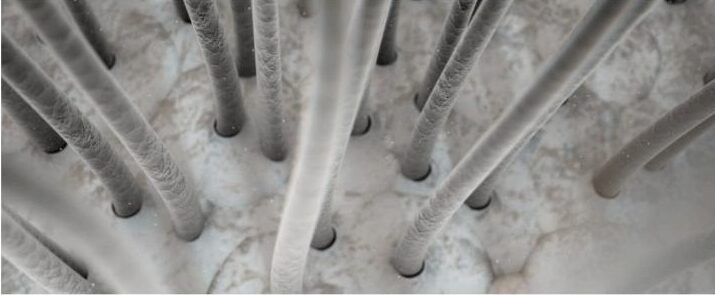
Hair grows in cycles. The anagen phase represents active growth, lasting two to seven years. The catagen phase marks a brief transition period. The telogen phase involves resting and eventual shedding. Hormonal disruption shortens the anagen phase, meaning hair spends less time growing and more time falling out.
Dihydrotestosterone (DHT) serves as the primary culprit in androgenic hair loss. The enzyme 5-alpha-reductase converts testosterone into DHT. Women produce testosterone too, though in smaller amounts than men. Even modest elevations or increased follicle sensitivity to DHT can trigger progressive damage.
The process of follicle miniaturization explains how hair gradually disappears. DHT binds to androgen receptors in the hair follicle. Over successive growth cycles, the follicle progressively shrinks until it can no longer produce a visible hair shaft. DHT functions like a dimmer switch, gradually reducing the follicle’s output until the light goes out entirely.
Estrogen plays a protective role in this equation. According to research published by the NIH, estrogens stimulate hair follicle growth via high-affinity receptors and counterbalance androgen activity. When estrogen declines, androgen effects become relatively stronger even if androgen levels remain unchanged.
Two pathways lead to hormonal hair loss in women. The first involves elevated androgens, as seen in PCOS. The second involves reduced estrogen protection, as occurs during menopause and perimenopause. Thyroid dysfunction disrupts the entire growth cycle through a separate mechanism. Many women experience more than one pathway simultaneously.
Condition #1: PCOS and Hair Loss: The Androgen Overload
Polycystic ovary syndrome (PCOS) ranks among the most common hormonal disorders in women of reproductive age. The PCOS and hair loss connection affects approximately 40 to 70% of women with the condition.
Elevated testosterone undergoes conversion to DHT, which binds to hair follicles and renders them inactive. This process causes androgenic alopecia in a pattern distinct from male baldness. Women typically experience diffuse thinning at the crown and a widening part line rather than a receding hairline.
PCOS creates a paradox for many women. The same androgen excess that thins scalp hair often stimulates unwanted facial and body hair growth. Different follicle types respond differently to androgens, leading to this frustrating combination of too little hair where women want it and too much where they do not.
Insulin resistance amplifies the problem. Common in PCOS, insulin resistance increases circulating androgens, compounding the follicle damage. This metabolic bridge between PCOS and hair loss explains why addressing blood sugar regulation matters for hair health.
Emerging research from 2025 reveals concerning long-term implications. Women with PCOS may experience hair thinning even after menopause due to prolonged lifetime androgen exposure. The damage accumulates over decades, making early intervention particularly valuable.
Key diagnostic markers for PCOS-related hair loss include elevated total and free testosterone, elevated DHEAS, abnormal LH to FSH ratio, and insulin or glucose abnormalities. Clinical signs such as irregular periods, acne, and hirsutism support the diagnosis.
Treatment options specific to PCOS include spironolactone (an anti-androgen medication), oral contraceptives to suppress androgen production, and insulin-sensitizing agents like metformin. According to PLOS ONE research from 2025, spironolactone remains the most commonly prescribed medication for women aged 20 to 29 with androgenic alopecia.
Condition #2: Thyroid Dysfunction and Hair Loss: The Cycle Disruptor
Thyroid hormones regulate the hair growth cycle at a fundamental level. Both T3 and T4 are required for normal anagen phase duration and proper follicle cell division.
Thyroid dysfunction affects hair through two distinct mechanisms depending on direction. Hypothyroidism impedes follicle cell division and delays re-entry into the anagen phase, causing diffuse shedding. Hyperthyroidism causes oxidative damage to follicles.
The clinical data confirms substantial impact. According to a systematic review published by the NIH, diffuse telogen hair loss affects approximately 50% of people with hyperthyroidism and 33% with hypothyroidism. One prospective study found hypothyroidism in 31.25% of FPHL patients.
A diagnostic challenge complicates matters. Hair shedding from thyroid disorders may occur months before other thyroid symptoms manifest. Women often fail to connect their hair loss to thyroid dysfunction because they feel otherwise healthy.
The typical presentation involves diffuse, all-over shedding rather than patterned thinning. However, thyroid dysfunction can coexist with and worsen androgenic alopecia, creating a mixed presentation.
The good news: thyroid-related hair loss usually reverses once thyroid hormone levels stabilize with medication. Recovery typically takes three to six months after levels normalize.
Key diagnostic tests include TSH, Free T3, Free T4, and thyroid antibodies (TPO antibodies for Hashimoto’s). TSH alone provides insufficient information for a complete picture.
Condition #3: Menopause, Perimenopause, and Hair Loss: The Estrogen Withdrawal Effect
The hormonal shift of menopause involves cessation of ovarian estrogen production. This removes the protective counterbalance to androgens, making hair follicles relatively more vulnerable to DHT even when androgen levels remain stable.
Perimenopause represents a critical and often overlooked window. Hormonal fluctuations can begin up to 10 years before menopause, meaning hair loss may start in a woman’s late 30s or early 40s.
Research published in Maturitas in 2025 examined how hormonal changes during menopause directly impact the hair follicle, an estrogen-sensitive tissue. A cross-sectional study of postmenopausal women aged 50 to 65 found FPHL prevalence of 52.2%, with age, time since menopause, and BMI as significant associated factors.
The hair loss pattern in menopause involves diffuse thinning across the crown and top of the scalp. The frontal hairline typically remains preserved, distinguishing it from male pattern baldness.
The “perimenopause window” concept carries important implications. Hormone replacement therapy (HRT) proves most effective when started early in perimenopause. Women who wait until full menopause may see diminished results, making early recognition critical.
HRT can help by stabilizing estrogen levels and slowing the relative androgen increase that drives follicle miniaturization. However, it works best when combined with scalp-directed treatments.
The Compounding Hormonal Burden: When Conditions Overlap
Many women do not have just one hormonal condition. They have two or three operating simultaneously, each amplifying the others’ impact on hair follicles.
Common Overlap Scenarios and How They Compound Hair Loss
Scenario 1: PCOS Plus Perimenopause. A woman with PCOS (elevated androgens since her 20s) enters perimenopause in her early 40s. Declining estrogen removes the remaining protective buffer, dramatically accelerating follicle miniaturization. Her lifetime androgen exposure has already sensitized follicles, and the estrogen withdrawal becomes the tipping point.
Scenario 2: Thyroid Dysfunction Plus PCOS. Thyroid dysfunction disrupts the hair growth cycle while PCOS-driven DHT simultaneously miniaturizes follicles. The result combines pattern thinning and diffuse shedding. This presentation can confuse diagnosis if only one condition receives testing.
Scenario 3: Thyroid Dysfunction Plus Menopause. Hypothyroidism slows follicle cell division while menopause removes estrogen protection. Both conditions independently cause hair loss. Together they create a compounding burden that standard single-condition treatment protocols fail to address.
Scenario 4: All Three Overlapping. A postmenopausal woman with a history of PCOS who develops Hashimoto’s thyroiditis faces all three hormonal burdens simultaneously. This combination occurs more commonly than most women and some clinicians realize.
Each specialist tends to focus on their domain. Without coordinated testing, the full picture remains hidden. Nutritional deficiencies (iron, ferritin, vitamin D, zinc) frequently coexist with all three conditions and add another layer of follicle stress.
Why Treating Symptoms Without a Diagnosis Fails Women
The common mistake involves reaching for the most visible treatment, whether minoxidil, supplements, or specialty shampoo, without identifying the underlying hormonal driver.
Minoxidil can slow shedding but cannot reverse the hormonal environment driving follicle miniaturization. Treating the symptom without the cause resembles bailing water without plugging the leak.
Mismatched treatment creates additional risks. Spironolactone works well for PCOS-driven androgenic alopecia but represents the wrong first choice for thyroid-related diffuse shedding. Wrong diagnosis leads to wrong treatment.
The emotional cost deserves acknowledgment. The psychological impact of hair loss in women is significant, associated with anxiety, low self-esteem, and social impairment. Research indicates that 55% of affected women display symptoms of depression. Encouragingly, 89% see improvement in depression symptoms after effective hair loss treatment.
Treatments prove more effective at arresting progression than stimulating regrowth. Every month without a correct diagnosis represents a month of preventable follicle loss.
The Diagnostic Pathway: Tests to Request and Specialists to See
This section provides a practical roadmap to help women advocate for themselves in clinical settings. The diagnostic sequence matters: starting with the right tests prevents months of back-and-forth between specialists.
Step 1: The Initial Blood Panel
Request these core blood tests at the first appointment:
Thyroid Panel: TSH, Free T3, Free T4, and TPO antibodies
Hormonal Panel: Total and free testosterone, DHEAS, estradiol, LH, FSH
Nutritional Markers: Ferritin (not just hemoglobin), vitamin D (25-OH)
Metabolic Screening: Fasting insulin and glucose
Ferritin specifically matters because it reflects iron stores available to hair follicles. A woman can have normal hemoglobin but low ferritin and still experience significant hair shedding.
Step 2: Specialist Referrals
Dermatologist: First specialist referral for hair loss pattern diagnosis. Can perform trichoscopy to distinguish androgenic alopecia from telogen effluvium or other conditions. Prescribes topical minoxidil, oral minoxidil off-label, and spironolactone.
Gynecologist or Reproductive Endocrinologist: Essential for PCOS diagnosis, perimenopause evaluation, and HRT consideration. Particularly important for the perimenopause window timing.
Endocrinologist: For confirmed thyroid dysfunction, adrenal issues, or complex insulin resistance. Manages the systemic hormonal environment.
Hair Restoration Specialist: Once the hormonal environment is stabilized, evaluates candidacy for advanced treatments including PRP, LLLT, Alma TED, or surgical options.
Step 3: Scalp-Level Diagnostic Tools
Trichoscopy (dermoscopy) allows dermatologists to examine hair shaft diameter, follicle density, and scalp signs non-invasively. This can differentiate androgenic alopecia from other types without a biopsy.
Distinguishing FPHL (with a stable donor area) from DUPA (diffuse unpatterned alopecia) is critical for determining whether surgical hair restoration represents a viable option.
Treatment Options: Matching the Intervention to the Cause
Treatment selection depends on confirmed diagnosis. Most treatments require three to six months to show initial results and six to twelve months for significant improvement.
FDA-Approved and First-Line Medical Treatments
Minoxidil (topical 5% foam): The only FDA-approved topical treatment for FPHL. Works by prolonging the anagen phase. Appropriate across all hormonal causes as a baseline treatment.
Spironolactone: Blocks androgen receptors and reduces DHT’s effect on follicles. Most appropriate for PCOS-driven hair loss. Not appropriate during pregnancy.
Thyroid Medication: Addresses the root cause of thyroid-related hair loss. Hair recovery typically begins three to six months after thyroid levels normalize.
Hormone Replacement Therapy: Can help menopausal hair loss by stabilizing estrogen levels. Most effective when started early in perimenopause.
Advanced Non-Surgical Treatments
PRP (Platelet-Rich Plasma) Therapy: Uses growth factors from the patient’s own blood to stimulate follicle activity. Works best when the hormonal environment is being managed concurrently.
Low-Level Light Therapy (LLLT): FDA-cleared device-based treatment that stimulates follicle metabolism. Particularly useful for women who cannot tolerate medications.
Alma TED: Ultrasound-based treatment delivering hair growth serum without needles. Involves 45-minute sessions with a series of three treatments one month apart. Results become visible within one month. Learn more about the Alma TED hair treatment results timeline and what to expect from this non-invasive approach.
When to Consider Surgical Hair Restoration
Surgical hair restoration (FUE or FUT) is generally considered after medical management is optimized. The hormonal environment must be stabilized before surgery. Transplanting follicles into a scalp with unmanaged DHT activity risks continued loss of native hair around the transplanted grafts.
The ISHRS 2025 Practice Census documented a 16.5% rise in female hair transplant patients between 2021 and 2024. More women are pursuing surgical options, but candidacy evaluation remains essential. Women considering this path can review female before and after results to understand realistic outcomes.
The Role of Nutrition in Hormonal Hair Loss
Nutritional deficiencies amplify follicle vulnerability and must be addressed alongside hormonal management.
Iron/Ferritin: Low ferritin ranks among the most common and correctable contributors to hair shedding in women. Target ferritin level for hair health generally exceeds 70 ng/mL.
Vitamin D: Deficiency is common in women with PCOS and thyroid disorders. Vitamin D receptors in hair follicles play a role in the hair cycle.
Stress and Cortisol: Women with high stress levels are 11 times more likely to experience hair loss. Chronic stress disrupts estrogen, progesterone, and thyroid hormone balance.
The Psychological Dimension: Why Early Action Matters
Hair loss in women is not a vanity issue. It carries significant psychological weight, associated with anxiety, low self-esteem, and social impairment.
Women often delay seeking help because they feel hair loss is not serious enough to bother a doctor about. This perspective deserves correction. Hair loss represents a legitimate medical concern warranting investigation.
A 2025 AI-powered study of over 1 million users presented at the AAD Innovation Academy found that women begin addressing hair concerns earlier than men. This represents a positive trend, but it only proves beneficial if early concern leads to proper diagnosis rather than self-treatment with unproven products.
Conclusion: The Compounding Hormonal Burden Requires a Coordinated Response
PCOS, thyroid dysfunction, and menopause or perimenopause do not operate in isolation. They share a common biological pathway and frequently coexist, compounding each other’s impact on hair follicles.
The most important step is not choosing a treatment. It is identifying which hormonal conditions are present through a structured blood panel and specialist evaluation sequence.
Key action steps include requesting a comprehensive blood panel, seeing a dermatologist for hair pattern diagnosis, engaging the appropriate specialist for systemic hormonal management, and addressing nutritional deficiencies.
Most treatments require six to twelve months to show significant results. Starting the right treatment sooner preserves more follicles and produces better long-term outcomes.
Hormonal hair loss in women is common, complex, and treatable. It requires a coordinated, diagnosis-driven approach rather than trial-and-error self-treatment. A comprehensive hair loss treatment plan developed with qualified specialists can help ensure all contributing factors are addressed together.
Ready to Take the Next Step? Start With a Professional Evaluation
Once the hormonal picture becomes clearer and medical management is underway, a consultation with a hair restoration specialist can help women understand their full range of options.
Hair Transplant Specialists (INeedMoreHair.com) offers board-certified surgeons with combined 100+ years of experience, including Dr. Sharon Keene, former President of the International Society of Hair Restoration Surgery. The team understands the complexity of female hair loss.
Non-surgical options available for women managing hormonal hair loss include Alma TED, PRP therapy, LLLT, and stem cell therapy with exosomes. These treatments can support follicle health alongside medical management.
Surgical options (FUE, FUT) are available for appropriate candidates. The team can evaluate whether a woman is a good surgical candidate based on her hair loss pattern and donor area.
To discuss a specific situation, schedule a consultation at Hair Transplant Specialists by calling (651) 393-5399 or visiting INeedMoreHair.com. The practice is located in Eagan, Minnesota, with appointments available Monday through Saturday.
The right support, at the right time, makes all the difference.