Corrective Hair Transplant for Unnatural Hairline: The 5-Failure-Type Diagnostic Map, Single-Hair Transitional Zone Science, and Correction Pathway That Turns an Obvious Result Into an Undetectable One
Introduction: When a Hair Transplant Creates a New Problem
For many patients, a visibly unnatural hairline is more distressing than the original hair loss ever was. Baldness is common, understood, and largely forgivable to the observing eye. A row of pluggy tufts or a ruler-straight surgical edge is none of those things. It announces itself. It signals that something was done, and that it did not work. The result is a compounded burden: the emotional weight of the original hair loss, the visible evidence of a failed procedure, the financial loss, and a deep erosion of trust in medical providers.
This is not a fringe problem. According to the 2025 ISHRS Practice Census, repair and revision procedures climbed to 6.9% of all hair transplants performed in 2024, up from 5.4% in 2021. That is a 28% relative increase in just three years. Within that revision category, hairline design mistakes account for roughly 20% of all corrective work, making them one of the most common reasons patients return to the operating chair.
The central premise of this guide is simple but frequently overlooked: not all unnatural hairlines represent the same problem. Treating them as one leads to inadequate or repeated corrections. This article lays out a five-failure-type diagnostic map, explains the single-hair transitional zone science that underpins every successful repair, and outlines the correction pathways that turn an obvious result into an undetectable one. The clinical framework here reflects the expertise of Hair Transplant Specialists and the credentials of Dr. Sharon Keene, former President of the International Society of Hair Restoration Surgery (ISHRS).
Why Unnatural Hairlines Happen: The Biological and Technical Breakdown
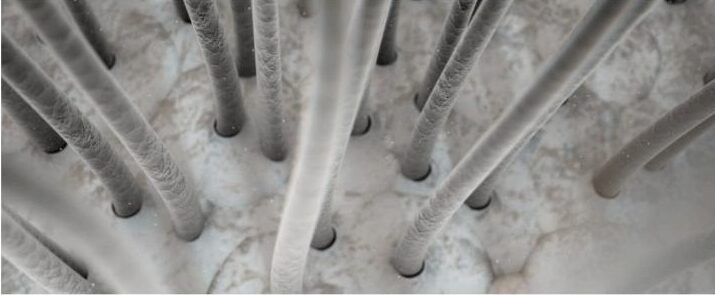
To understand what goes wrong, one must first understand what a natural hairline actually is at the biological level. It is not a line at all. It is a gradual transition from bare scalp to full density, led by delicate single-hair follicular units at the leading edge and building through a density gradient of roughly 35 to 45 follicular units per square centimeter in the frontal and transition zone, increasing to 50 to 60 units per square centimeter behind the hairline.
The classic “doll hair” look originates in the plug graft era of the 1950s through the mid-1980s, when surgeons used large circular punches of 3mm to 10mm, each containing 10 to 30 hairs. That is far beyond the natural follicular unit of just 1 to 4 hairs. The eye reads such clusters as artificial instantly.
Crucially, the pluggy problem did not disappear with the plug punch. It persists today through modern mechanisms: multi-hair grafts placed in the frontal hairline zone where only single hairs belong, incorrect exit angles, and technician-led surgery performed without meaningful physician oversight. Angulation is central here. Hairline grafts must be placed at 15 to 20 degrees from the scalp surface to mimic natural growth direction. Deviation from that creates an upright, artificial appearance.
A 2026 peer-reviewed review in Frontiers in Medicine catalogs the full range of FUE complications, including unnatural results, recipient-site necrosis, and donor depletion. Many of these outcomes trace back to a single structural cause: the medical tourism pipeline. Turkey alone performed over 1.5 million procedures in 2024, accounting for more than 60% of global hair transplant medical tourism. The volume-over-quality “factory clinic” model produces a disproportionate share of the revision cases now filling specialist waiting lists.
The 5-Failure-Type Diagnostic Map: Identifying What Went Wrong
Each failure type has a distinct anatomical cause, a distinct visual signature, and a distinct correction pathway. Conflating them is the single greatest error in revision planning. The following framework is designed to help patients identify their specific situation before consulting a revision specialist.
Failure Type 1: The Pluggy or Doll-Hair Cluster
Visual signature: Rows of dense, circular tufts that resemble doll hair or corn rows, with visible bare scalp gaps between clusters.
Anatomical cause: Large multi-hair grafts, historically 10 to 30 hairs but today often 4 to 8 hair clusters, placed at the hairline where only single-hair follicular units belong.
Natural hairlines never feature groups of 6 to 15 hairs emerging from a single point. The eye reads this as artificial immediately. Correction typically involves camouflage with single-hair FUE grafts placed between existing clusters, graft excision and re-implantation (a single 15-hair cluster can be dissected into 5 to 7 natural follicular units), or a combination of both. This is the most common failure type seen in patients returning from overseas clinics.
Failure Type 2: The Ruler-Straight or Geometric Edge
Visual signature: A hairline that looks drawn with a ruler, perfectly straight or sharply geometric, lacking the micro-irregularity of real hair growth.
Anatomical cause: Failure to incorporate natural temporal recession points, widow’s peak variation, and the subtle randomness of every biological hairline. This is often the result of template-based design rather than individualized facial mapping.
The human eye is exquisitely sensitive to geometric perfection in biological structures. A flawlessly straight hairline signals surgical origin at a glance. Correction involves redesign using FUE to add sentinel hairs (isolated, very fine single hairs placed slightly ahead of the main hairline) and micro-irregular placement to soften the edge. Scalp Micropigmentation (SMP) can serve as a non-surgical adjunct to blur harsh lines. Facial mapping and bone structure assessment are the 2026 standard for corrective hairline redesign.
Failure Type 3: Too-Low Placement
Visual signature: A hairline sitting lower on the forehead than is appropriate for the patient’s age, facial proportions, or projected future hair loss.
Anatomical cause: Failure to account for age-appropriate hairline position and the long-term “isolated island” risk, in which DHT-resistant transplanted hair becomes stranded as native hair recedes around it.
A hairline that looks appropriate at 35 can become a disconnected strip on a bald scalp by 50 if future loss was never planned for. This failure is particularly complex to correct: raising a hairline requires laser hair removal or electrolysis to eliminate dramatically misplaced grafts, followed by redesign at an appropriate position with proper density graduation. A 2024 multicenter retrospective study in the Journal of Plastic, Reconstructive & Aesthetic Surgery confirmed that hair transplantation effectively improves unnatural hairline appearance, including stiff, rectangular, high, and wide presentations.
Failure Type 4: Incorrect Angulation and Exit Direction
Visual signature: Hair that grows upright, outward, or in inconsistent directions, creating a “toothbrush” effect instead of a flat, forward-sweeping flow.
Anatomical cause: Recipient site incisions made at incorrect angles. Hairline grafts require 15 to 20 degrees from the scalp surface, increasing to 30 to 45 degrees in the mid-scalp. Grafts placed at 45 to 90 degrees at the hairline produce upright, unnatural growth.
Angulation errors are difficult to self-diagnose because they are most visible when hair is wet or styled back, and patients often attribute the issue to hair texture. Correction involves excision and re-implantation at correct angles, camouflage with correctly angled single-hair grafts, or SMP to reduce contrast. These are among the most technically demanding corrections and require a surgeon with deep expertise in recipient site creation.
Failure Type 5: The Isolated Island Effect
Visual signature: A zone of transplanted hair disconnected from the rest of the scalp, either because surrounding native hair has thinned or because the original design created an anatomically isolated patch.
Anatomical cause: Design failure to anticipate progressive hair loss. Transplanted DHT-resistant follicles survive while native hair continues to recede, leaving the transplant as an island.
Unlike too-low placement, this can occur at any hairline height when the surrounding density plan was inadequate. It is often invisible at the one-year mark and emerges only over 5 to 15 years. Correction requires additional FUE to reconnect the island to the hair-bearing scalp, concurrent medical management to slow native loss, and Body Hair Transplantation (BHT) when scalp donor supply is depleted. Corrective planning must include a 10 to 20 year loss progression model, not just the current presentation.
The Single-Hair Transitional Zone: The Science Behind Undetectable Correction
The single-hair transitional zone is the anatomical and philosophical foundation of every successful hairline correction. It is not merely a technique; it is a biological principle.
In a natural hairline, only single-hair follicular units occupy the most anterior edge. Behind them, the zone gradually shifts toward two-hair grafts, then three- and four-hair units further back. An authoritative surgical textbook chapter by Ronald Shapiro, MD establishes that sentinel hairs (those isolated fine single hairs placed slightly ahead of the main line) are a key element of natural design.
Three principles define the science:
- Density gradient: 35 to 45 follicular units per square centimeter at the transition zone, rising to 50 to 60 behind it. The eye reads this gradient as biological.
- Micro-irregularity: No two adjacent follicles share exactly the same depth, angle, or spacing. Surgical precision that eliminates this randomness produces an artificial result.
- Angulation: 15 to 20 degree exit angles create the flat, forward-sweeping growth of natural hair. This is anatomical replication, not aesthetic preference.
Every corrective technique, whether camouflage, excision, redesign, or SMP, must be judged by whether it produces or supports this architecture. Dr. Keene’s published research on natural hairline density forms the institutional foundation of Hair Transplant Specialists’ approach.
Microprecision Follicular Grafting®: How the Correction Is Executed
Hair Transplant Specialists operationalizes the transitional zone philosophy through its proprietary Microprecision Follicular Grafting® technique. The method uses follicular units of 1 to 4 hairs as they naturally occur, without artificial dissection that damages follicle integrity.
A defining architectural feature is the quarter-inch (¼”) transitional zone of single-hair grafts at the leading edge. This is what separates an undetectable result from a merely improved one. The technique addresses each failure type directly: camouflage placement between pluggy clusters, micro-irregular redesign of straight edges, angulation correction through precise recipient site creation, and density graduation for isolated island repair.
Modern top clinics achieve 95 to 98% graft survival rates in revision cases when advanced FUE is combined with proper angulation, density graduation, and single-hair leading-edge technique. Facial mapping, scalp analysis, and bone structure assessment are integral to the 2026 corrective standard. The benchmark of success is undetectability, not graft count, a philosophy that distinguishes revision specialists from volume-focused clinics.
The Medical Tourism Pipeline: Correcting Overseas Clinic Results
A significant and growing share of corrective patients return from overseas factory clinics. ISHRS data shows repair cases attributable to previous black-market transplants rose to 10% of all repair cases in 2024, up from 6% in 2021, a 67% increase. In 2025, 59% of ISHRS member surgeons reported black-market clinics operating in their own cities.
The factory model has predictable structural failure points: technician-led surgery without physician oversight, volume-over-quality incentives, template-based hairline design, and no post-operative accountability. The most common results are pluggy frontal hairlines from multi-hair placement, incorrect angulation from rapid recipient site creation, and donor over-harvesting.
None of this reflects poorly on the patient. Many chose overseas care based on legitimate cost considerations and were never given accurate risk information. Correcting these results carries added complexity: language barriers in obtaining original records, unknown graft counts and placement maps, variable graft quality, and scarring from unsanitary conditions. Hair Transplant Specialists offers domestic diagnostic capability to assess these results and map them to the correct correction pathway.
The Donor Depletion Challenge: When Scalp Supply Is Limited
Donor depletion is a co-challenge in many corrective cases. Patients who underwent aggressive over-harvesting, common in factory settings, have limited remaining scalp supply. The StatPearls clinical reference confirms that transplantation performed too early or too aggressively depletes donor supply and compromises long-term results.
Body Hair Transplantation (BHT) is the critical option in these situations. A 2024 multicenter study confirms that FUE facilitates use of non-scalp beard and body hair for limited-donor repair situations, and that non-scalp hair can better match recipient traits for softer hairlines. Beard hair is DHT-resistant, and finer body hair can blend well at the hairline when placed correctly.
Full maturation of original grafts typically takes 12 to 18 months before accurate corrective placement is possible. That interval should be used productively with a hybrid protocol combining PRP, exosome therapy, and LLLT to maximize graft survival and preserve native hair.
The Psychological Dimension: Addressing the Compounded Burden
Patients with unnatural hairlines carry a psychological burden clinically distinct from ordinary hair loss distress. Layered together are the original trauma, the visible evidence of failure, the financial loss, and the broken trust. A 2025 narrative review in the Journal of Cosmetic Dermatology confirms that hair loss is associated with significant depression, anxiety, and social withdrawal, and that patient-reported outcomes are now considered as critical as graft survival rates.
The lived experience is one of feeling more visible, not less: withdrawing from situations where the hairline is exposed and remaining hypervigilant about lighting, wind, and proximity to others. Screening tools such as the BDDQ and BDI help identify patients whose expectations require careful management before surgery. Satisfaction rates of 75 to 90% in corrective cases are closely linked to expectation management, meaning the consultation is as important as the surgery. Hair Transplant Specialists’ commitment to the complete patient journey addresses these emotional dimensions alongside the technical ones. Correction is possible, results can be genuinely undetectable, and the psychological recovery that follows is well documented.
Non-Surgical Adjuncts: Supporting Correction Before, During, and After
The hybrid protocol is the 2025 to 2026 standard: surgical correction supported by biological adjuncts outperforms surgery alone.
- Scalp Micropigmentation (SMP): Camouflages prior scars, softens harsh geometric edges, and creates the appearance of a natural transition zone; especially valuable during the waiting period.
- PRP therapy: Enhances graft survival and supports native hair retention.
- Exosome and stem cell therapy: Optimizes scalp health and follicle support around corrective grafts.
- Low-Level Light Therapy (LLLT): Stimulates follicles and supports the biological environment for graft survival.
- Alma TED: Ultrasound-based, needle-free delivery of hair growth serum, ideal during the waiting interval.
- Finasteride and minoxidil: Essential for slowing native loss that would otherwise undermine the result, particularly critical for isolated island correction.
These adjuncts are sequenced deliberately: some pre-operatively to optimize scalp health, some immediately post-operatively to support graft survival, and some as long-term maintenance to protect the correction.
What to Expect: The Corrective Hair Transplant Timeline
A minimum of 12 to 18 months after the original procedure is typically required before corrective surgery. This allows full graft maturation and an accurate assessment of the existing result. The waiting period is non-negotiable; operating too early risks disturbing surviving grafts and produces an inaccurate map of what needs correcting.
That interval can be used productively with SMP, PRP, LLLT, and medical therapy. The corrective process then begins with consultation and diagnostic mapping, followed by the procedure itself. Procedures run 3 to 9 hours depending on extent and are performed while the patient is awake and relaxed. Visible signs of surgery may persist for up to 10 days, with most patients resuming normal activities within a few days. Hair growth begins at 3 to 4 months, with full results visible at 9 to 12 months.
Complex cases may require staged correction, with a minimum 8-month waiting period between procedures for accurate assessment. Corrective surgery is significantly more complex than primary surgery, which is precisely why choosing a properly credentialed specialist is essential to avoid a third procedure.
Why Surgeon Credentials Matter More in Corrective Cases
Corrective hairline work demands a higher level of expertise than primary transplantation. The surgeon must diagnose the specific failure type, work around existing grafts, manage limited donor supply, and design a result that remains undetectable for decades.
The ISHRS credential is the relevant quality benchmark, representing the global standard for hair restoration expertise. Dr. Sharon Keene’s qualifications apply directly to corrective work: former President of ISHRS (2014 to 2015), recipient of the 2013 Platinum Follicle Award for outstanding achievement in basic scientific or clinically related research, and a published researcher on natural hairline density. That research is not merely academic; it is the clinical foundation of the single-hair transitional zone approach.
A key risk in failed procedures is technician-led surgery where the physician designs the hairline but technicians place the grafts. Patients should ask about physician involvement at every stage. The Hair Transplant Specialists team brings more than 100 combined years of practice, with surgical technicians carrying 15 to 18 or more years of experience each. When evaluating any corrective surgeon, patients should look for ISHRS membership, before-and-after documentation of revision cases specifically, a willingness to explain the failure-type diagnosis and correction pathway, and transparent discussion of donor supply limitations.
Conclusion: From Visible Failure to Permanently Undetectable
An unnatural hairline is not a permanent condition. With the right diagnostic framework and the right surgical expertise, genuinely undetectable correction is achievable.
Identifying which of the five failure types applies is the essential first step, because conflating them leads to inadequate results. The single-hair transitional zone principle is the biological foundation of every successful repair: the goal is not merely improvement but anatomical replication of natural hair distribution. The psychological journey is real and clinically documented, and successful correction addresses both the physical and emotional dimensions. Patients who sought care overseas made understandable decisions, and correction is available without judgment. Even those with limited scalp donor supply have options through BHT and hybrid protocols.
The 2026 standard for corrective hairline work is high-fidelity restoration measured by undetectability. That standard is achievable with the right team, the right technique, and the right plan.
Ready to Correct Your Hairline? Start With a Diagnostic Consultation
For patients who have identified their failure type and are ready to explore correction, the first step is a comprehensive diagnostic consultation. This is a clinical assessment, not a sales conversation, that maps the specific failure type, evaluates donor supply, and outlines a personalized correction pathway.
The Hair Transplant Specialists team includes Dr. Sharon Keene, former ISHRS President and published researcher on natural hairline density, representing the level of expertise corrective cases demand. The consultation addresses both the technical and emotional dimensions of correction, consistent with the practice’s commitment to the complete patient journey.
To begin, contact Hair Transplant Specialists at (651) 393-5399 or visit INeedMoreHair.com. The office is located in Eagan, MN, with hours Monday through Thursday 9:00 AM to 5:00 PM, Friday 9:00 AM to 3:00 PM, and weekend appointments available.
The path from an obvious result to an undetectable one begins with understanding exactly what went wrong, and that understanding starts with a single conversation.