Choosing a Beard Transplant Clinic: The Facial Anatomy Test
Introduction: The Question Most Clinic Checklists Never Ask
Beard transplants are the fastest-growing segment of hair restoration. According to International Society of Hair Restoration Surgery (ISHRS) census data, beard and mustache procedures now account for 5% of all male hair restoration surgeries, up from 4% in 2021. Year-over-year growth has held near 28% through 2025 and 2026.
As demand has risen, so has the volume of advice on choosing a clinic. Most of it recycles the same generic checklist borrowed from scalp-transplant guidance: read the reviews, look at before-and-after photos, confirm the facility is clean, and make sure the staff is friendly. These are reasonable baseline checks, but they do not answer the question that matters most.
Choosing a beard transplant clinic is fundamentally a question of anatomical competency, not a checklist of trust signals. A clinic can have glowing reviews, a spotless facility, and a licensed physician on staff and still lack the facial-hair-specific skill needed to produce a natural result. Licensure alone does not certify that skill.
This article provides a concrete audit framework that can be applied to any clinic under consideration. It is not another generic list.
The Credentialing Gap No One Tells You About
In the United States, any licensed physician can legally perform a beard transplant. There is no requirement for facial-hair-specific training, and the same is true in many other countries.
Board certification in dermatology or plastic surgery is a meaningful credential. It signals rigorous medical training and accountability. It is not, however, the same as documented training in facial hair restoration, which involves a distinct set of technical skills.
The consequences of this gap show up in industry data. In 2024, 59% of ISHRS member surgeons reported black-market or unlicensed hair transplant clinics operating in their cities, up from 51% in 2021. Over the same period, repair procedures (surgeries to correct botched transplants) rose from 5.4% to 6.9% of all hair transplants, a 28% relative increase in three years. Roughly 10% of those repair cases are linked directly to black-market or unqualified providers.
The problem is serious enough that ISHRS launched its “Fight the FIGHT” campaign (Fight the Fraudulent, Illicit, and Global Hair Transplants) and established World Hair Transplant Repair Day, held each November 11 since 2021. On that day, volunteer surgeons provide pro bono corrective surgery to victims of botched procedures. These efforts reflect an industry-recognized problem, not a fringe concern.
The stakes are especially high for facial work. A face is the most visible part of the body, and an unnatural beard cannot be hidden under a hat or a longer hairstyle. In one documented case shared by an ISHRS member, a 24-year-old patient died by suicide following a botched black-market beard transplant. That tragedy is not a typical outcome, but it is a sobering reminder that provider selection for facial procedures carries real psychological weight.
Why Scalp Expertise Doesn’t Automatically Transfer to Facial Work
The central idea behind this entire framework is simple: facial and scalp hair restoration are technically distinct disciplines. A surgeon who excels at hairlines is not automatically qualified to rebuild a beard.
Several anatomical differences drive this distinction:
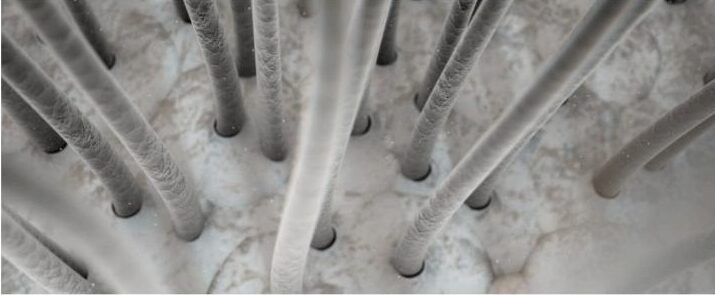
- Follicle angle. Scalp hair emerges at angles closer to perpendicular. Facial hair grows at roughly 30 to 45 degrees relative to the skin surface, and in the mustache zone it can be as shallow as 10 to 20 degrees.
- Skin characteristics. Facial skin is thinner, more mobile, and more vascularized than scalp skin. That narrows the margin for error in graft placement and raises the risk of complications such as post-inflammatory hyperpigmentation and folliculitis.
- Hair biology. Beard hair is typically thicker, more rigid, and more heavily medullated than scalp hair, with more single-hair follicular units. Applying scalp technique on a one-to-one basis can produce grafts that “stand proud” from the skin rather than blending in.
Peer-reviewed and clinical literature consistently identifies improper angulation as the most common aesthetic failure in beard transplants. The result is hair that projects outward instead of lying flat against the face. A multicenter study on beard and body FUE indexed in PubMed Central, along with clinical papers in publications such as the Indian Journal of Plastic Surgery, the Brazilian Journal of Plastic Surgery, and Hair Transplant Forum International, confirms that facial FUE is technically distinct from scalp FUE. These sources recommend that it be performed by physicians with specific training and experience in the technique.
The Five-Zone Test: Why a Beard Is Not One Procedure
A beard is not a single surface. It involves at least five distinct anatomical zones, each requiring its own protocol for angulation, density, hair caliber, and growth direction. Treating the face as one uniform zone is a documented root cause of unnatural results. A qualified clinic should be able to discuss each zone individually.
Sideburns: The Seam That Must Disappear
The sideburns form a transition seam between scalp hair and facial hair. Done well, the shift is invisible. Done poorly, it creates a visible line where one hair type abruptly meets another. Success depends on precise density tapering and careful matching of hair characteristics across the transition.
Cheeks: Highest Patient Priority, High Density Demands
For patients seeking a full beard, cheek coverage is typically the highest priority. Native cheek hair fans outward, and that direction must be replicated graft by graft. The zone also demands significant graft density to look full rather than patchy.
Mustache: The Most Technically Demanding Zone
The mustache is where angulation skill is tested most directly. Hair here emerges at a near-flat 10 to 20 degrees, the shallowest angle anywhere on the face. Native mustache hair also follows a downward and outward vector from the philtrum (the groove beneath the nose). That vector must be replicated precisely, not approximated, or the result will look combed in the wrong direction.
Goatee and Chin: Forward-and-Downward Precision
Chin hair grows forward and downward. Because this zone sits at the center of the face, misdirected grafts are immediately noticeable. Even small errors in direction can disrupt the overall symmetry of the beard.
Sub-Jawline: The Blending Challenge
The sub-jawline zone blends the beard into the neckline. Without deliberate density tapering, the beard can end in an abrupt, artificial edge that looks drawn on rather than grown.
The Donor-Supply Dimension: A Credential Rarely Discussed
Placing grafts is only half of the procedure. Where those grafts come from, and how many are used, is a separate dimension of surgical judgment.
According to ISHRS 2025 data, the occipital donor zone (the back of the scalp) supplies roughly 91.7% of donor hair used in beard transplants. Because scalp and beard hair differ, the surgeon must select donor follicles whose caliber and characteristics best match the target facial zone. That is a matter of judgment, not just extraction skill.
Supply is also finite. A full beard transplant typically requires 1,500 to 3,000 grafts, and comprehensive coverage can require up to 5,000. That is a significant draw on a patient’s lifetime donor reserve.
The demographics make this especially important. Per the ISHRS 2025 Census, 95% of first-time beard and hair restoration patients are between 20 and 35 years old, the same group most likely to experience progressive male pattern baldness later in life. A clinic that harvests aggressively for a beard today may leave a patient with limited options if he needs scalp restoration in the future.
Donor conservation planning, which balances present beard goals against potential future scalp needs, is therefore a genuine factor that separates clinics. ISHRS data shows the average patient undergoes approximately 1.5 procedures, so reputable clinics discuss multi-session planning rather than promising perfection in a single session.
Technique choice matters too. FUE accounts for over 75% of male hair restoration procedures and is preferred for facial work because it avoids a linear donor scar. For patients who may wear short hairstyles, that distinction is significant.
The Beard Transplant Clinic Audit: Four Questions That Separate Specialists from Generalists
The following four questions are designed to replace generic trust-signal checklists. Each one is intended to surface documented facial-hair-specific competency rather than general hair restoration reputation.
Question 1: What Is Their Case Volume Specific to Beard Work?
Overall hair transplant volume is a weak proxy for beard competency. A clinic may perform thousands of scalp procedures and only a handful of facial ones. Prospective patients should ask directly how many facial procedures (not scalp procedures) the surgical team has performed, and over what period. Because beard transplants remain a growing niche at about 5% of male procedures, dedicated facial volume is a meaningful differentiator.
Question 2: Is There Zone-by-Zone Portfolio Evidence?
Generic before-and-after photos are not enough. Patients should ask to see results across all five zones: sideburns, cheeks, mustache, chin, and sub-jawline. Mustache and sideburn results deserve the closest scrutiny, since they expose angulation and blending errors most clearly. A strong clinic should also be able to explain the growth-direction logic behind a specific case, not just display the final photo.
Question 3: Is There Donor-Harvest Ratio Transparency?
Patients should ask how the clinic calculates graft allocation for each zone and how it plans around future donor needs, particularly for younger patients. An open discussion of occipital donor usage and caliber matching signals surgical judgment beyond basic extraction. Vague or evasive answers about graft counts and donor planning are a warning sign.
Question 4: Who Actually Performs the Procedure, Surgeon or Technician?
Experienced technicians are a valuable part of any surgical team. Still, angle-critical steps such as recipient site creation, especially in the mustache and chin, benefit from direct surgeon involvement or oversight. Patients should ask specifically who determines the growth-direction mapping for each zone before the procedure begins.
Red Flags: When “We Also Do Beards” Signals an Add-On, Not a Specialty
There is a meaningful difference between a clinic with a documented facial restoration track record and a general hair transplant provider that offers beard work as a side service. Warning signs include:
- Inability to answer zone-specific questions about angulation, direction, or density
- No distinct facial case volume or portfolio
- Marketing focused almost entirely on scalp work, with beards mentioned only briefly
- Graft estimates offered without discussion of donor conservation
With 59% of ISHRS surgeons reporting unlicensed clinics in their area, facial procedures warrant extra scrutiny. Low-cost, high-volume medical tourism models often emphasize throughput, advertising thousands of procedures a year, over zone-specific aesthetic qualification. On the face, where every error is visible, volume without specialized skill is a risk rather than a reassurance.
What Specialized Facial Restoration Competency Looks Like in Practice
The audit is designed to surface credentialing depth. Hair Transplant Specialists in Eagan, Minnesota, offers an example of what that depth can look like.
Dr. Sharon Keene served as President of ISHRS from 2014 to 2015, the same organization that produces the census data and safety campaigns cited throughout this article. Her published research includes studies on FUE technique and safe excision limits, which bear directly on donor conservation. She received the ISHRS Platinum Follicle Award for research achievement and an award for ethics, credentials that reflect institutional-level expertise beyond general licensure.
Dr. Roy Stoller, who practices on Long Island, serves as an author and examiner for board certification exams and brings more than 20 years of individual experience. That role places him directly in the setting of technical standards for the field. The surgical team also includes board-certified surgeon Dr. Paul Rose.
The team’s combined 100-plus years of practice, along with surgical technicians who each bring 15 to 18-plus years of experience, provides the kind of tenure signal relevant to the audit’s case-volume question. Prospective patients should still ask about facial-specific case numbers directly, as the audit recommends for any clinic.
The practice offers both beard and eyebrow restoration and uses FUE, which aligns with the industry’s preference for scarless methods on visible skin. Its proprietary Microprecision Follicular Grafting® technique emphasizes natural follicular groupings and avoidance of “pluggy” results, reflecting the same angle-sensitive, naturalness-first philosophy facial work demands.
Outcome standards matter as well. Graft survival at accredited, specialist-led clinics typically ranges from 90 to 98%, with top-tier practices reporting up to 98% at the 12-month mark. Patients should confirm these benchmarks during consultation rather than assume them.
Conclusion: Let Anatomy, Not Marketing, Guide the Decision
Legal eligibility to perform a beard transplant is not evidence of facial-hair-specific competency. The anatomy of the face, with its shallow angles, thinner skin, distinct hair biology, and five separate zones, demands skills that scalp experience alone does not guarantee.
Two practical tools follow from this: the five-zone framework (sideburns, cheeks, mustache, chin, and sub-jawline) and the four audit questions covering beard-specific volume, zone-by-zone portfolio evidence, donor transparency, and surgeon involvement. Beard transplantation is a growing but still specialized field, and donor decisions made today will shape scalp options years from now.
The audit should be applied to every clinic under consideration, including recommended ones. A qualified provider will welcome the questions.
Next Step: Put a Clinic to the Test
Hair Transplant Specialists invites prospective patients to schedule a consultation and apply these audit questions directly to its surgical team. The consultation is an opportunity to review zone-specific results, discuss growth-direction planning, and talk through donor conservation firsthand rather than relying on marketing claims.
- Location: 2121 Cliff Dr., Suite 210, Eagan, MN 55122
- Phone: (651) 393-5399
- Website: INeedMoreHair.com
- Hours: Monday through Thursday, 9:00 AM to 5:00 PM; Friday, 9:00 AM to 3:00 PM; weekends by appointment
A direct, no-pressure conversation is the best way to find out whether a clinic passes the facial anatomy test.