Scalp Micropigmentation Specialist vs. Studio Technician: The Medical-Grade Difference That Determines Your Outcome
Introduction: The Title “Specialist” Means Nothing Without Context
In a market where nearly anyone can print business cards reading “scalp micropigmentation specialist,” the word itself has become almost meaningless, unless a patient knows exactly what to look for. The title carries no universal standard, no guaranteed clinical training, and no assurance that the person holding it can evaluate whether the procedure is even appropriate for a given patient.
The clearest evidence of this problem comes from a 2025 retrospective study published in the International Journal of Dermatology by Park and colleagues. Reviewing 120 patients who required corrective procedures after failed scalp micropigmentation (SMP), the researchers found that 89.2% had originally been treated at tattooing or beauty salons rather than medical clinics (Park et al., International Journal of Dermatology). That single figure reframes the entire conversation.
The core thesis of this article is straightforward: there are two categorically different types of SMP providers. On one side sit cosmetic studio practitioners. On the other sit physician-supervised medical specialists. The distinction between them is the single most important factor determining a patient’s outcome.
This matters more than ever because the SMP market is booming. Valued at roughly $2.80 to $3.10 billion in 2025 and 2026, it is projected to approach $4.91 billion by 2033 and 2034. With that growth has come an explosion of providers, including approximately 3,800 active SMP training academies worldwide as of 2026, up 81% from 2021. The sections that follow examine the regulatory landscape, the clinical requirements of complex cases, the widening technology gap, and what a genuine medical-grade specialist environment actually looks like.
The SMP Market Explosion and the Practitioner Quality Crisis
Demand for SMP is being driven by the roughly 80 million Americans affected by hair loss and the appeal of a non-surgical, accessible solution. For many patients, SMP represents a practical path to restored confidence without an operating room.
Rapid growth, however, carries a paradox. As the industry expands and training academies proliferate, average practitioner quality is diluting rather than improving. More providers does not mean more qualified providers. The 81% surge in training academies since 2021 raises pressing questions: What do these academies actually teach? How long does training take? And are graduates equipped for genuinely complex clinical applications?
The answer is visible in the corrective patient segment. Roughly 23% of SMP patients are correcting prior transplant results or unsatisfactory SMP outcomes, a figure that illustrates the scale of the quality problem in stark terms.
The Park et al. findings put a human face on those numbers. The researchers described improperly performed SMP as “exceedingly challenging to rectify” and documented that failed procedures caused severe mental stress and feelings of inferiority in patients. The stakes are not merely cosmetic; they are psychological, and they are lasting. The root cause of this crisis is not simply skill. It is the absence of meaningful regulatory oversight.
The Regulatory Patchwork: Why “Licensed” Doesn’t Mean What You Think
Standardized licensing requirements for SMP vary dramatically across U.S. states. Some states have no statewide SMP-specific regulation at all, deferring instead to county-level health departments. The result is a fragmented patchwork of oversight that leaves patients exposed.
The practical implication is sobering. A practitioner can be fully “licensed” in their jurisdiction while having received minimal training, no clinical oversight, and no requirement whatsoever to understand contraindications, skin pathology, or a patient’s medical history.
It is also critical to distinguish between cosmetic licensing and medical credentialing. A tattoo artist permit or an esthetician license is not equivalent to clinical training. Those credentials do not confer the medical knowledge required for complex SMP applications. Medical News Today explicitly advises against seeking SMP at a tattoo studio, recommending instead that patients consult a healthcare professional or a trained SMP specialist, precisely because the lack of regulation demands thorough due diligence.
This regulatory gap creates a genuine consumer vulnerability. A patient searching for a “scalp micropigmentation near me” may find providers who are technically compliant with local law yet clinically unequipped for anything beyond a routine case. The only setting where these gaps are reliably filled is a physician-supervised environment, where medical credentialing, board certification, and institutional accountability apply regardless of what state-level SMP rules happen to require.
What a Cosmetic Studio Practitioner Can and Cannot Do
The typical cosmetic studio SMP practitioner is trained in pigment application technique, often affiliated with a training academy, credentialed in bloodborne pathogen safety, and genuinely skilled in aesthetic artistry. These are real competencies and should not be dismissed. Standard SMP applications on healthy scalp tissue, performed for patients with straightforward hair loss presentations, can produce acceptable results in skilled hands.
The limitations, however, are critical. A cosmetic studio practitioner is not equipped to:
- Perform skin type assessment for contraindication screening
- Evaluate hair loss classification or underlying medical causes
- Review treatment history for drug interactions or prior procedures
- Assess scar type and tissue behavior before scar camouflage
- Determine whether SMP is the appropriate primary intervention or a secondary, complementary one
Cleveland Clinic warns that the biggest risks of SMP come from unlicensed or inexperienced practitioners, including allergic reactions to pigments, infection from unsterilized needles, and unnatural or undesirable appearance. There is also a technical failure mode specific to studio settings: poorly trained practitioners often use regular tattoo techniques and inks deposited too deeply, causing pigments to break down and turn blue under the skin. This is one of the most common complaints in corrective cases. These are not artistic failures; they are clinical failures rooted in the absence of medical evaluation protocols.
What a Medical-Grade Scalp Micropigmentation Specialist Actually Provides
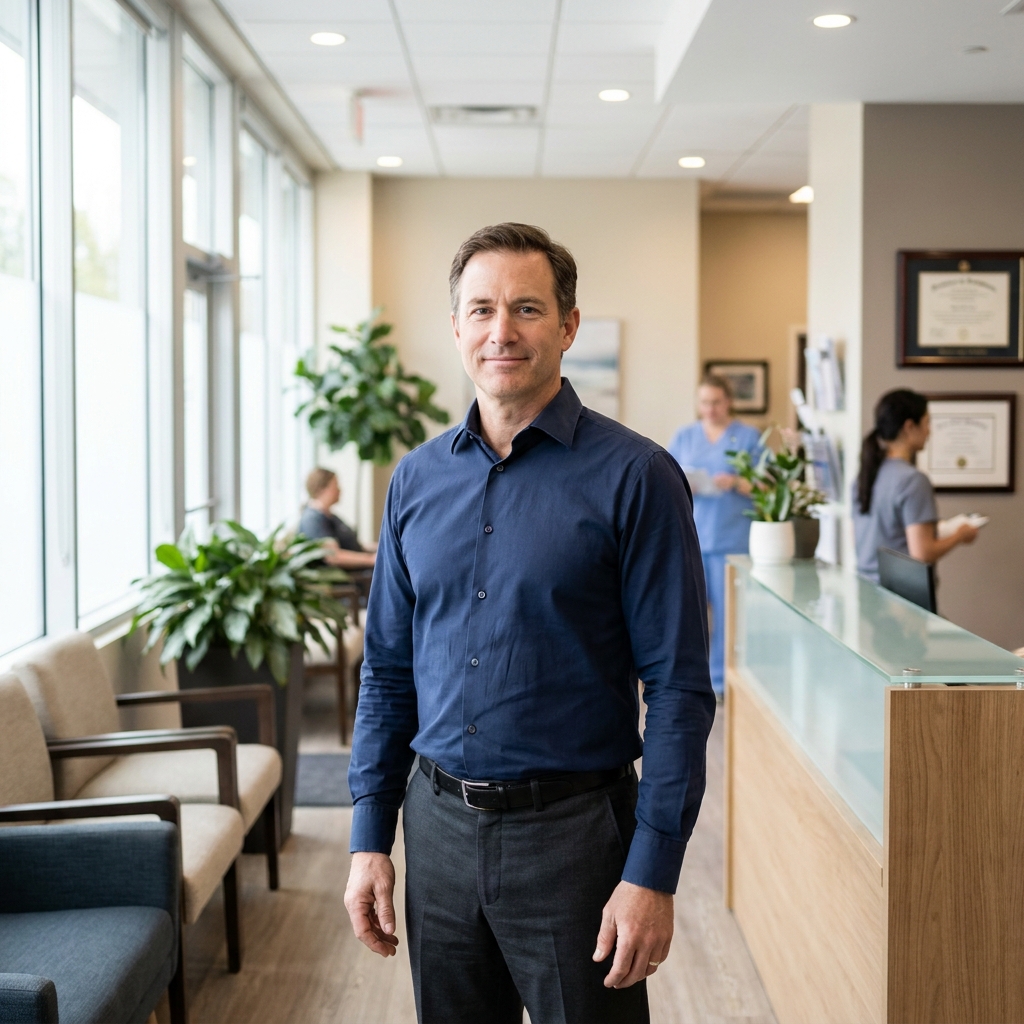
A medical-grade SMP environment is a physician-supervised setting where the procedure is performed within a full hair restoration medical practice. It integrates clinical evaluation with procedural expertise rather than treating pigment application as a standalone service.
The pre-procedure evaluation is where the difference becomes tangible. A medical setting can provide:
- Comprehensive skin type assessment
- Contraindication screening for medications, autoimmune conditions, bleeding disorders, and active scalp infections
- Hair loss classification using validated diagnostic frameworks
- Treatment history review, including prior SMP, hair transplants, and topical or oral medications
- Goal-setting aligned with the patient’s full hair restoration trajectory
The significance of physician oversight cannot be overstated. A board-certified hair restoration surgeon can determine not only how to perform SMP but whether SMP is the right intervention at all, whether it should complement a surgical plan, follow a transplant procedure, or be deferred entirely.
The International Society of Hair Restoration Surgery (ISHRS) describes SMP as an “indispensable” part of a comprehensive hair surgeon’s practice, lending institutional authority to the medical-setting advantage. Among physician-oriented credentials, the ASAHRS Fellowship stands out as one of the most rigorous certification pathways, combining evidence-based medicine, advanced technology, ethical practice, and hands-on clinical competency. That stands in sharp contrast to a studio-level academy certificate. A 2025 Annals of Dermatology survey found strong patient preference for medically supervised SMP environments, especially among patients who had prior SMP experience and had seen both sides firsthand (Annals of Dermatology).
High-Complexity Applications: Where the Clinical Gap Becomes a Safety Gap
Not all SMP applications carry equal risk. The most in-demand procedures are frequently the most clinically demanding, and it is precisely in these cases that the gap between studio and medical settings widens from a quality issue into a safety issue.
Scar Camouflage: Why Scar Tissue Requires Clinical Assessment
Scar tissue behaves unpredictably as an SMP substrate. Pigment can spread, fade, or change tone in ways that healthy scalp tissue does not, requiring zone-specific needle selection, adjusted technique, and clinical assessment of scar type, texture, and maturity. Scar camouflage typically demands more sessions spaced further apart than standard SMP, and outcomes depend heavily on accurate scar classification.
A 2026 study in the Journal of Cutaneous and Aesthetic Surgery confirmed SMP as a viable aesthetic intervention in scarring alopecia, with results described as “diagnosis-dependent.” The word “diagnosis” itself signals that clinical evaluation is a prerequisite, not an option. A cosmetic studio has no mechanism to classify scar type, assess tissue behavior, or anticipate complications, making scar camouflage in a non-medical setting a categorically higher-risk procedure. This is precisely where a surgical practice such as Hair Transplant Specialists excels: camouflaging FUT linear scars or FUE dot scars requires understanding of the original surgical procedure, knowledge that only a surgical practice possesses.
Alopecia Coverage: When Hair Loss Has a Medical Dimension
Alopecia is not a single condition. Androgenetic alopecia, scarring alopecia, alopecia areata, traction alopecia, and telogen effluvium each carry different causes, progression patterns, and SMP candidacy profiles. The alopecia treatment segment is the fastest-growing within the SMP market, reflecting rising demand for specialist-level care precisely because these patients have complex needs.
A 2025 study by Liu and colleagues in the Journal of Cosmetic Dermatology documented strong outcomes from a standardized three-session SMP protocol in androgenetic and scarring alopecia patients, with Visual Density Scores reaching 8.7 out of 10 immediately post-treatment and remaining high at follow-up. Crucially, that protocol was administered in a clinical setting with proper patient selection. Applying SMP to a scalp where hair loss is still progressing can produce results that look mismatched within months, requiring costly correction. Women face a particularly acute version of this risk, as female pattern hair loss requires a different diagnostic and treatment approach than male pattern baldness, a distinction a 2024 comparative study in the Journal of Cosmetic Dermatology explored in depth (Journal of Cosmetic Dermatology, 2024).
Post-Transplant Correction: The Case Only a Surgical Practice Can Fully Solve
Roughly 23% of SMP patients are correcting prior transplant results, including density gaps, visible scars, unnatural hairlines, or areas of incomplete coverage. This application is uniquely suited to a surgical practice. Understanding graft placement, donor area depletion, follicular unit density, and hairline design requires surgical knowledge that no standalone studio possesses.
A physician-led practice can evaluate whether SMP alone is sufficient, whether additional surgical grafting is needed, or whether a combination approach produces the best outcome, all without institutional bias toward any single modality. This evaluation is only possible where SMP exists alongside surgical hair restoration. Hair Transplant Specialists, with its board-certified surgical team experienced in FUE, FUT, and SMP within one integrated practice, is precisely positioned to serve this patient segment.
The Technology Gap: What Medical-Grade Clinics Offer That Studios Cannot
In 2026, leading medical-grade SMP clinics deploy AI-powered scalp mapping for precise pigment placement, hyper-realistic pigment matching using spectrophotometric analysis, and digital hairline design previews that let patients visualize outcomes before treatment begins.
These tools translate directly into better results. AI scalp mapping reduces placement errors. Spectrophotometric pigment matching minimizes color mismatch and long-term tone shift. Digital simulation aligns patient expectations with realistic outcomes. Most cosmetic studios, by contrast, rely on practitioner eye and manual technique without access to diagnostic imaging, pigment analysis, or design software.
This gap is widening rather than narrowing. As medical-grade clinics invest in diagnostic and design infrastructure, the quality differential grows. Trichoscopy offers a clear example: peer-reviewed research has confirmed it as a useful non-invasive tool for visualizing SMP placement and assessing scalp health, yet it falls entirely outside the scope of a cosmetic studio. Better tools, better oversight, and better outcomes follow from the medical-grade environment.
How to Evaluate a Scalp Micropigmentation Specialist: A Clinical Credential Checklist
For patients actively vetting providers, the following framework separates genuine medical-grade specialists from studio-level operators.
Credentials and Oversight to Look For
- Is the SMP performed within a physician-supervised or board-certified hair restoration practice, or is it a standalone cosmetic studio?
- Does the provider hold recognized medical or clinical SMP certifications, such as the ASAHRS Fellowship, rather than only tattoo or beauty academy certificates?
- Are board-certified surgeons involved in patient evaluation, treatment planning, and oversight, even if a trained technician performs the procedure?
- Does the practice conduct a comprehensive pre-procedure clinical evaluation including contraindication screening, hair loss classification, and treatment history review?
- Is the practice affiliated with recognized professional bodies such as the ISHRS?
- Can the practice address the full spectrum of hair restoration needs, surgical and non-surgical, without being limited to SMP as its only tool?
Red Flags That Signal a Studio-Level Provider
- The provider operates from a tattoo parlor, beauty salon, or standalone cosmetic studio without physician affiliation.
- No pre-procedure medical consultation or contraindication screening is offered; the process moves directly from inquiry to booking.
- Credentials are limited to tattoo artist licensing, esthetician certification, or training academy completion without clinical oversight.
- The provider cannot explain the difference between androgenetic alopecia, scarring alopecia, and other hair loss types, or does not ask about a diagnosis.
- Scar camouflage or alopecia coverage is offered without any assessment of scar type, tissue condition, or hair loss progression.
- The provider uses standard tattoo equipment and inks rather than SMP-specific needles and medical-grade pigments.
The empirical basis for taking these red flags seriously is the Park et al. finding: 89.2% of patients who needed corrective SMP had originally been treated in exactly these settings.
Hair Transplant Specialists: SMP Within a Full Medical Hair Restoration Practice
Hair Transplant Specialists (INeedMoreHair.com) embodies the medical-grade standard described throughout this article. The categorical differentiator is straightforward: SMP here is performed within a full surgical hair restoration practice, not a standalone studio. Every patient benefits from the clinical infrastructure, physician oversight, and diagnostic capability of a complete medical practice.
The board-certified surgical team reflects extraordinary depth. Dr. Sharon Keene served as President of the ISHRS from 2014 to 2015 and received the Platinum Follicle Award for outstanding research. Dr. Roy Stoller is an author and examiner for board certification exams and an international presenter. Dr. Paul Rose is board-certified and trained with elite aesthetic surgeons worldwide. Together, the team represents more than 100 years of combined practice, supported by surgical technicians with over 18 years of experience each, a depth no training academy can replicate.
Because the practice offers FUE, FUT, SMP, and non-surgical hair loss treatments under one roof, every patient receives an unbiased evaluation of which approach, or combination of approaches, best serves their goals. The team’s surgical expertise means they understand the origin, structure, and behavior of transplant-related scars better than any non-surgical provider. Based in Eagan, Minnesota, with Dr. Stoller also practicing on Long Island, the practice serves patients across a wide geographic range and exemplifies the ISHRS position that SMP is indispensable within a comprehensive hair surgeon’s practice.
The Human Cost of Getting This Decision Wrong
Failed SMP is not merely an aesthetic inconvenience. The Park et al. study explicitly documented that improperly performed SMP causes severe mental stress and feelings of inferiority in patients. Corrective work compounds the difficulty: pigment removal or revision is technically demanding, time-consuming, and not always fully successful, which makes the original provider choice consequential in ways most patients never anticipate.
For the roughly 80 million Americans affected by hair loss, SMP represents a significant emotional investment, not just a cosmetic one. A failed outcome deepens the original distress rather than resolving it. Women face a particularly acute version of this risk, given the psychological burden of female pattern hair loss and the reality that theirs is the fastest-growing segment of the market. The choice of who performs SMP is not a matter of preference; it is a clinical safety decision with lasting consequences, and understanding that empowers patients rather than discouraging them from a treatment that helps many people.
Conclusion: The Specialist Title Must Be Earned, Not Assumed
The term “scalp micropigmentation specialist” spans two categorically different kinds of providers: cosmetic studio practitioners and physician-supervised medical specialists. That distinction determines the safety, accuracy, and longevity of a patient’s results. The Park et al. finding remains the empirical anchor: 89.2% of patients who needed corrective SMP had originally been treated in tattoo or beauty salon settings. That is a matter of clinical record, not opinion.
The medical-grade advantage rests on three pillars: clinical evaluation capability, integrated care access that allows SMP to be weighed against surgical and non-surgical alternatives without bias, and technology infrastructure including AI scalp mapping, spectrophotometric pigment matching, and digital design previews. For straightforward applications on healthy scalp tissue, a skilled studio practitioner may produce acceptable results. For scar camouflage, alopecia coverage, and post-transplant correction, however, the medical-grade environment is not a preference; it is a prerequisite. As the market keeps growing and the practitioner pool keeps expanding, the credential gap between studio and medical-grade providers will only become more consequential, and more visible in outcome data.
Ready to Meet a True Scalp Micropigmentation Specialist? Schedule Your Consultation
Patients who want SMP performed within a full medical hair restoration practice can take the next step with Hair Transplant Specialists at INeedMoreHair.com. The consultation is the starting point for a comprehensive clinical evaluation, not merely a booking. The board-certified team will assess whether SMP is the right approach, the right timing, and the right complement to any broader hair restoration plan.
The practice welcomes patients at its Eagan, Minnesota location, with Dr. Stoller also practicing on Long Island. To schedule, visit INeedMoreHair.com or call (651) 393-5399. Consultations are available Monday through Thursday from 9:00 AM to 5:00 PM, Friday from 9:00 AM to 3:00 PM, and by appointment on weekends.