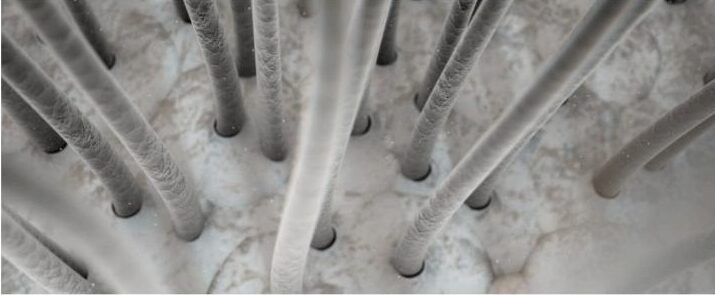
Platelet Rich Plasma Hair Loss Treatment: How It Works
The Blood-to-Scalp Science: Centrifuge Layers, Injection Depth Precision, and the Activated vs. Non-Activated Distinction That Determines Results
Introduction: Why Most PRP Explanations Leave Patients More Confused Than Informed
Platelet-rich plasma (PRP) is one of the most discussed non-surgical hair restoration treatments available today, yet most explanations of how it works stop at a single vague sentence: “growth factors stimulate the follicles.” For a patient trying to decide whether to invest time and money in a treatment, that phrase is almost useless. It says nothing about why one PRP treatment produces measurable hair density gains while another produces nothing but a sore scalp.
The truth is that the difference between PRP that works and PRP that does not often comes down to three clinically critical variables: whether the PRP is activated before injection, how precisely it is injected into the scalp, and what molecular events actually occur inside the follicle afterward. Most clinics never explain any of these to their patients.
This article addresses PRP at three levels of depth. First, the centrifuge science and how blood separates into distinct layers. Second, the activated versus non-activated distinction, validated by a landmark 2025 meta-analysis of 43 randomized controlled trials. Third, the molecular signaling cascade (ERK, Akt/PI3K, VEGF) that explains the cellular mechanism in concrete terms.
PRP for hair restoration was first pioneered by Brazilian plastic surgeon Dr. Carlos Uebel in 2004. In the two decades since, it has grown into a globally practiced technique with a rapidly expanding evidence base. This guide is designed for anyone in the research phase who wants to evaluate PRP intelligently: not merely to understand that it exists, but to determine whether a specific clinic’s protocol is likely to deliver results.
What PRP Actually Is: Concentrating the Blood’s Most Powerful Healing Agents
PRP is a concentration of platelets derived from the patient’s own blood. Platelets are best known for their role in clotting, but they also store and release a powerful mix of growth factors and cytokines that drive tissue repair and regeneration.
The key growth factors in PRP each play a distinct role in the hair cycle:
- PDGF (platelet-derived growth factor): initiates and regulates the anagen (growth) phase.
- VEGF (vascular endothelial growth factor): promotes perifollicular angiogenesis, building blood supply around the follicle.
- TGF-β (transforming growth factor beta): modulates inflammation and promotes anagen extension.
- IGF-1 (insulin-like growth factor 1): promotes anagen entry and inhibits apoptosis (cell death).
- EGF (epidermal growth factor): drives epithelial cell proliferation.
- bFGF (basic fibroblast growth factor): stimulates dermal papilla cell proliferation.
Concentration is what makes PRP therapeutic. A typical human blood platelet count is approximately 200,000 per µL. Therapeutic PRP concentrates platelets roughly four-fold, and high-quality preparations can exceed 1,000,000 platelets/µL, a threshold that matters clinically because low-platelet PRP simply fails to deliver meaningful results.
It is equally important to understand what PRP does not do. It does not create new follicles from scratch. Instead, it rescues and reactivates follicles that are present but underperforming due to the miniaturization process of androgenetic alopecia.
Finally, patients deserve transparency on regulatory status. The equipment used to prepare PRP is FDA-cleared, but the hair loss indication itself is off-label, meaning it is not FDA-approved for that specific use and is not covered by insurance.
The Blood-to-Scalp Pipeline: A Step-by-Step Science of PRP Preparation
One of PRP’s practical advantages is efficiency. The entire process, from blood draw to injection, typically takes about 30 to 60 minutes, making it a relatively quick in-office treatment.
It begins with a simple blood draw, usually 10 to 60 mL collected from the patient’s arm. The starting volume matters more than most patients realize, because it directly affects the final platelet yield: a larger draw provides more raw material to concentrate.
Inside the Centrifuge: How Three Distinct Blood Layers Are Created
Once collected, the blood is placed into a centrifuge and spun at high speed for roughly ten minutes. The physics is straightforward: rapid spinning generates centrifugal force that separates blood components by density. Heavier components sink; lighter ones rise.
This produces three distinct layers:
- Platelet-poor plasma (top layer): mostly plasma proteins with low platelet content.
- Platelet-rich plasma (middle layer): the therapeutic target, rich in concentrated platelets and growth factors.
- Red blood cells (bottom layer): the densest component, separated out and discarded.
The middle layer is the clinical prize. A skilled technician must carefully extract it without contaminating it with red blood cells below or diluting it with platelet-poor plasma above. This extraction step is a genuine skill, not a formality.
Quality separates good PRP from mediocre PRP, and the double-spin centrifugation method is central to that quality. A two-stage spinning process produces more consistent, higher-quality PRP, reliably achieving the optimal platelet concentration of 2 to 6 times normal blood levels required for the best outcomes. By contrast, single-spin protocols produce more variable platelet concentrations, which translates directly into inconsistent clinical results. This is a legitimate quality variable patients should ask their provider about.
Underlying all of this is a sobering industry reality. A 2026 review in the Journal of Cosmetic Dermatology acknowledged that no standardized preparation protocol exists across the field. In practical terms, PRP quality varies significantly between clinics, which is precisely why understanding these variables matters.
The Activated vs. Non-Activated Distinction: The Single Most Important Variable Most Clinics Do Not Explain
Once PRP is prepared, it can be administered in one of two fundamentally different states: activated or non-activated. This distinction, rarely explained to patients, has profound consequences for both efficacy and safety.
Activation means adding an agent such as calcium chloride or thrombin to the PRP, which triggers platelet degranulation: the release of the growth factors stored inside platelet alpha-granules. Without deliberate activation, platelets may release their growth factors more slowly and less completely once injected.
The evidence on this point is now substantial. A landmark 2025 systematic review and meta-analysis published in Dermatology and Therapy analyzed 43 randomized controlled trials with 1,877 participants. It found that activated PRP was effective in increasing hair density and minimizing recurrence compared with placebo. Critically, non-activated PRP was associated with a higher frequency of adverse effects.
The clinical implication is significant. This is not a minor procedural footnote; it is the variable that can separate a treatment producing measurable density gains from one that generates side effects without proportionate benefit.
Before any PRP treatment, patients should ask three questions: Does the provider use activated or non-activated PRP? What activation agent is used? And how do they verify platelet concentration in the final preparation?
There is nuance worth acknowledging. Some protocols achieve results through injection-site activation, since contact with collagen in the dermis triggers a degree of degranulation naturally. However, intentional pre-activation with calcium chloride or thrombin produces significantly higher growth factor release, and the meta-analysis evidence favors it.
Injection Depth Precision: The 1.5 to 2.0 mm Standard That Determines Whether Growth Factors Reach Their Target
Even perfectly prepared, activated PRP will underperform if it is injected to the wrong depth. This is not a minor technical detail. PRP must be delivered to the precise anatomical location of the hair bulb, the metabolically active base of the follicle, to exert its biological effects.
The clinical standard is an injection depth of 1.5 to 2.0 mm, targeting the intradermal and subcutaneous layer where the hair bulb resides. The 2026 Journal of Cosmetic Dermatology review documented a steep penalty for missing this window: administration under 1.0 mm reduces efficacy by 38 to 45 percent. Growth factors deposited too superficially in the epidermis cannot diffuse efficiently to their follicular targets.
The anatomical logic is simple. The hair bulb contains the dermal papilla cells that regulate the entire hair growth cycle. It sits at a specific depth, and injections that miss this zone deposit growth factors into tissue that cannot use them effectively.
Precision at this level requires standardized needle gauges, controlled injection technique, and detailed anatomical knowledge of how scalp layer depth varies across different regions of the head. This is precisely why the skill and training of the administering clinician directly determine outcomes, and why patients are well served by choosing a hair restoration specialist rather than a general aesthetics clinic.
The Molecular Signaling Cascade: What Actually Happens Inside the Follicle After Injection
Understanding the molecular mechanism is not merely academic. It explains why PRP works, under what conditions it works best, and why it fails when preparation or delivery standards are compromised.
When growth factors bind to receptors on the surface of follicular cells, they trigger intracellular signaling cascades: chains of molecular events that ultimately alter gene expression and change cell behavior. Three cascades are central to PRP’s action.
The ERK Pathway: Driving Cellular Proliferation
Growth factors such as PDGF and EGF bind to cell surface receptors and activate the ERK (extracellular signal-regulated kinase) pathway. In accessible terms, this cascade instructs the cell nucleus to produce the proteins needed for cell division.
In hair restoration, ERK activation in dermal papilla cells and follicular keratinocytes drives the proliferation that extends the anagen (growth) phase of the hair cycle. This matters directly for androgenetic alopecia, where DHT-driven miniaturization progressively shortens the anagen phase. ERK pathway activation counteracts that trend by promoting cell division and renewed follicle activity.
The Akt/PI3K Pathway: Protecting Follicles From Programmed Cell Death
The Akt/PI3K pathway, activated by IGF-1 and other growth factors, promotes cell survival by suppressing apoptosis, the process of programmed cell death. A key mechanism here is that Akt activation upregulates BCL-2, an anti-apoptotic protein that prevents follicular cells from dying prematurely.
The practical significance is considerable. Follicles in early-to-moderate androgenetic alopecia are not dead; they are miniaturized and increasingly vulnerable to apoptosis. The Akt pathway’s anti-apoptotic effect is one reason PRP can rescue these follicles before they are permanently lost.
This also explains a critical timing insight: because the pathway’s effectiveness depends on follicle viability, PRP achieves 70 to 80 percent success rates in early-to-moderate hair loss but is significantly less effective for severe baldness (Norwood Grade 6 to 7), where too few viable follicles remain.
VEGF-Driven Angiogenesis: Building the Blood Supply Follicles Need to Thrive
VEGF is one of the most abundant growth factors in PRP, and it stimulates angiogenesis: the formation of new blood vessels around the hair follicle. Growth factors and cytokines in PRP stimulate cell proliferation, angiogenesis, and collagen synthesis, helping to stimulate hair follicles, prolong the anagen phase, and reduce scalp inflammation.
Anagen-phase follicles are metabolically demanding and require a robust perifollicular blood supply to deliver oxygen and nutrients. In androgenetic alopecia, miniaturized follicles often suffer from compromised microcirculation. VEGF-driven angiogenesis builds new capillaries around treated follicles, improving nutrient delivery and creating a more favorable microenvironment for sustained growth.
There is a synergistic dimension as well: IGF-1 in PRP boosts VEGF expression, so one growth factor amplifies the action of another. Transcriptomic studies reinforce these observations, showing upregulation of genes associated with follicular growth and angiogenesis after PRP therapy, confirming these molecular events at the genetic level.
Who Responds Best to PRP: Matching the Science to the Patient
Properly administered PRP demonstrates 30 to 40 percent increased hair density after three to six months, with patient response rates of 70 to 80 percent.
The ideal candidate is in the early-to-moderate stages of hair loss (roughly Norwood Grades 1 to 4 for men, Ludwig Grades 1 to 2 for women) with follicles that are miniaturized but still viable. The molecular pathways PRP activates require living follicular cells to act upon.
The gender data challenges a common assumption. Female patients report 75 to 85 percent satisfaction versus 70 to 75 percent for men, making PRP a clinically validated option for female androgenetic alopecia rather than a treatment primarily suited to male pattern baldness.
Age also matters. Patients under 40 show significantly higher response rates due to greater follicle viability. For patients considering the best age for hair transplant surgery, this same principle of follicle viability applies across all restoration approaches.
PRP is a poorer fit for severe baldness (Norwood Grade 6 to 7), scarring alopecia, or stress-triggered telogen effluvium. It is contraindicated for individuals with blood or bleeding disorders, active cancer, low platelet count, or sepsis, and for those taking blood thinners or NSAIDs within 48 hours of treatment.
Finally, systemic factors can blunt results regardless of technique. Iron deficiency, hormonal imbalances, and poor scalp health can all reduce PRP efficacy, which is why comprehensive providers assess these variables before and during treatment.
The Treatment Protocol: What a Properly Structured PRP Program Looks Like
A standard initial protocol involves 3 to 4 sessions spaced 4 to 6 weeks apart. This spacing allows each treatment to build on the biological response initiated by the previous one.
Effects typically last 12 to 18 months before maintenance is needed. Maintenance sessions every 4 to 6 months significantly reduce recurrence. The data is striking: only 20 percent of patients experience significant recurrence at one year when maintaining sessions on that schedule, compared with substantially higher relapse rates in those who discontinue.
Side effects are generally minor and temporary: scalp tenderness (about 15 percent of cases), mild swelling at injection sites (usually resolving within 24 to 48 hours), minor headache (under 10 percent of patients), and pinpoint bleeding at injection sites.
The 2025 meta-analysis findings on activated PRP’s superiority apply within a properly structured, maintained protocol, not to one-off treatments.
PRP’s Most Powerful Application: Surgical Synergy Rather Than Standalone Treatment
Most content positions PRP as a standalone alternative to hair transplant surgery. That framing misses where PRP delivers its most powerful, evidence-backed results.
PRP functions as a biological amplifier when combined with hair transplant surgery, enhancing graft survival, accelerating healing, and improving the density of transplanted results. A 2025 systematic review in Cureus found that across the studies examined, adding PRP to hair transplantation was associated with increased hair density, enhanced follicle survival, and earlier initiation of hair growth.
Surgical PRP application spans three phases: pre-operative (conditioning the scalp’s vascular environment), intraoperative (graft preservation and immediate growth factor delivery), and post-operative (accelerating healing and reducing shock loss).
This application carries institutional endorsement at the highest level. Updated February 2026 guidance from Johns Hopkins Medicine notes that PRP can aid in the stimulation of hair growth after hair transplants.
The logic is complementary. Hair transplant surgery addresses the structural problem by relocating DHT-resistant follicles, while PRP addresses the biological environment through growth factor signaling, angiogenesis, and anti-apoptosis. Combined, they attack the problem at two distinct levels simultaneously. Patients interested in understanding natural hair density after transplant will find that PRP’s role in this outcome is increasingly well-supported by the evidence.
Combination Protocols: Stacking Treatments for Superior Outcomes
Beyond surgery, PRP performs well within combination protocols. Pairing PRP with microneedling or topical minoxidil has shown up to 50 percent better outcomes than PRP monotherapy, a clinically significant improvement that standalone PRP cannot match.
Research published in the Journal of the American Academy of Dermatology examined PRP combined with microneedling and topical minoxidil for refractory severe androgenetic alopecia, demonstrating superior results even in cases that had not responded to individual treatments.
The mechanistic rationale is clear. Microneedling creates microchannels that enhance PRP penetration while independently stimulating collagen and growth factor production. Minoxidil extends the anagen phase through a different molecular mechanism (potassium channel activation and VEGF upregulation), producing additive effects alongside PRP’s growth factor delivery. Combining PRP with finasteride and minoxidil is likewise identified in the clinical literature as among the most effective approaches.
Leading specialists recommend combination protocols that stack treatments targeting hormonal, circulatory, and cellular mechanisms simultaneously, with PRP as a central component. For patients exploring how hair loss treatment combining surgery and medication fits into a comprehensive plan, PRP represents a key biological layer within that strategy. Next-generation adjuncts are also emerging: exosome therapy and platelet-rich fibrin (PRF) represent the direction the field is moving, helping patients understand where PRP sits in an evolving treatment landscape.
How Hair Transplant Specialists Applies These Clinical Standards
Understanding the three critical variables (activation status, injection depth precision, and molecular mechanism) provides a framework for evaluating any PRP provider. At Hair Transplant Specialists, PRP is integrated into a broader, evidence-based approach that considers each patient’s stage of hair loss, follicle viability, hormonal environment, and long-term restoration goals.
For patients who are candidates for FUE or FUT hair transplantation, PRP serves as a powerful adjunct within a comprehensive restoration protocol: not a replacement for surgery, but a biological amplifier of surgical outcomes. This aligns directly with the surgical synergy evidence.
The practice’s surgeons, including former ISHRS President Dr. Sharon Keene, maintain active engagement with the peer-reviewed literature that produces findings like the 2025 meta-analysis, ensuring clinical protocols reflect current evidence rather than outdated conventions.
Because PRP outcomes depend heavily on patient-specific factors, a thorough hair transplant consultation is the essential first step, functioning as a clinical assessment rather than a sales process. Hair Transplant Specialists offers the full spectrum of treatments referenced in combination protocols, including FUE, FUT, PRP, finasteride, minoxidil, low-level light therapy, Alma TED, and exosome therapy, enabling genuinely individualized combination protocols rather than one-size-fits-all approaches.
Conclusion: The Science Behind PRP Is Precise, and So Should Be the Provider
PRP works through a specific molecular cascade: ERK-driven proliferation, Akt-driven anti-apoptosis, and VEGF-driven angiogenesis. It only works, however, when the preparation meets quality thresholds (double-spin centrifugation and adequate platelet concentration), when the PRP is properly activated (as validated by the 2025 meta-analysis of 43 RCTs), and when injection depth targets the hair bulb at 1.5 to 2.0 mm.
These are not minor procedural details. They are the variables that determine whether a patient experiences meaningful hair density gains or a treatment that produces side effects without proportionate benefit.
For anyone considering PRP, the most important reframe is understanding that its most powerful application is as part of a comprehensive, multi-modality protocol, particularly in combination with hair transplant surgery for appropriate candidates. Armed with this framework, patients can ask the right questions of any provider: about activation protocols, centrifugation methods, injection depth standards, and how PRP fits into a broader strategy.
As the evidence base continues to grow, with the non-surgical hair restoration market forecast to expand at an 11.04 percent CAGR through 2031, PRP’s role in comprehensive hair restoration will only become more precisely defined and more effectively delivered.
Ready to Understand Whether PRP Is Right for Your Hair Loss?
The science is clear, but applying it to an individual requires a clinical assessment, not a generic recommendation. A consultation with Hair Transplant Specialists provides a personalized evaluation of a patient’s hair loss stage, follicle viability, and candidacy for PRP, whether as a standalone treatment or as part of a comprehensive surgical or non-surgical protocol.
The consultation delivers a clear understanding of which treatments, individually or in combination, are most likely to produce meaningful results based on the patient’s specific biology and goals.
Hair Transplant Specialists
2121 Cliff Dr. Suite 210, Eagan, MN 55122
Phone: (651) 393-5399
Website: INeedMoreHair.com
At Hair Transplant Specialists, the focus is on the patient’s journey, not just the procedure, ensuring that every step from assessment through treatment and maintenance is guided by clinical evidence and individualized care.