Beard Hair Transplant Near Me: The 5-Question Clinic Vetting Framework
Introduction: Why Finding the Right Beard Transplant Surgeon Is Harder Than It Looks
Fuller beards dominate men’s grooming in 2026. Industry experts confirm that fuller beards are making a comeback, with grooming professionals reporting clients actively growing their beards out again. This cultural shift has driven a 49% surge in beard transplant interest across metro areas, transforming what was once a niche procedure into a mainstream consideration.
For patients actively searching for a local provider, the challenge extends far beyond simply finding a clinic that offers beard transplants. The uncomfortable reality is that any licensed physician in the United States can legally perform hair transplant surgery without specialized training. This regulatory gap creates a minefield for patients navigating the local market.
The consequences of poor provider selection are measurable. According to ISHRS data, repair cases from unqualified practitioners now account for 10% of all cases seen by qualified surgeons — patients who trusted the wrong clinic and now require complex corrective procedures.
This article provides a structured 5-question vetting framework designed to separate genuinely specialized beard restoration surgeons from general cosmetic clinics that happen to offer the procedure. Patients will gain specific credential questions to ask, red-flag signals to recognize, consultation preparation steps, and gallery evaluation criteria that protect against costly mistakes.
Why Beard Transplants Demand a Specialist — Not Just Any Hair Clinic
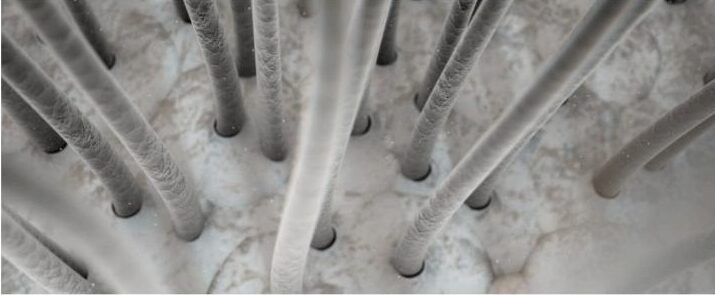
Beard transplants are fundamentally different from scalp procedures. Facial hair follicles grow at 30–45 degree angles relative to the skin surface, in stark contrast to scalp hair, which grows closer to perpendicular. This angulation difference demands an entirely different surgical approach and zone-by-zone design expertise.
The biological distinctions extend further. Beard hair has nearly twice as many cuticle layers as scalp hair, and the average diameter of beard hair (125 microns) significantly exceeds that of scalp hair (69 microns). These characteristics make donor-recipient matching a critical surgical consideration that general hair clinics may overlook.
Robotic FUE systems, increasingly common for scalp procedures, cannot currently be used for beard hair extraction due to design limitations. Manual extraction by a skilled surgeon is non-negotiable, which is one reason beard transplants demand more specialized expertise.
A full beard transplant requires 2,500–4,000 grafts distributed across distinct zones: mustache (350–500 grafts), each cheek zone (300–700 grafts), goatee, and sideburns. Each zone presents unique angulation and density requirements. The ISHRS warns that inexperienced surgeons risk “poor growth, abnormal exit angles, or abnormal hairline” — visible, permanent consequences on the face.
The 5-Question Beard Transplant Clinic Vetting Framework
The following framework represents the essential questions every decision-ready patient should ask before selecting a local provider. These questions can be posed during a phone inquiry, virtual consultation, or in-person meeting. A qualified clinic will welcome them; evasiveness or vague answers are themselves red flags.
Question 1: What Are the Surgeon’s Specific Credentials in Hair Restoration?
The credential hierarchy in hair restoration surgery is specific and verifiable. ABHRS (American Board of Hair Restoration Surgery) Diplomate status represents the highest credential in the field — only approximately 270 surgeons worldwide hold it.
General board certification in plastic surgery or dermatology does not indicate hair restoration specialization. These are adjacent fields, not direct qualifications for beard transplant surgery. ISHRS membership and fellowship serve as meaningful markers of active engagement with the specialty’s scientific and ethical standards.
Patients should verify credentials directly via the ABHRS surgeon-finder tool and ISHRS member directory. Leadership roles signal elevated expertise: a surgeon who has served as ISHRS President or as an author and examiner for board certification exams demonstrates peer-recognized authority that few practitioners achieve. Learn more about surgeon awards and recognition that distinguish truly qualified specialists.
Red flag: A clinic that cannot clearly name the surgeon’s specific hair restoration credentials or deflects to general cosmetic surgery certifications.
Question 2: Will the Surgeon Personally Perform the Extraction and Recipient Site Creation?
In some clinics, the surgeon consults and designs the plan but delegates the actual extraction and graft placement to unlicensed or minimally trained technicians. This “technician-driven clinic” model poses significant risks for beard transplants.
The ISHRS and ABHRS explicitly state that extraction incisions and recipient site creation are “non-delegable acts” that must be performed by the physician of record. The 30–45 degree angulation precision required in facial zones demands surgeon-level skill — errors are visible on the face and permanent.
Patients should ask directly: “Who will be making the recipient sites and performing the extraction — you or your technicians?”
Experienced surgical technicians with 15 or more years of experience can appropriately assist with graft handling and placement under physician supervision. This differs fundamentally from unsupervised delegation of surgical acts.
Red flag: Vague answers such as “our team will take care of you” without specifying the surgeon’s direct role in the surgical steps.
Question 3: How Many Beard Transplants Has the Surgeon Performed, and Can You See Dedicated Results?
Beard transplant volume must be distinguished from total hair transplant volume. A surgeon with 1,000 scalp procedures but only 10 beard cases is not a beard specialist.
When evaluating before-and-after galleries, patients should look for zone-specific results (mustache, cheeks, and goatee separately), natural exit angles, density consistency, and results on patients with similar skin tone and hair type. NIH practice guidelines recommend at least 50 observed and 25 supervised surgeries before independent practice — watching instructional videos is explicitly cited as inadequate training.
Results should be shown at the 9–12 month mark, when full maturation occurs, rather than early post-procedure photos. Beard hair demonstrates a 95% graft survival rate at one year post-transplant when performed by qualified surgeons — results significantly below this benchmark suggest technique or training deficiencies. Patients can review hair transplant graft survival rate data to better understand what qualified outcomes look like.
Red flag: A gallery that shows only scalp results, uses stock photos, or cannot provide time-stamped before-and-after documentation for beard cases specifically.
Question 4: What Technique Will Be Used, and Is It Appropriate for the Patient’s Specific Beard Goals?
FUE (Follicular Unit Extraction) is the dominant and preferred technique for beard transplants, accounting for over 60% of revenue share in the broader hair restoration market. Its minimal scarring, faster recovery, and precise graft placement make it ideal for facial work. Understanding the differences between FUE extraction tool options — motorized vs. manual can help patients ask more informed questions during their consultation.
The donor source question deserves attention. Scalp grafts are most common, but beard-to-beard transplants — harvesting from under the chin or mandible — avoid scalp donor depletion and may offer better texture matching. This trade-off is critical for patients under 30 who may need scalp restoration later.
Patients should ask about graft count estimates by zone and whether the clinic offers a customized design consultation that accounts for natural facial hair growth patterns, existing hair, and desired style.
Red flag: A clinic that proposes the same technique and graft count for every patient without individualized assessment, or that offers robotic FUE for beard extraction, which is currently not possible.
Question 5: What Does the Full Care Continuum Look Like — Before, During, and After the Procedure?
Post-operative care directly impacts outcomes. Clinics offering personalized post-operative care report 43% better outcomes according to industry data.
Patients should ask specifically about consultation depth, anesthesia approach, procedure duration (typically 4–8 hours for a full beard), and recovery support. The realistic timeline includes initial shedding at 2–3 weeks, new growth at 3–4 months, and full results at 9–12 months. A detailed hair transplant results timeline month by month helps patients set accurate expectations for the recovery process.
Follow-up appointments should be included, with structured monitoring of graft survival. Virtual consultations are increasingly offered as a first step to reduce friction, particularly for patients willing to travel for the right specialist.
Cost transparency matters. The national average cost of a full beard transplant is $9,574 (range: $7,581–$17,418), based on 2025 CareCredit/Synchrony research. A reputable clinic will provide transparent, all-inclusive pricing and financing pathways.
Red flag: No structured follow-up protocol, opaque pricing with add-on fees revealed late in the process, or pressure to book immediately without adequate consultation time.
Red Flags That Should End the Evaluation Immediately
The following warning signs warrant immediate disqualification of a clinic from consideration:
- Unusually low pricing that cannot be explained by geography or graft count — signaling undertrained staff or overharvesting risk
- Inability to name the surgeon’s specific hair restoration credentials or ABHRS/ISHRS affiliation
- Before-and-after galleries lacking beard-specific cases, showing only early results, or unverifiable as real patients
- Vague answers about who performs extraction and recipient site creation
- No structured post-operative care plan or follow-up appointments
- High-pressure sales tactics, limited-time discounts, or pressure to book without thorough consultation
- Inability to explain why FUE is or is not appropriate for the specific case
The growing repair case market reflects these risks: men who received poor results at unqualified clinics now account for 10% of all cases seen by qualified surgeons. Corrective beard transplants are more complex and costly than selecting the right provider from the outset.
How to Prepare for a Beard Transplant Consultation
Effective preparation maximizes the consultation’s value. Patients should bring reference photos of beard styles reflecting their goals — this helps the surgeon assess feasibility and design a realistic plan.
Documenting current beard growth with clear, well-lit photos from multiple angles before the consultation provides a useful baseline. A medical history summary should include current medications, any history of scalp or facial procedures, known skin conditions, and family hair loss patterns.
Age eligibility matters: patients should ideally be at least 25 years old, as facial hair continues to develop into the late 20s. A reputable clinic will flag this proactively.
Patients should ask the surgeon to walk through the graft count estimate zone by zone and explain the donor source recommendation. Virtual consultations serve as a productive first step, particularly for patients in markets with limited local specialists. The Twin Cities hair restoration consultation process offers a useful model for what a thorough pre-procedure evaluation should include.
The consultation is also an opportunity to evaluate the clinic’s communication style, transparency, and patient-centered approach.
Understanding Beard Transplant Costs in the Local Market
National benchmarks provide useful context: partial beard transplants average $4,286 (range: $3,396–$7,802), while full beard transplants average $9,574 (range: $7,581–$17,418).
Local pricing varies by geography (metro vs. rural), surgeon experience and credential level, graft count required, and procedure scope. Beard transplants are not covered by insurance as a cosmetic procedure, with rare exceptions for trauma-related hair loss or gender-affirming care.
Transparent, all-inclusive pricing protects patients — hidden fees for anesthesia, follow-up visits, or aftercare products are a red flag. Monthly payment plans and medical financing partnerships make the procedure more accessible. The cost of a corrective repair procedure far exceeds the cost of choosing a qualified specialist from the start.
How Hair Transplant Specialists Meets Every Criterion in This Framework
Hair Transplant Specialists (INeedMoreHair.com) satisfies each criterion in the vetting framework.
Credential depth: Dr. Sharon Keene served as President of ISHRS (2014–2015) and received the Platinum Follicle Award for outstanding achievement in basic scientific or clinically related research — among the highest peer-recognized honors in hair restoration. Dr. Roy Stoller serves as an author and examiner for board certification exams. All surgeons are board-certified.
Surgeon involvement: The team’s combined 100+ years of experience and surgical technicians with 15–18+ years of experience reflect a model where expertise is embedded at every level of the procedure.
Beard-specific results: The practice offers facial hair transplants as a dedicated service, with a portfolio reflecting specialized technique rather than a general cosmetic clinic add-on.
Technique appropriateness: FUE is offered as the gold standard approach, with individualized graft planning and natural hairline design that avoids the pluggy appearance associated with inferior techniques.
Full care continuum: The practice provides thorough consultations, post-procedure checkups, recovery instructions, and a patient experience supported by state-of-the-art surgical suites — along with transparent, competitive pricing and financing options.
The primary location in Eagan, Minnesota serves the Twin Cities area, with Dr. Stoller also practicing on Long Island. Virtual consultations are available for patients across multiple markets.
Conclusion: The Right Clinic Is the One That Passes All Five Questions
The local search for a beard transplant provider is not merely a geographic exercise — it is a structured credential and quality evaluation.
The five questions provide a complete vetting framework: (1) What are the surgeon’s specific hair restoration credentials? (2) Will the surgeon personally perform the extraction and recipient site creation? (3) How many beard transplants has the surgeon performed, and are dedicated results available? (4) What technique will be used, and is it appropriate for the patient’s goals? (5) What does the full care continuum look like?
Beard transplant results are permanent and visible on the face. The decision deserves the same rigor as any significant medical procedure. When performed by a qualified specialist, beard transplants achieve a 95% graft survival rate and deliver meaningful improvements in confidence and appearance.
Patients who apply this framework are equipped to make a confident, informed decision — and to recognize the right provider when they find one.
Ready to Apply the Framework? Schedule a Consultation with Hair Transplant Specialists
Hair Transplant Specialists welcomes the vetting questions outlined in this article. The team includes a former ISHRS President, board certification exam authors, and surgeons with 100+ combined years of experience.
Contact Information:
- Phone: (651) 393-5399 or (651) 395-5366
- Website: INeedMoreHair.com
- Office Hours: Monday–Thursday 9AM–5PM, Friday 9AM–3PM, weekends by appointment
Flexible financing options are available with transparent, all-inclusive pricing and no hidden fees. Virtual consultations offer an accessible first step for patients not yet ready to visit in person.