Beard Transplant Minnesota: The Donor Site Selection & Facial Density Planning Protocol
The beard transplant market has experienced remarkable growth, expanding 21% in just one year from $243.04 million in 2025 to $294.65 million in 2026. This surge reflects increasing demand for facial hair restoration procedures among men seeking fuller, more defined beards. However, achieving natural-looking results requires far more than simply relocating hair follicles from one area to another.
Beard transplants present unique technical complexities that distinguish them from standard scalp procedures. Facial hair restoration demands specialized donor selection, precise density calculations, and placement angles that differ significantly from those used on the scalp. These procedures currently account for approximately 4-5% of all hair restoration surgeries, with the International Society of Hair Restoration Surgery documenting a 101% increase in facial hair procedures between 2014 and 2016.
For Minnesota residents considering beard restoration, understanding the science behind successful outcomes proves essential. This article examines the critical technical elements that determine transplant success: strategic donor site selection, facial density planning targeting 48.4 follicular units per square centimeter, and the acute angle placement technique required for natural-appearing facial hair.
The Science of Donor Site Selection for Beard Transplants
The mid-occipital scalp region serves as the gold standard donor site for beard transplants, and the reasons extend beyond simple convenience. This area provides follicles with characteristics that most closely match natural beard hair, making it the preferred harvesting zone for experienced restoration surgeons.
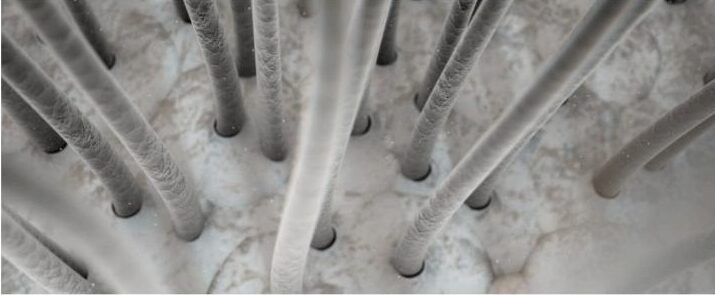
Understanding why this donor site works requires examining the fundamental differences between beard and scalp hair. Beard hair measures approximately 125 microns in diameter compared to 69 microns for typical scalp hair. Additionally, beard follicles contain twice as many cuticle layers, contributing to their coarser texture. The mid-occipital scalp produces hair that most closely approximates these characteristics, creating the most seamless integration when transplanted to facial areas.
Beard hair grows in single follicular units and demonstrates resistance to dihydrotestosterone (DHT), the hormone responsible for male pattern baldness. This DHT resistance ensures transplanted follicles remain permanent once established in their new location.
A strategic consideration often overlooked involves future planning: using scalp grafts for beard restoration reduces the available supply for potential scalp procedures later in life. Patients should discuss long-term hair restoration goals during consultation to ensure donor resources are allocated appropriately.
Why Mid-Occipital Scalp Hair Matches Beard Texture
The anatomical and biological compatibility between mid-occipital scalp hair and beard hair creates optimal conditions for natural results. The caliber measurements and cuticle layer structure of hair from this region produce visual similarity that allows transplanted follicles to blend seamlessly with existing facial hair.
Growth cycle compatibility also affects long-term outcomes. Patients should understand that transplanted scalp hair will continue growing according to scalp hair patterns, requiring regular trimming to maintain desired beard length—a minor maintenance consideration that reflects the permanence of results.
Alternative Donor Sites: When and Why
When scalp supply proves limited, alternative donor sites may be considered. Body hair from the chest or other areas can supplement scalp grafts, though technical challenges exist. Research indicates that 30-85% of body hairs remain in the telogen (resting) phase at any given time, compared to lower percentages for scalp hair. This affects extraction efficiency and may require pre-procedure minoxidil treatment to shift more follicles into the active anagen phase.
Beard-to-beard transplants offer advantages for patients with patchy growth patterns. Harvesting from denser beard areas to fill sparse zones provides perfect color and texture matching. According to ISHRS data, 93.2% of donor hair comes from the scalp, with approximately 5.0% harvested from existing beard areas.
Facial Density Planning: The Mathematics of Natural Beard Patterns
Clinical research establishes the target density for natural-appearing beard restoration at 48.4 ± 9.3 follicular units per square centimeter. However, natural beards display significant variance across different facial zones, and successful planning accounts for these regional differences.
The mustache, goatee, cheeks, and jawline each demonstrate distinct density patterns in natural beard growth. Replicating these variations rather than applying uniform density throughout creates results that appear genuinely natural rather than artificially constructed.
Graft calculation methodology depends on coverage goals. A typical full beard restoration requires 2,500 to 4,000 grafts, though individual needs vary based on coverage area and desired density. Strategic mixing of graft types—placing single-hair follicular units at beard borders while using two-hair and occasional three-hair grafts in central areas—optimizes both density and natural appearance.
Creating gradual density transitions at beard borders prevents the unnatural lines that characterize poorly executed procedures. This aesthetic mathematics requires both technical skill and artistic sensibility from the surgical team.
Hair Transplant Specialists in Eagan offers transparent, all-inclusive pricing with financing options starting at $150 per month.
Calculating Graft Requirements by Facial Zone
Typical graft distribution breaks down as follows:
- Mustache: 400-600 grafts
- Goatee: 600-800 grafts
- Cheeks: 800-1,200 grafts per side
- Jawline: 400-600 grafts
Patient goals significantly affect these calculations. Full beard creation requires substantially more grafts than patchy area filling or density enhancement of existing growth. The consultation process determines individualized graft needs based on current facial hair patterns, desired outcomes, and available donor supply.
Strategic Graft Placement for Natural Appearance
The transitional zone technique uses single-hair grafts at beard borders, creating soft, natural edges rather than abrupt density changes. Central beard areas receive two-hair and occasional three-hair grafts to build appropriate density.
Avoiding the “pluggy” or “clumpy” appearance that plagued earlier transplant techniques requires proper graft distribution and natural follicular groupings. Hair Transplant Specialists’ Microprecision Follicular Grafting® technique preserves natural follicular groupings without artificial dissection, maintaining the organic distribution patterns found in natural beard growth.
The Acute Angle Placement Technique: Achieving Flat-Lying Facial Hair
Facial hair requires dramatically different placement angles than scalp hair. While scalp transplants typically use angles of 40-45 degrees, beard procedures require acute angles of just 15-20 degrees to ensure hairs lie flat against the face rather than projecting outward.
Creating recipient sites at these acute angles presents significant technical challenges due to hypermobile facial skin. The face moves constantly during daily activities, and the skin lacks the stability of scalp tissue. Experienced surgeons must account for this mobility while maintaining precise angle consistency.
Improper angles produce hairs that stick out unnaturally or create a “cobblestoning” effect, particularly problematic in the chin area. These complications prove difficult and expensive to correct, underscoring the importance of selecting experienced practitioners for initial procedures.
Surgical technicians with extensive facial hair restoration experience recognize variable exit angles during extraction—beard hair doesn’t follow the uniform patterns characteristic of scalp hair. Teams like those at Hair Transplant Specialists, where technicians have over 18 years of experience, develop the expertise necessary for consistently excellent outcomes.
Punch size selection also affects results. Facial procedures typically utilize 0.8-0.9mm punches, minimizing scarring while ensuring graft integrity during extraction and placement.
Facial-Specific Technical Challenges
Beard transplants present unique obstacles beyond angle considerations. Hypermobile skin complicates precise follicle removal, requiring specialized techniques to stabilize tissue during extraction. Variable exit angles demand continuous assessment rather than the more predictable patterns found in scalp procedures.
Skin tension management during recipient site creation proves challenging on curved facial contours. The cheeks, jawline, and chin present different tissue characteristics requiring adjusted approaches throughout a single procedure.
Facial vascularity creates both advantages and challenges. Rich blood supply supports excellent healing but increases bleeding during procedures. Experienced surgeons manage this effectively while protecting facial nerves from temporary paresis—a rare but possible complication.
FUE Technique Advantages for Beard Transplants
Follicular Unit Extraction dominates beard transplant procedures, used in over 75% of cases. The technique’s advantages for facial restoration include:
- No linear scarring: Critical for patients who may wear short beards or occasionally go clean-shaven
- Selective harvesting: Ability to choose grafts that best match beard characteristics
- Faster recovery: Patients typically return to work the next day
- Strategic extraction: Enables harvesting from multiple body areas when needed
Minnesota-Specific Considerations for Beard Transplant Success
Minnesota’s climate presents unique factors for post-procedure care. Winter healing protocols must address protecting newly transplanted grafts from extreme cold and dry air during the critical first 10-14 days when scabs are present.
Indoor heating effects during Minnesota winters can significantly impact facial skin moisture during recovery. Patients should maintain appropriate humidity levels and use recommended moisturizing protocols to support optimal healing.
Summer procedures require attention to sun exposure during the months following transplantation. Protecting healing skin from UV damage supports better outcomes during the 3-12 month maturation period.
Timing considerations may include scheduling around Minnesota lifestyle factors: hunting season, winter sports participation, and outdoor work commitments that could complicate post-procedure care.
Local Clinic Expertise and Capabilities
Hair Transplant Specialists in Eagan provides state-of-the-art surgical suites staffed by a team with over 100 combined years of experience. Dr. Sharon Keene, former President of the International Society of Hair Restoration Surgery, brings world-renowned expertise and extensive research contributions on FUE techniques and safe excision limits.
The facility offers comfort amenities during procedures, including 65-inch televisions, Netflix access, Sonos music systems, and complimentary meals—recognizing that patient comfort contributes to optimal outcomes.
The Beard Transplant Timeline: What to Expect
Understanding the complete timeline helps patients maintain realistic expectations:
- Procedure day: 3-9 hours depending on graft count, performed while patients remain awake and relaxed
- First 24 hours: Scab formation begins; patients must keep face dry and sleep elevated
- Days 1-5: Face must remain dry; no shaving; minimal touching of transplanted areas
- Days 10-14: Scabs fall off naturally; visible procedure signs diminish
- Weeks 1-2: “Shock loss” occurs—transplanted hairs shed (normal and expected)
- Months 3-4: New growth begins from transplanted follicles
- Months 9-12: Full results visible; beard reaches mature density
Transplanted hair is permanent and requires regular trimming like natural scalp hair. A minimum 8-month waiting period between procedures applies if additional density is desired.
Ideal Candidate Criteria and Realistic Expectations
Optimal candidates typically wait until their 30s when facial hair patterns are fully established. Adequate donor supply assessment ensures sufficient scalp hair for current needs and potential future procedures.
Medical screening identifies conditions that may affect healing or graft survival. Psychological readiness includes understanding the 9-12 month timeline to final results and committing to post-procedure care protocols during the critical first 14 days.
Pre-procedure preparation requires avoiding blood thinners for 1-2 weeks, shaving donor areas as directed, and obtaining medical clearance when indicated.
Take the Next Step Toward Beard Restoration Goals
For Minnesota residents ready to explore beard restoration, Hair Transplant Specialists offers comprehensive consultations including personalized assessment, donor site evaluation, customized density planning, and transparent pricing discussion.
The team’s credentials include Dr. Sharon Keene’s leadership in the international hair restoration community, technicians with over 18 years of experience described as “some of the most experienced in the world,” and a track record that includes professional athletes and media personalities among satisfied patients.
Contact Information:
- Phone: (651) 393-5399 or (651) 395-5366
- Location: 2121 Cliff Dr. Suite 210, Eagan, MN 55122
- Hours: Monday-Thursday 9 AM-5 PM, Friday 9 AM-3 PM, weekends by appointment
- Website: INeedMoreHair.com for virtual tours and educational resources
Flexible financing starting at $150 per month makes beard restoration accessible. Contact Hair Transplant Specialists today to begin the journey toward facial hair confidence with Minnesota’s most experienced team.